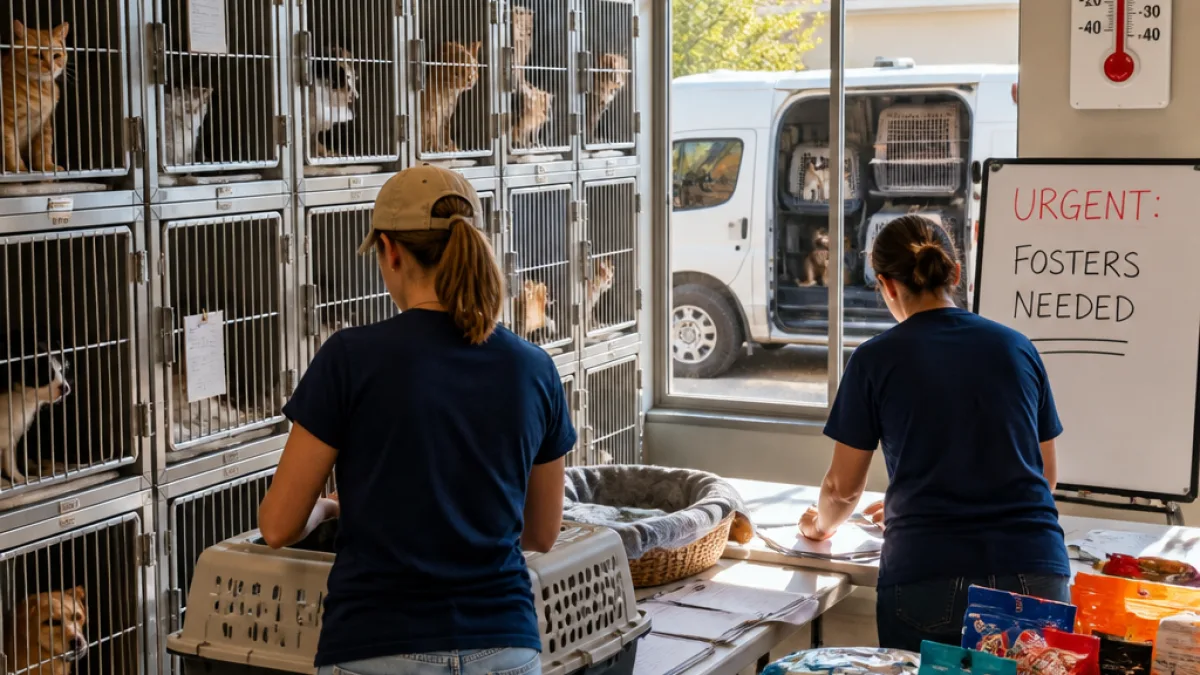
The Arizona Humane Society says it is facing a summer surge that is stretching its rescue and shelter operations to the limit, driven by a growing number of hoarding investigations, heat-related animal cruelty and an uptick in pet surrenders across the Valley.
Multiple pressures create a bottleneck
Maricopa County deputies recently discovered a hoarding situation in Morristown where officers found 27 dead cats and five living animals that are now in the care of the sheriff’s office. While the Arizona Humane Society is not directly involved in that particular case, the organization’s staff say the incident mirrors a larger pattern they have seen throughout the year.
Spokesperson Kelsey Dickerson told WE NEWS the society’s rescue and cruelty team has responded to roughly 120 hoarding investigations so far this year. Those cases, she said, can quickly overwhelm intake capacity because a single home may yield dozens or even hundreds of animals needing immediate medical and behavioral care.
“What is so complicated about these cases is that, a lot of times it’s not just the physical well‑being that we’re having to treat these animals, but it’s also the emotional well‑being as well,”
Dickerson added that hoarding cases often come with severe neglect or illness and can require long stays in shelter care, which reduces available kennel space and resources for other animals.
Legal holds add weeks or months to shelter stays
Another factor compounding the strain on shelters is legal holds. When an owner is arrested or involved in a criminal case, the humane society frequently assumes custody of the animals and may be required to hold them until court proceedings conclude.
Those holds can last for months. During that time, the animals occupy kennel space that cannot be used to take in new pets, creating a "bottleneck" that staff say is necessary but limits the shelter’s flexibility to respond to additional emergencies.
Heat intensifies neglect and cruelty
Summer’s triple‑digit temperatures are raising the number and severity of calls related to animals suffering from heat exposure. Dickerson noted the difference between a pet left outside in mild weather and one left outside when temperatures climb into the hundreds.
“As you can imagine, if it’s 60 degrees outside and a pet is outside without shade or water, that is a lot different of a situation than when it’s 120 degrees outside,” she said, describing why concern escalates rapidly when conditions worsen.
Community response: adoptions, fosters and volunteers needed
To respond to the influx, the Arizona Humane Society is issuing an urgent appeal for community support. The organization specifically needs:
- Adopters to provide permanent homes for animals in the shelter
- Foster families to temporarily care for pets undergoing medical treatment or behavioral rehabilitation
- Volunteers to assist with daily operations, transport and outreach
Dickerson emphasized that many of the animals arriving this summer have survived significant trauma and require both medical intervention and patient rehabilitation. The society provides training and support for fosters and volunteers and posts information about how to help on its website.
Numbers at a glance
| Metric | Reported figure |
|---|---|
| Dead cats found in Morristown case | 27 |
| Surviving animals from that home | 5 |
| Hoarding investigations responded to this year | 120 |
| Temperature examples cited | 60° vs 120° |
Local animal advocates say preventing these crises will require a combined approach: better community education about humane care in extreme heat, resources to help owners who are struggling rather than immediately surrendering pets, and stronger coordination between law enforcement, public health and animal welfare organizations when hoarding or abuse is suspected.
The Arizona Humane Society is urging Valley residents to report suspected neglect or cruelty to local authorities, consider fostering or adopting, and share information about how to safely help animals in hot weather—such as providing shade, fresh water and not leaving pets unattended in parked vehicles.
As temperatures remain high and court cases keep animals in long-term care, shelter leaders warn that the summer surge is likely to continue without increased community support.