InterContinental Hotels Group (IHG) said its business weathered disruption from the war in Iran after a boost in booking demand related to the World Cup helped offset losses in the Middle East. The hotel owner reported rising half‑year revenues and operating profits, though statutory pre‑tax profit fell.
Results and regional performance
For the six months to 30 June, underlying revenues rose 6% to $1.26bn (£930m), while operating profit increased 10% to $665m (£492.4m). On a statutory basis, pre‑tax profits were down 9% to $578m (£428m).
Across IHG’s global portfolio, revenue per available room (RevPAR) — the industry metric that combines occupancy and average room rate — climbed 4.1% for the first half. Growth slowed in the second quarter, with RevPAR rising 3.5% versus 4.4% in the opening three months, a deceleration the group attributed in part to the conflict in the Middle East.
| Metric | First half | Second quarter |
|---|---|---|
| RevPAR (global) | +4.1% | +3.5% |
| RevPAR (Americas) | +4.8% | +5.4% |
| RevPAR (Middle East) | — | -19% |
Local impact and the World Cup effect
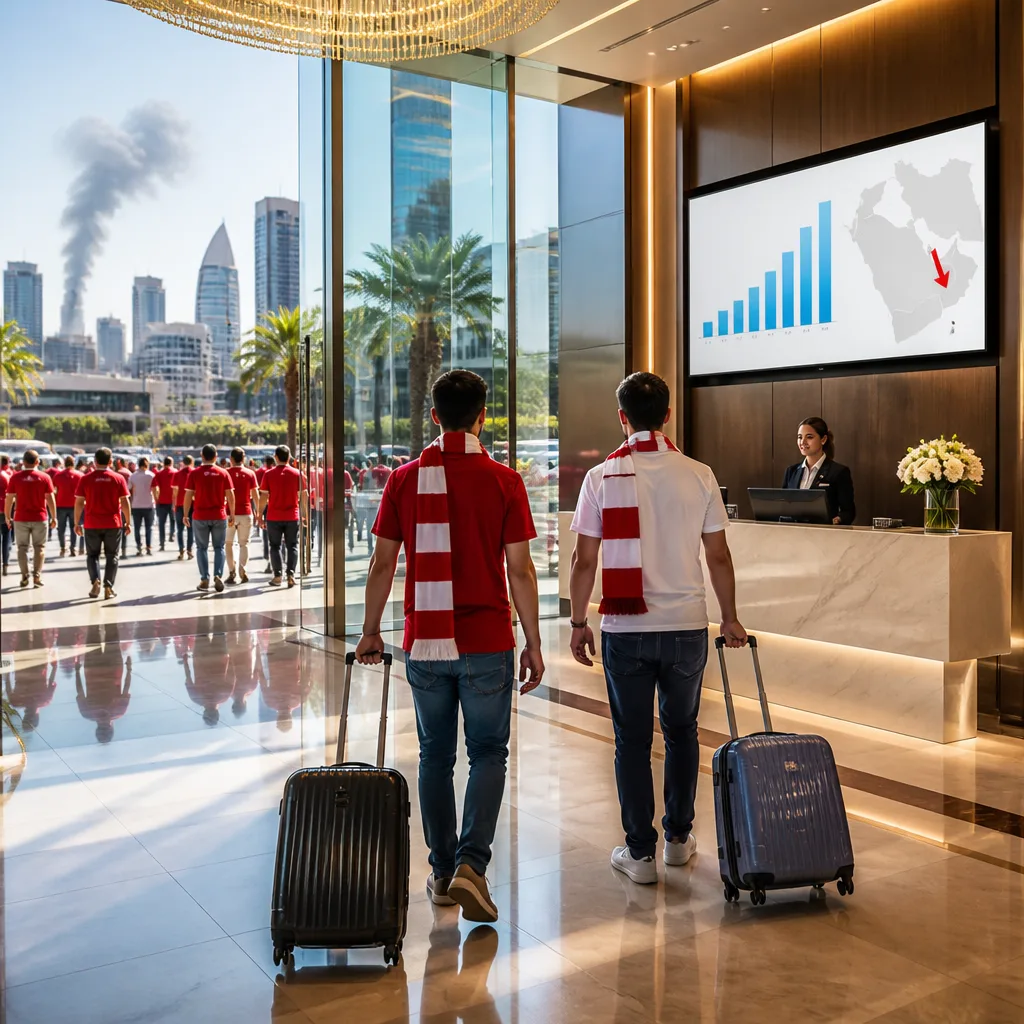
IHG said locations hosting World Cup matches contributed around 1 percentage point to the company’s overall growth, aiding performance particularly in the Americas where RevPAR rose by 4.8% for the half and 5.4% in the second quarter. The group’s UK business, its third largest market with 378 hotels, saw RevPAR increase by 3.1% in the second quarter.
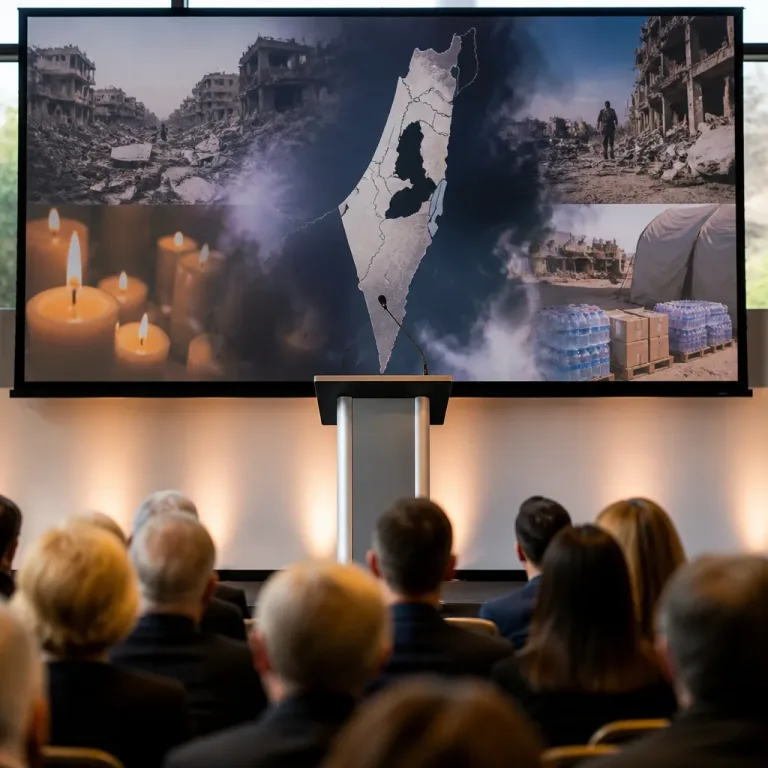
However, the Middle East — which represents about 5% of IHG’s system size globally — saw a sharp deterioration. RevPAR in the region fell nearly a fifth in the second quarter after a modest decline in the prior quarter, reflecting the immediate hit to demand following the outbreak of conflict on 28 February.
“While there are ongoing impacts from the Middle East conflict, including some wider disruption to international travel flows, we continue to expect these to be fully offset by growth in demand elsewhere.”
The comment was made by IHG’s chief executive, who underlined the group’s expectation that stronger performance in other markets would counterbalance regional weakness.
What this means for travel and hospitality
The results underline two tensions facing multinational hotel operators. First, large one‑off events such as major sporting tournaments can provide short‑term upside to demand and rates in host cities, supporting group‑level metrics even when pockets of the portfolio underperform. Second, geopolitical shocks can produce rapid and significant local declines — in IHG’s case, a near‑20% fall in RevPAR in the Middle East — with knock‑on effects on international travel patterns.
- Short‑term relief: World Cup bookings provided a measurable contribution to group growth.
- Regional vulnerability: The Middle East slump illustrates exposure to geopolitics despite its relatively small share of the group’s system size.
- Mixed earnings picture: Underlying revenue and operating profit rose, while statutory pre‑tax profit fell.
Industry observers will watch whether the boost from tournament demand proves sustainable through the second half of the year, and whether travel flows recover in the Middle East as security conditions and airline schedules evolve. For IHG, the immediate challenge will be to translate higher top‑line demand in buoyant markets into sustained margin gains while managing regional volatility.
The firm’s results are a reminder that for global hospitality companies, aggregate performance can mask sharp contrasts between markets — a dynamic likely to persist as geopolitical and event‑driven demand patterns continue to reshape travel behaviour.