
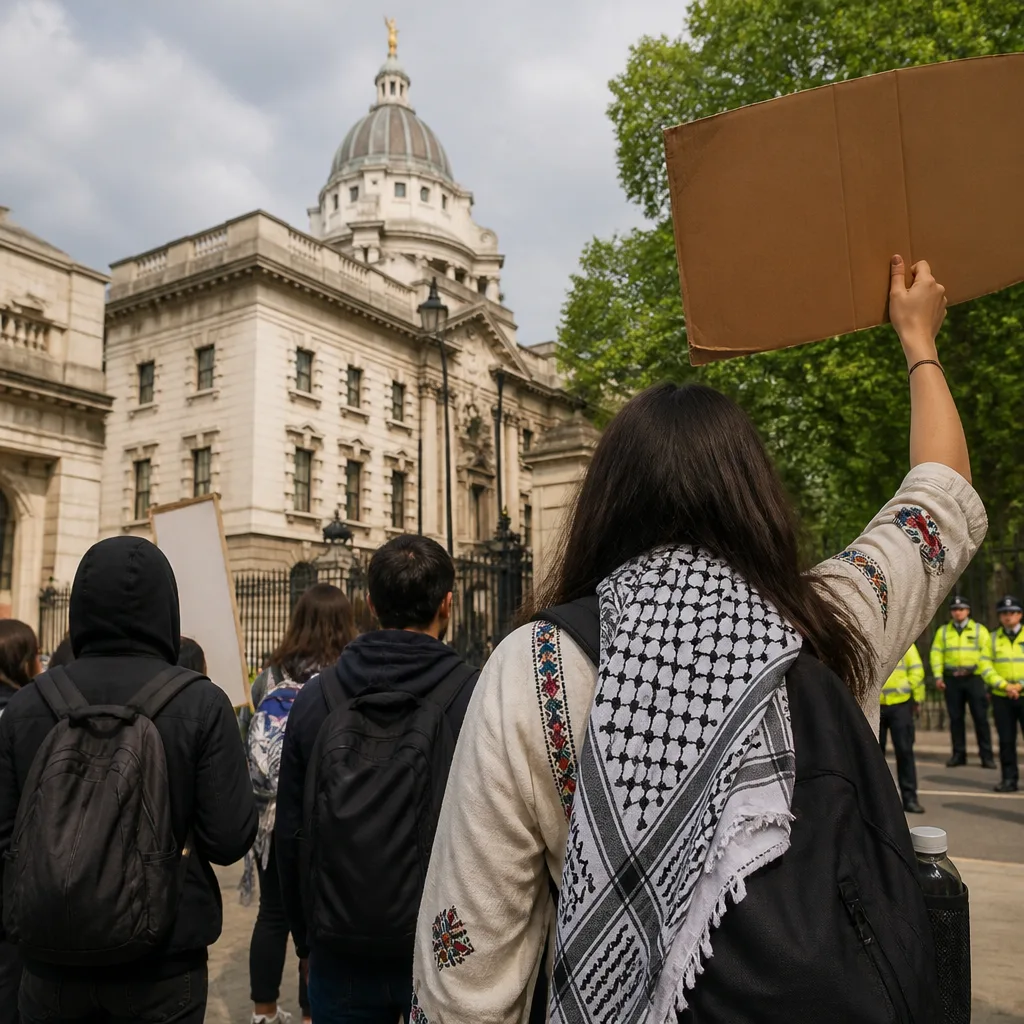
A London jury has acquitted a 22‑year‑old woman charged with expressing support for Hamas after a speech given outside the School of Oriental and African Studies in 2023, finding that her words did not amount to praise for a proscribed organisation.
The verdict at the Central Criminal Court (the Old Bailey) concluded a week‑long trial in which prosecutors said the defendant’s declaration of solidarity with Palestinian resistance shortly after the 7 October attacks in Israel amounted to support for Hamas. The jury disagreed.
What the court heard
Prosecutors told the court that comments made two days after the attacks were a “thinly veiled reference” to the group that the UK lists as a terrorist organisation. The defendant, who was identified in court documents as Sarah Cotte, 22, repeatedly denied supporting Hamas and told jurors she was advocating for Palestinians’ right to resist.
“I don't support Hamas and I have never supported Hamas. I was supporting the right to resist.”
After the verdict Cotte told reporters the decision was a reflection of public feeling about Britain’s position on Zionism, and that she had used the platform to discuss the Palestinian struggle and what she described as the rights of people of conscience.
Legal and political context
The case highlighted the legal limits of speech under the UK’s terrorism legislation. Hamas is proscribed in full in the UK; the government outlawed the organisation’s political wing in late 2021, while the group’s military wing, the Qassam Brigades, has been banned since 2001. Under the legislation, those convicted of supporting a proscribed organisation can face up to 14 years in prison.
Defence and prosecution disagreed over whether an expression of “unconditional solidarity” with Palestinian resistance could reasonably be read as support for Hamas, or whether it was a broader political statement about the rights of Palestinians. The jury’s not guilty verdict indicates they accepted the latter interpretation.
Wider implications
Legal observers said the ruling will be watched closely by campaigners, universities and prosecutors because it sits at the intersection of protest, political expression and counter‑terrorism policy. Universities have been a focal point for demonstrations and heated debate since the conflict escalated, and authorities face pressure to balance public order and safety with the protection of lawful protest and free speech.
The verdict also intersects with broader political debates about how the British state defines and prosecutes support for organisations it regards as terrorist. Critics of proscription measures argue they can chill legitimate political speech; supporters say strict enforcement is necessary to prevent encouragement of violence.
- Defendant: 22‑year‑old woman acquitted at the Old Bailey.
- Charge: Alleged support for a proscribed organisation following a speech outside SOAS in 2023.
- Legal risk: Supporting proscribed groups carries a maximum sentence of 14 years.
| Entity | UK proscription date |
|---|---|
| Hamas (political wing) | Late 2021 |
| Qassam Brigades (military wing) | 2001 |
Prosecutors maintained the Crown’s duty to pursue possible breaches of the terrorism laws, while defence teams have argued that context, intent and precise wording must be scrutinised before criminal sanction is applied. The jury’s decision reflects that scrutiny in this instance.
The case will be of interest to students, free‑speech advocates and legal practitioners because it clarifies how juries may assess politically charged language in the shadow of terrorist atrocities. It also puts a spotlight on how universities and police handle demonstrations that include contentious and emotive views.
Police, prosecutors and university authorities did not immediately comment beyond court statements. The defendant welcomed the verdict outside court, asserting her right to speak on the Palestinian cause while rejecting any association with Hamas.















