
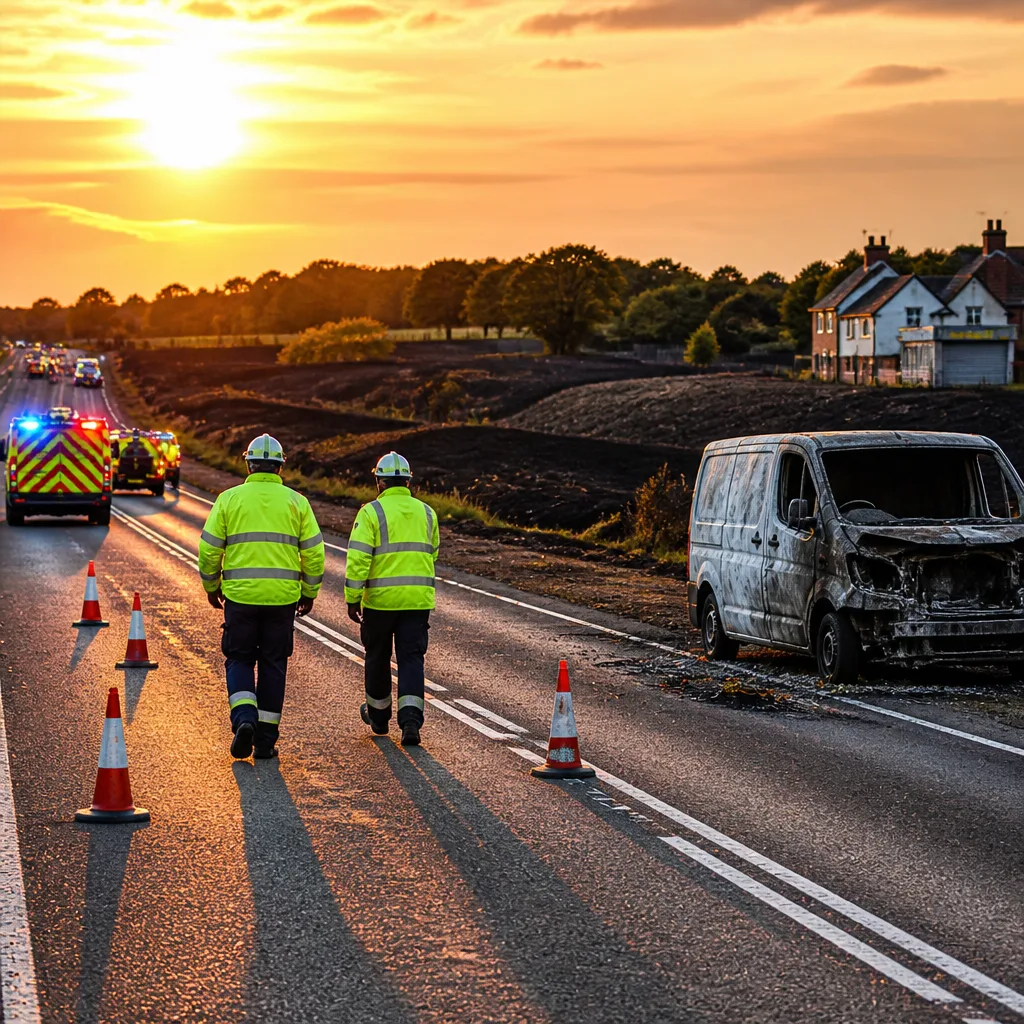
A wildfire that began in a van on the A31 has left a key route between Southampton and Bournemouth closed and local firms warning of mounting economic pain as the height of the holiday season continues. The blaze has spread into surrounding heathland and now covers an area equivalent to about 230 football pitches, according to local accounts, and the road is not expected to reopen until at least 20 August.
Immediate impact on footfall and supply chains
Shops and tourist businesses in villages and towns inside the New Forest say takings have fallen noticeably since the fire began on Sunday. Owners described the situation as “painful”, stressing the longer the closure persists the greater the strain on margins and on those employed in the local economy.
“We will survive this, but the longer it goes on, the more difficult it is,” said Jonathan Stainton-Burrell, who runs Hockey's Farm Shop in South Gorley.
Hockey's Farm Shop also highlighted the wider chain effects: it supports roughly 65 other local suppliers, meaning reduced trade will ripple out to producers and small traders who rely on seasonal turnover. His wife added that the emergency response teams were doing a good job but warned of a “complete knock-on effect for the rest of the year”.
Tourism at the centre of the shock
The New Forest relies heavily on visitor spending in summer. The chief executive of the local tourism board said around one in five jobs in the area are related to tourism, underlining how road closures and perceptions of danger can translate quickly into fewer nights sold, lower hospitality receipts and less seasonal employment.
Nic Caras, chief executive of Go New Forest, urged holidaymakers to continue making plans and stressed that much of the national park remains open. The appeal is pragmatic: sustaining visitor numbers would help preserve jobs and firm cashflows that are concentrated in a short peak season.
- Cause: fire began in a van on the A31.
- Extent: burned area about 230 football pitches.
- Transport: A31 closed between Southampton and Bournemouth until at least 20 August.
- Local economy: tourism accounts for roughly one in five jobs; some businesses support 65 suppliers.
Traffic disruption and changing visitor patterns
Local residents and holiday homeowners reported sharply altered traffic patterns. One visitor with a holiday home in Bashley said congestion initially made access difficult, but in the days after the A31 closure the opposite problem arose — towns that usually see high footfall have experienced quieter streets and emptier shops.
On Lyndhurst High Street, which sits near the centre of the forest, traders described a noticeable drop in customers. That matters in a sector where fixed costs — staff wages, short-term rental costs for holiday lets, and stock — are incurred irrespective of a sudden weekday-to-weekend swing in visitor numbers. Reduced turnover can quickly translate into pressure on pay packets and the viability of small firms.
What this means for prices, wages and jobs
When local shops and cafés lose summer revenue, pressure tends to show up in three places: deferring investment, trimming staff hours or recruiting fewer seasonal workers. For suppliers tied to farm shops and local restaurants, reduced orders can mean lower production runs and squeezed margins. While the immediate concern is lost takings this month, business owners warned of second‑order effects that could last much longer.
Authorities have kept the message that much of the park remains accessible and that visitors should not assume the entire area is off-limits. If visitors heed that and plan trips that avoid the closed road, the economic damage can be limited. But if perceptions of danger and inconvenience persist, the hit to the summer season — and to dependent incomes — will be harder to reverse.
| Measure | Reported figure |
|---|---|
| Burned area | ≈230 football pitches |
| A31 reopening | Not before 20 August |
| Tourism jobs share | 1 in 5 |
| Local suppliers linked to one shop | ≈65 |
For now, the balance between reassuring visitors and protecting public safety will determine how deep the economic wounds run. Businesses are clear-eyed: emergency services are doing what they can, but the longer transport links remain severed and perceptions of disruption linger, the tougher the decisions local employers and workers will face as the summer season unfolds.














