
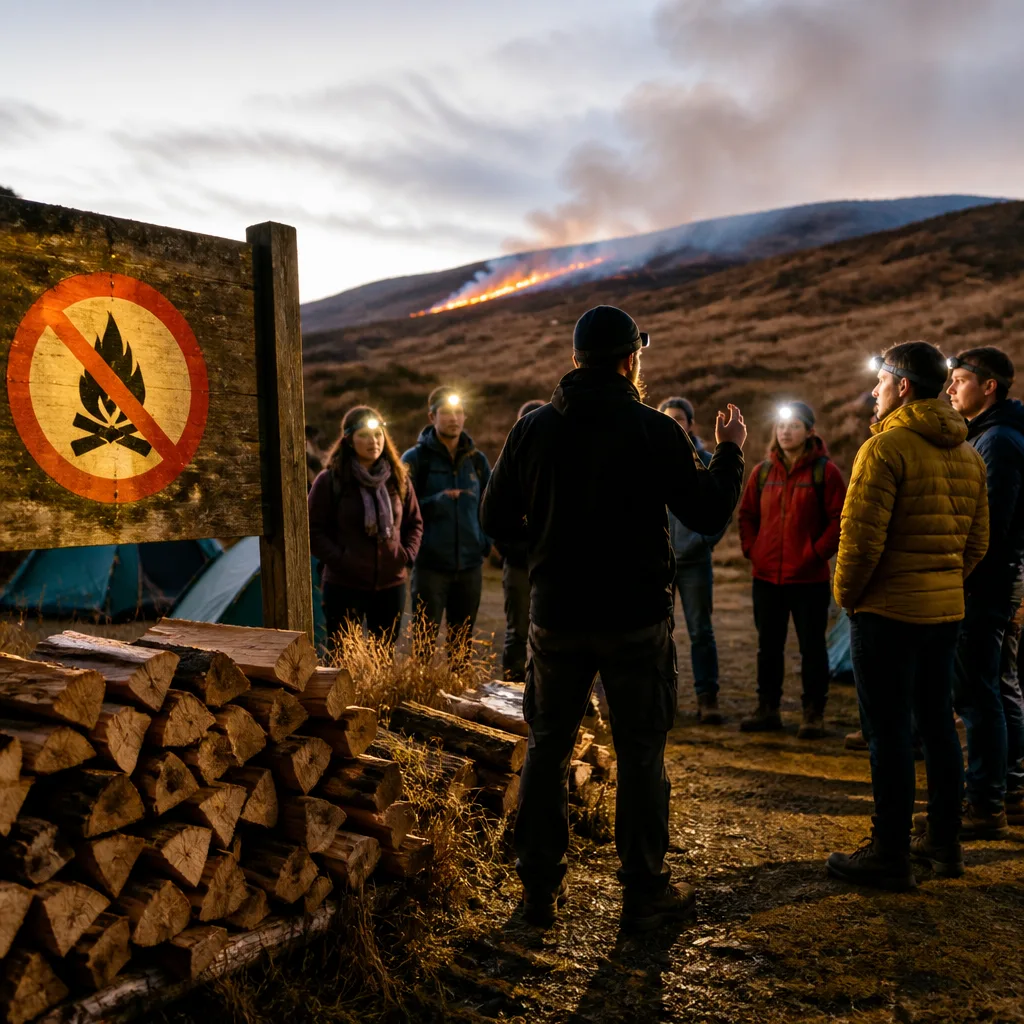
The owner of a wild-camping business in Gwynedd has been subjected to abusive social media coverage after enforcing a ban on campfires at his site, saying the measure is necessary because of nearby wildfires and extremely dry ground.
Safety concerns prompt enforcement; owner reports abuse
Adrian Wright, who runs Cefn Coed Wild Camping near Dolgellau, told local media he has been targeted in a TikTok clip that attacked him for asking campers to put out fires and reduce loud music. Mr Wright said he and his team brief every guest on arrival and have installed warning signage about the risk posed by open flames.
“There have been wildfires burning just a few miles away and the ground is so dry that campfires are a huge risk to life for people, animals and the environment,” Mr Wright said.
He added that staff patrol the site each night and ask any visitors found with a fire to extinguish it. The owner also said the ban has hit one of his revenue streams: sales of firewood, which he described as lost income as a result of the restriction.
Local impact on business and countryside
The dispute highlights a recurrent challenge for small tourism operators: balancing commercial interest and visitor expectations against public-safety obligations and environmental protection. Mr Wright emphasised the proximity of recent fires as the reason for his strict approach and warned of the consequences of non-compliance for neighbouring farms, livestock and wildlife.
“Ironically, no one wants to see an end to the ban more than us as we have lost income in firewood sales,” he said.
His daughter, Sophie, supported the stance, referencing a fire on a neighbouring farm to underline the urgency of precautions. She said the episode underscored the wider consequences of seemingly small acts – a point with direct implications for both local incomes and the rural economy.
Enforcement, reputation and the role of social media
While the immediate business impact for the campsite is the loss of firewood revenue and the administrative burden of briefing and night patrols, there is also reputational risk when disputes play out on platforms such as TikTok. Small operators can face a rapid reputational hit that may deter future bookings, with potential knock-on effects for seasonal income and any staff employed or contracted to help during peak periods.
Key elements of the situation include:
- Public-safety justification — Nearby wildfires and dry ground prompted the ban on campfires.
- Revenue impact — The owner reports lost income from firewood sales due to the restriction.
- Operational response — Guests are briefed at check-in and the site is patrolled nightly to enforce the rule.
- Social-media fallout — A TikTok video criticised the owner, illustrating how online platforms can amplify disputes.
| Issue | Immediate effect |
|---|---|
| Campfire ban | Reduced firewood sales; mandatory briefings; nightly patrols |
| Nearby wildfires | Heightened safety risk to people, animals and property |
| Social-media criticism | Abuse directed at owner; potential reputational damage |
The case is a reminder that small rural businesses operate close to environmental risk and that enforcing sensible safety measures can run counter to some visitors’ expectations. For operators dependent on seasonal trade, even modest losses in ancillary sales can matter for cashflow and for anyone the business employs or contracts.
There is no suggestion in the reporting that the business has failed to communicate its safety measures: the owner says guests are warned on arrival and that signage is in place. Nevertheless, the incident demonstrates how quickly tensions can escalate when enforcement meets social-media commentary, with consequences for both local livelihoods and countryside protection.
As summer conditions continue to raise wildfire risk across parts of the UK, the intersection of visitor behaviour, local enforcement and online criticism will remain a salient issue for rural tourism providers and the communities that host them.














