
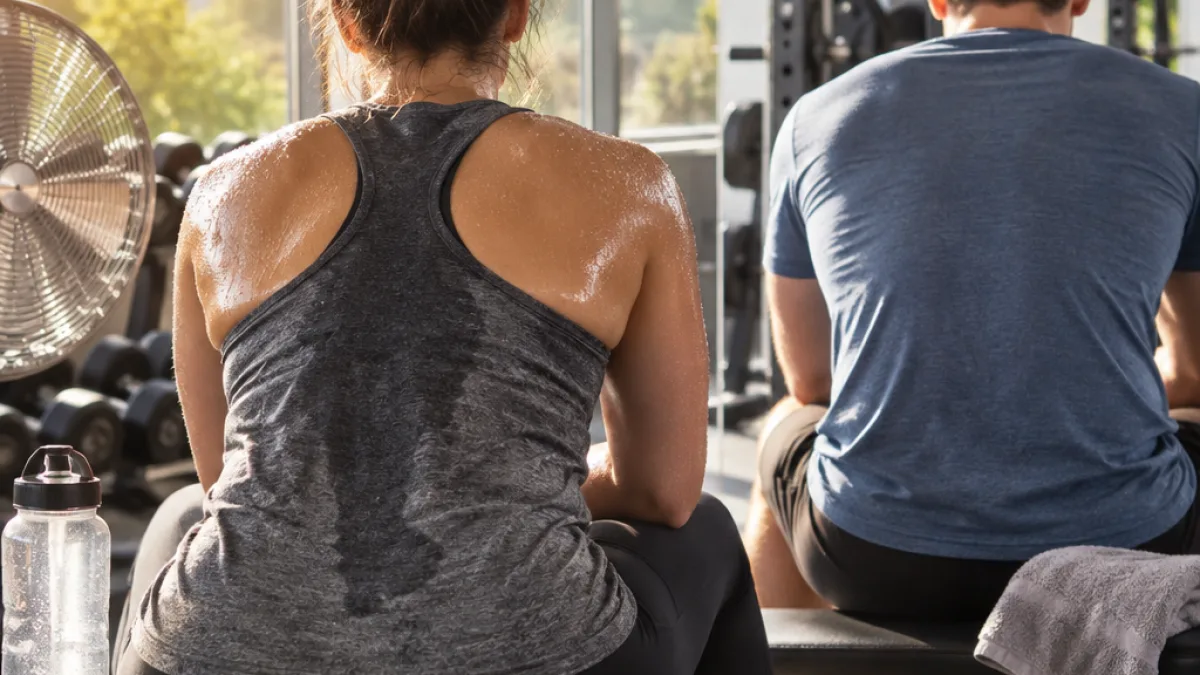
People sweat at different rates during exercise, and heavier perspiration is not automatically a sign that something is wrong. Sweating is one of the body’s main ways of controlling heat: physical activity makes the muscles warmer, and the brain responds by sending signals to the sweat glands. Moisture then reaches the skin, where evaporation helps reduce body temperature.
That response can vary considerably from one person to another. Some people may become noticeably sweaty during a relatively gentle session, while others may produce less visible perspiration during a similar workout. The amount can also change according to the surroundings, the type of activity and the individual’s own physical characteristics.
Several factors affect how much you perspire
Dr Niraj Kumar, senior consultant in internal medicine at ShardaCare – Healthcity, said sweating is influenced by a combination of personal and environmental factors rather than by exercise intensity alone.
“The amount a person sweats depends on several factors, including genetics, fitness levels, body weight, age, environmental temperature, humidity, workout intensity and hydration status.”
Regular exercisers may begin sweating sooner as their bodies adapt to repeated physical exertion. The source article explains that this can be part of becoming more efficient at managing heat during activity, rather than evidence of poor fitness. At the same time, people with a larger body mass, or those taking part in especially demanding exercise, may generate more heat and therefore sweat more.
| Factor | How it may affect sweating |
|---|---|
| Genetics and age | Can contribute to differences in an individual’s sweating response. |
| Fitness and exercise habits | Training regularly may lead to earlier and more efficient sweating during activity. |
| Body mass and effort | Greater heat production can be linked with increased perspiration. |
| Heat and humidity | Environmental conditions influence how the body responds to exercise. |
| Hydration | Hydration status is one of the factors that can affect the amount a person sweats. |
When a change deserves attention
Heavy sweating by itself does not necessarily mean that a person has an illness. However, unusually intense perspiration or a sudden change in an established pattern should not simply be dismissed. The article notes that several medical conditions and other health-related factors can alter the body’s response, including an overactive thyroid, changes in blood sugar, diabetes-related dysfunction of the autonomic nerves, hormonal changes, some infections and certain medicines.
Hyperthyroidism, for example, increases metabolic activity and may result in excessive sweating even when the physical effort is moderate. This is different from the expected rise in perspiration during a particularly strenuous workout or when exercising in hot, humid conditions. The key concern is a pattern that appears unusual for the individual, especially when it has changed without an obvious explanation.
What to keep in mind before exercising
There is no single amount of sweat that can be described as normal for everyone. A person’s response needs to be considered alongside their fitness, body size, age, surroundings, intensity of exercise and hydration status. Sweating is an important cooling process, so its presence during a workout is not, on its own, a reason to stop exercising.
- Expect perspiration to vary between people and from one workout to another.
- Remember that heat, humidity and the level of effort can all change the response.
- Take note of sweating that becomes unusually heavy or changes suddenly.
- Discuss concerning symptoms or a persistent change with a qualified health professional.
The information is intended as general guidance rather than a diagnosis. Anyone planning to begin a new exercise routine should consult a health practitioner first, particularly if they have concerns about sweating or an existing medical condition. A clinician can assess whether the change is part of an ordinary response to activity or whether further investigation is appropriate.