
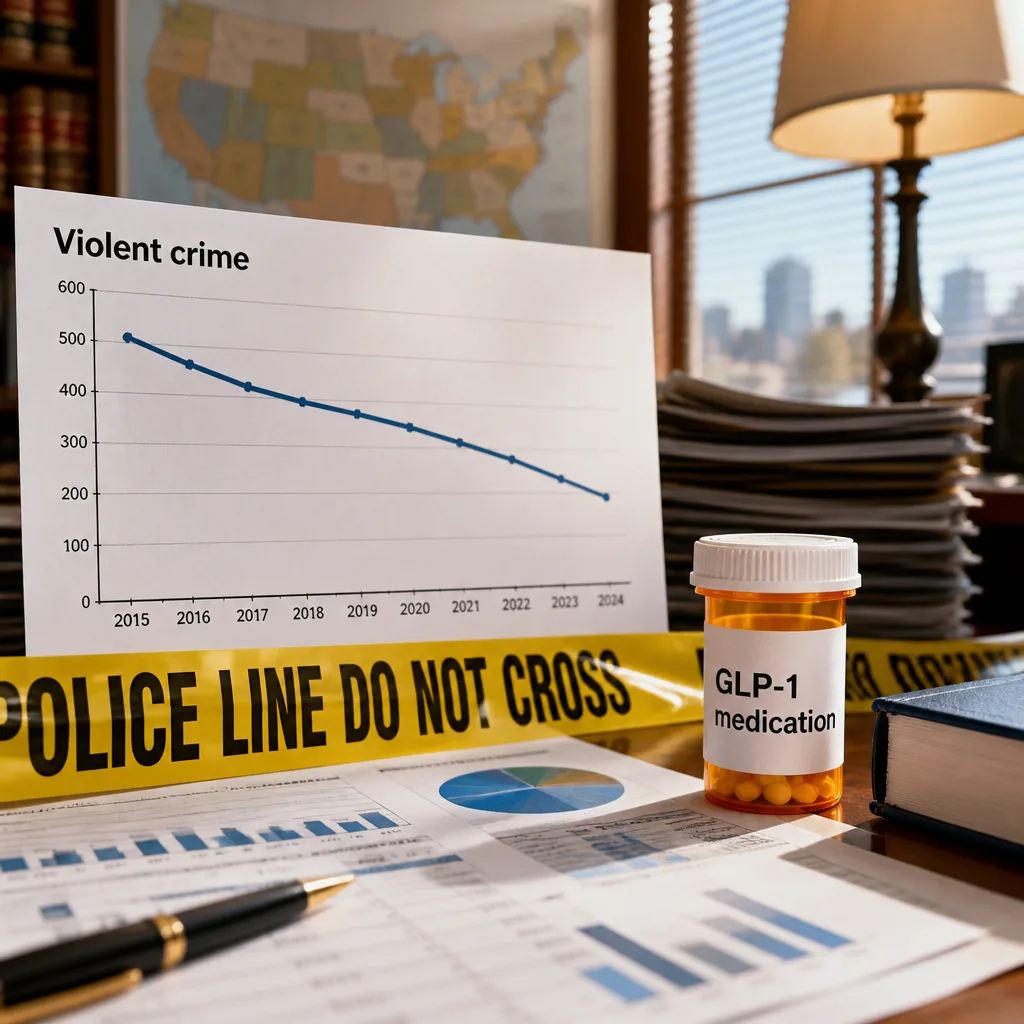
The United States experienced its steepest single‑year fall in violent crime since the FBI started compiling national statistics in 1936, the bureau has reported, prompting researchers to weigh a range of possible explanations — from demographic shifts and reduced substance misuse to advances in policing technology and even the growing use of weight‑loss drugs such as Ozempic.
Official figures and the scale of the decline
FBI data show an overall drop in the violent crime rate of 9.3% from 2024 to 2025 — the largest annual decline on record. Within that fall, the most pronounced reductions were in:
- Murder and non‑negligent manslaughter: down 18.1%
- Robbery: down 18.5%
- Rape: down 7.6%
- Aggravated assault: down 7.2%
Officials and analysts caution that multiple factors are likely responsible and that it is difficult to attribute the fall to any single cause.
Potential explanations under consideration
Commentators have proposed several, non‑exclusive drivers behind the reversal in violent crime trends that began after peaks recorded during the COVID‑19 pandemic. Those suggestions include:
- An ageing population and the dwindling proportion of younger people, who are statistically more likely to offend.
- A sustained reduction in alcohol and illicit drug use compared with levels seen during lockdown‑era disruptions.
- Increased deployment of artificial intelligence and other novel policing tools, which some argue improve detection and prevention.
- Behavioural and public health effects associated with greater use of glucagon‑like peptide‑1 (GLP‑1) receptor agonists, such as Ozempic, which have been linked in clinical studies to reduced alcohol misuse and improved impulse control.
Former Justice Department statistics specialist Leonard Adam Sipes Jr told Axios that lower alcohol consumption has almost certainly contributed to the fall, and that demographic shifts are also influential. He added, however, that it may be premature to judge the impact of AI and other policing technologies.
“There’s ‘no doubt’ that Americans consuming less alcohol helped lower the crime rate,”
The FBI itself described the figures as a “striking reversal” from the increases in violent crime seen during the pandemic and noted the data represent a second consecutive year of substantial declines.
Questions over Ozempic and other GLP‑1s
While some researchers and journalists have flagged the rise in prescriptions and off‑label use of GLP‑1 drugs such as Ozempic as a plausible partial explanation, they stress the evidence remains preliminary. Clinical links between GLP‑1 therapies and reductions in alcohol consumption and impulse‑driven behaviour are cited as mechanisms by which such drugs might indirectly suppress some violent offending.
Experts emphasise caution: correlation does not prove causation, and a complex mix of social, economic and policing factors will also influence crime statistics. The suggestion that a weight‑loss medication could be affecting national crime rates has attracted particular attention because it would represent an unconventional pathway to public safety gains.
Implications and the need for further study
The scale of the decline will prompt detailed analysis by criminologists, public‑health researchers and policy makers. Understanding which factors are most influential is important for shaping interventions and resource allocation. Researchers will need robust, peer‑reviewed studies to disentangle the relative roles of demographic change, shifting patterns of substance misuse, policing innovations and any pharmacological effects.
| Offence type | Year‑on‑year change (2024–25) |
|---|---|
| Murder and non‑negligent manslaughter | ‑18.1% |
| Robbery | ‑18.5% |
| Rape | ‑7.6% |
| Aggravated assault | ‑7.2% |
| Overall violent crime rate | ‑9.3% |
For now, officials urge cautious interpretation of the statistics. The FBI’s data mark a notable change in direction after pandemic years of volatility, but the precise causes of the decline will require sustained, multidisciplinary investigation.














