
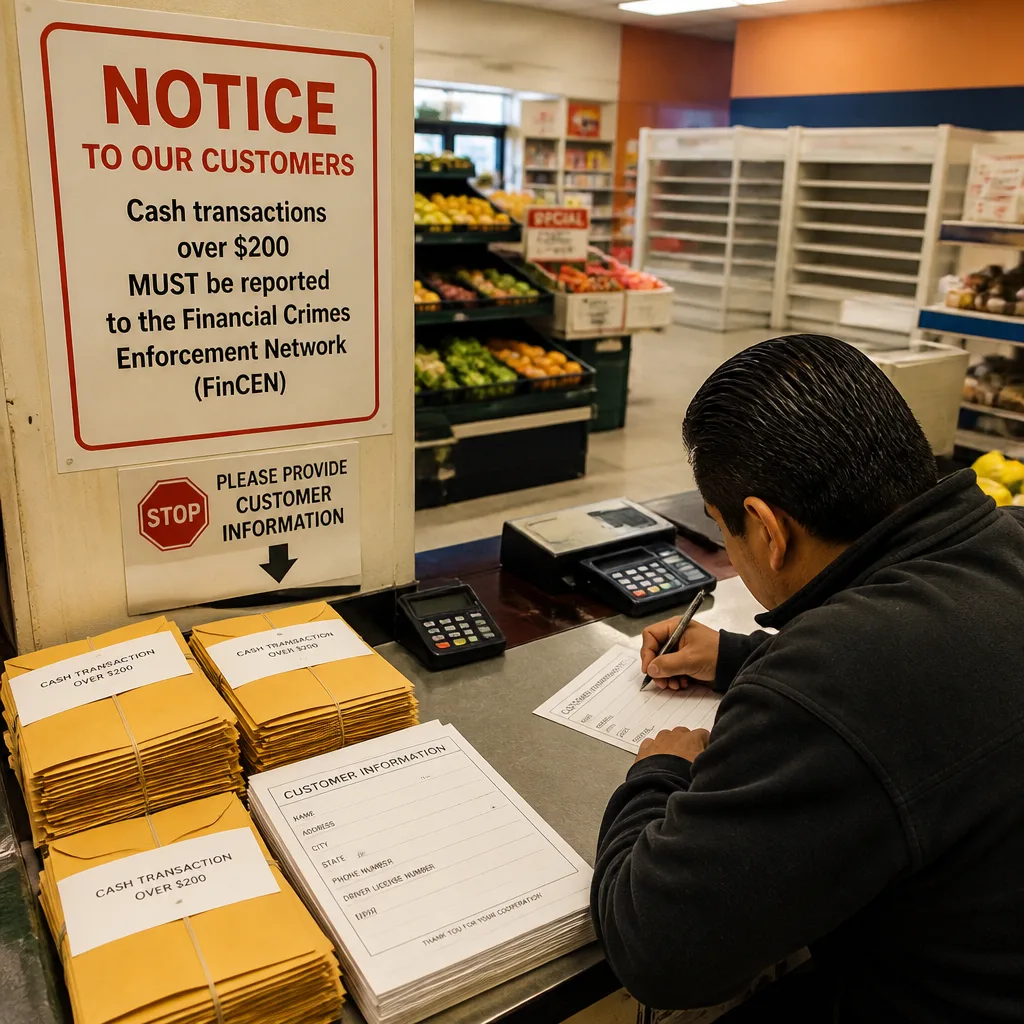
The US administration’s decision last April to sharply tighten reporting requirements for cash transactions near the Mexico border is having unintended economic consequences for small, community businesses, owners and legal experts say.
Rule change and immediate effect
The Financial Crimes Enforcement Network (FinCEN) ordered businesses providing financial services in the region to report cash transactions over $200, a dramatic reduction from the previous threshold of $10,000. The policy was presented as an anti‑money‑laundering measure aimed at disrupting Mexican cartel revenues.
But owners of small, family‑run shops that double as informal financial service points report a sharp decline in customers using these services, in turn reducing incidental retail spending that sustained their businesses.
How community shops have been affected
One illustrative case is Nachita’s, a grocery store located in a long‑standing neighbourhood of El Paso, Texas. The shop, run by Evangelina Ornelas, has for years offered small‑scale financial services alongside groceries and a kitchen. These services enabled people without bank accounts to pay bills, obtain money orders for rent and wire funds to relatives across the border.
“People would come in to do a money transfer, and while they were here they’d get a burrito or purchase grocery items,” she recalled.
After the new reporting requirement took effect, customers became reluctant to use in‑store payment and remittance services, reportedly because they feared that providing names, addresses and social security numbers would expose them to government monitoring or immigration enforcement. That reluctance has reduced the footfall that once converted money‑service transactions into grocery and food sales.
Implications for wages, prices and jobs
Although the rule targets money laundering, its knock‑on effects cut into the ordinary revenue streams of small enterprises. For micro‑businesses operating on thin margins, declines in ancillary sales — the burrito bought while waiting for a transfer to be processed, or groceries purchased at the same time as bill payment — can translate into real pressure on staffing and hours, and reduce the cash available to cover wages and supplier invoices.
Smaller takings may also force proprietors to raise prices on remaining goods and services to stay afloat, passing higher costs onto low‑income customers who can least afford them. The policy’s stated anti‑criminal aim is therefore colliding with the economic realities of immigrant and working‑class communities that depend on accessible, local financial services.
What businesses now must report
- Reporting threshold: cash transactions exceeding $200
- Previous threshold: $10,000
- Coverage: businesses providing financial services in the border region
| Aspect | Before April | After April |
|---|---|---|
| Cash reporting threshold | $10,000 | $200 |
Broader economic and social consequences
Community stores like Nachita’s perform multiple functions: they are retail outlets, informal banks, and social hubs. If customers avoid the financial side of their operations, all three functions are undermined. Legal experts and business owners quoted in reporting say the requirement to collect identifying information for low‑value transactions has created a chilling effect that extends beyond individual shops to the wider local economy.
The policy also risks shifting transactions into less transparent channels. When regulated, accessible services become less attractive, people may resort to more informal or unregulated alternatives — a perverse outcome for a measure aimed at increasing transparency.
For policymakers, the case raises a familiar tension: how to balance the need to cut off criminal finance with the imperative to avoid collateral harm to legitimate commerce and vulnerable households. The immediate evidence from El Paso suggests the balance has, at least in the short term, fallen on the side of disruption to lawful, everyday business activity.
As debates continue about the scale and effectiveness of the crackdown, the economic fate of small, bilingual and immigrant‑serving enterprises will remain a barometer of the policy’s wider social cost.














