
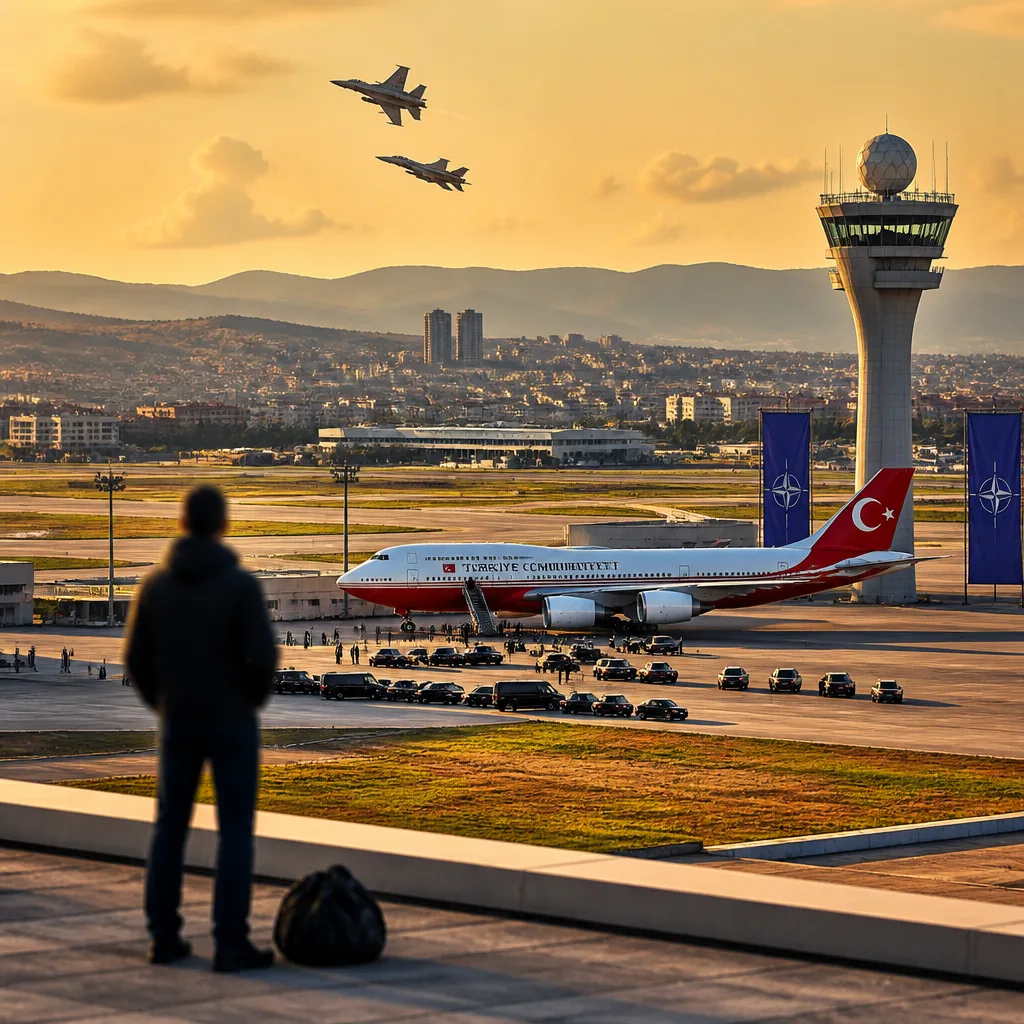
U.S. and Israeli intelligence agencies warned in July that Iranian proxies may have planned to fire a lightweight, shoulder-launched missile at President Trump’s aircraft as it left Ankara, according to U.S. and Middle East officials briefed on the matter.
Intelligence raised during NATO summit visit
The threat was disclosed after officials said they learned of intelligence indicating a militant could attempt to use a man-portable air-defence system (commonly known as a Manpad) from a position roughly a half-mile from the airport as the president’s jet prepared to depart. The warning related to the period surrounding a North Atlantic Treaty Organisation summit held in Turkey’s capital.
While the aircraft would have been accompanied by fighter jets once airborne, White House aides noted the plane could have been exposed during the initial take-off phase. Some U.S. officials, the sources said, judged the alleged plan to be impractical or implausible.
Turkish follow-up and divergent assessments
Turkish authorities later informed regional partners that they had found no evidence the president had been in danger from a Manpad attack, according to the Middle East officials who spoke to reporters. The intelligence picture, then, contained differing judgements among allied services.
| Actor | Role |
|---|---|
| U.S. intelligence | Reported discovery of a potential Manpad threat; briefed officials |
| Israeli intelligence | Concurred in the assessment that Iranian proxies posed a possible threat |
| Turkish authorities | Reported no evidence of an imminent Manpad danger after investigation |
Security implications and practical hurdles
The officials said the scenario involved someone bypassing heavy security measures at the summit, positioning themselves around half a mile from the airport and deploying a shoulder-fired missile as the jet took off. Manpads are designed to be portable and can pose a danger during take-off and landing phases, when aircraft are vulnerable.
But the sources also described scepticism within parts of the U.S. security apparatus. Some viewed the alleged plot as difficult to execute in practice, given the security environment around a presidential visit and the technical challenges of successfully engaging a fast-moving transport aircraft at take-off.
- Timing: Intelligence was reported in July, during a NATO summit in Ankara.
- Threat vector: Use of a shoulder-fired missile — a Manpad — from about a half-mile away.
- Differing judgements: U.S. and Israeli agencies raised the alarm; Turkish officials reported finding no supporting evidence.
The accounts in this report are drawn from U.S. and Middle East officials who said they had seen or been briefed on the underlying intelligence. They speak to the challenges of assessing threats in real time and the routine differences that can arise between allied services reviewing the same information.
There has been no public confirmation from the White House, the Turkish government or Israeli authorities detailing the specific intelligence products or the operational steps taken in response. Officials described routine protective measures — such as fighter escorts once the aircraft was airborne — that are typically used to mitigate risk during presidential travel.
The variant assessments underline how intelligence warnings can prompt urgent security decisions even when the underlying indicators are judged by some to be unlikely to result in a successful attack. In allied operations, such divergences are not unusual and often lead to further collection and analysis to resolve competing hypotheses.












