
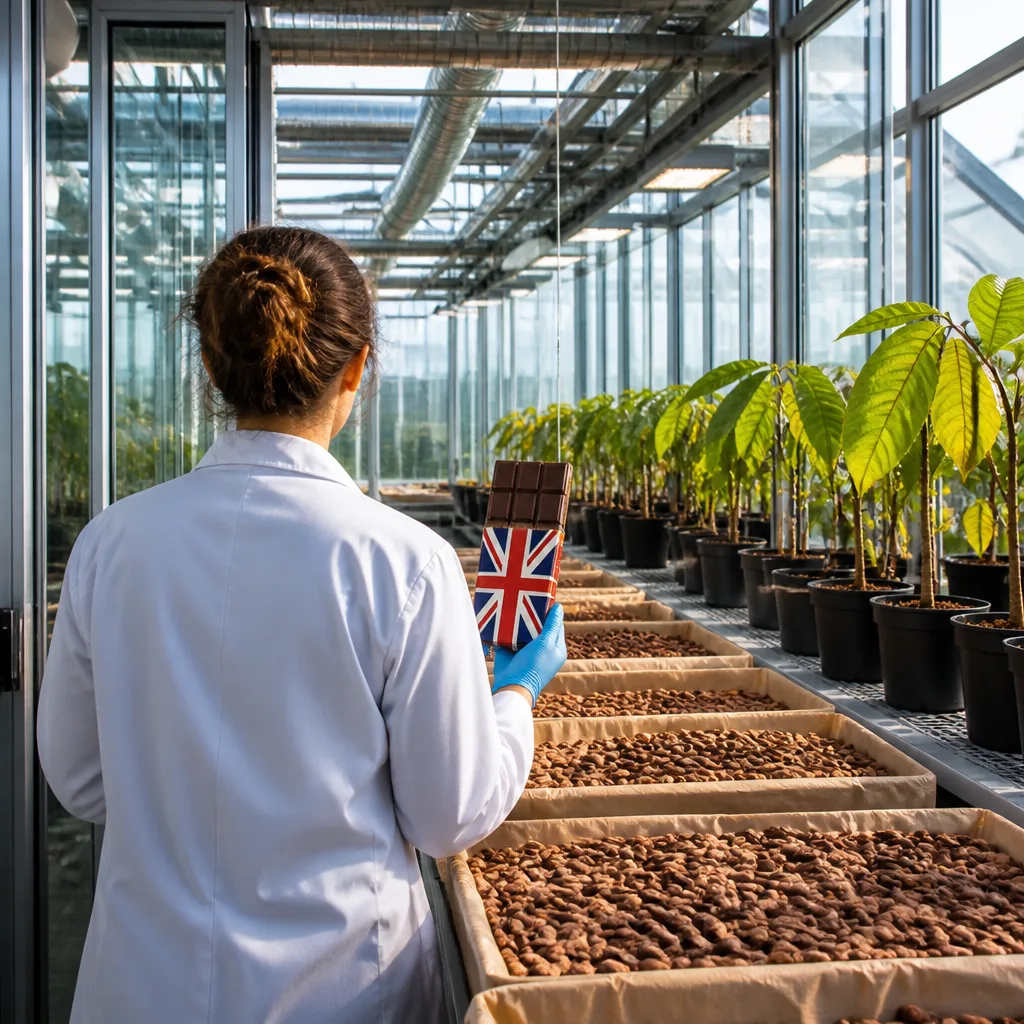
A chocolate bar made using only British ingredients has been produced at the University of Reading, the first of its kind since 1932, university officials said.
From bean to bar in Berkshire
The bar, named the Reading 100 Chocolate Bar to mark the university’s centenary, was created by a master's student in food security who harvested, fermented and processed cocoa grown at the institution's International Cocoa Quarantine Centre in Berkshire.
The quarantine centre, which holds more than 300 varieties of cocoa, is described by the university as a climate-controlled facility that safeguards plants and allows scientists to study them without risk of spreading pests and diseases between cocoa-growing regions. It also plays a role in the international transfer of material for cocoa-growing countries.
Why the achievement matters
The UK's chocolate industry is a substantial market, valued at around £10.4bn, but it depends entirely on imported cocoa. Producing a bar entirely from cocoa grown and processed in the UK is therefore notable both as a technical achievement and as a demonstration of the research facility's capabilities.
The student behind the bar said the project was intended to draw attention to the difficulties facing cocoa cultivation worldwide, including the effects of climate change and the threat from pests and disease. She noted that losses to crops are already significant.
"It is incredible that we can make 100% British chocolate – but in the context of climate change, pests and diseases, there are estimates that 30 to 40% is lost," she said.
Her process involved removing the pulp from freshly harvested cocoa pods, fermenting the beans for around seven to ten days, and drying them in the sun — steps that replicate traditional cocoa processing but were carried out using material grown at the quarantine centre.
Research, resilience and public awareness
University staff emphasise that the quarantine centre not only preserves genetic diversity in cocoa but also functions as a research hub, offering a secure environment for study and for transferring material internationally. The student said the project aimed to raise public awareness of the centre and the broader scientific work often unseen outside specialist circles.
- Location: University of Reading, Berkshire (International Cocoa Quarantine Centre)
- Scale: Collection of more than 300 cocoa plant types
- UK chocolate market: approximately £10.4bn, reliant on imported cocoa
| Year | Notable milestone | Cocoa origin |
|---|---|---|
| 1932 | Previous known UK-grown chocolate bar | Rowntrees (gifted to Princess Elizabeth) |
| 2026 | Reading 100 Chocolate Bar created | Grown and processed at Reading quarantine centre |
The achievement carries symbolic weight: the last widely noted instance of a chocolate bar made from British-grown cocoa dates to 1932, when Rowntrees presented a bar to the then Princess Elizabeth. The new bar demonstrates the scientific possibilities of domestic cocoa cultivation under highly controlled conditions, rather than signalling a near-term commercial shift in an industry still dependent on imports from traditional cocoa-producing countries.
Researchers warn that climate-driven extremes and biological threats complicate any move towards larger-scale growing outside equatorial regions, and the student pointed to recent heatwaves as an example of conditions that can exacerbate crop losses.
While the Reading bar is unlikely to alter international supply chains, it highlights the role of UK research in safeguarding cocoa genetic resources, developing resilience strategies, and informing growers worldwide. The quarantine centre’s work — including quarantine protocols and the maintenance of diverse collections — supports many cocoa-growing nations and underpins conservation and breeding efforts.
The project has drawn public attention to those scientific efforts and underlined the interconnected challenges of food security, climate change and agricultural pests that affect crops globally.















