
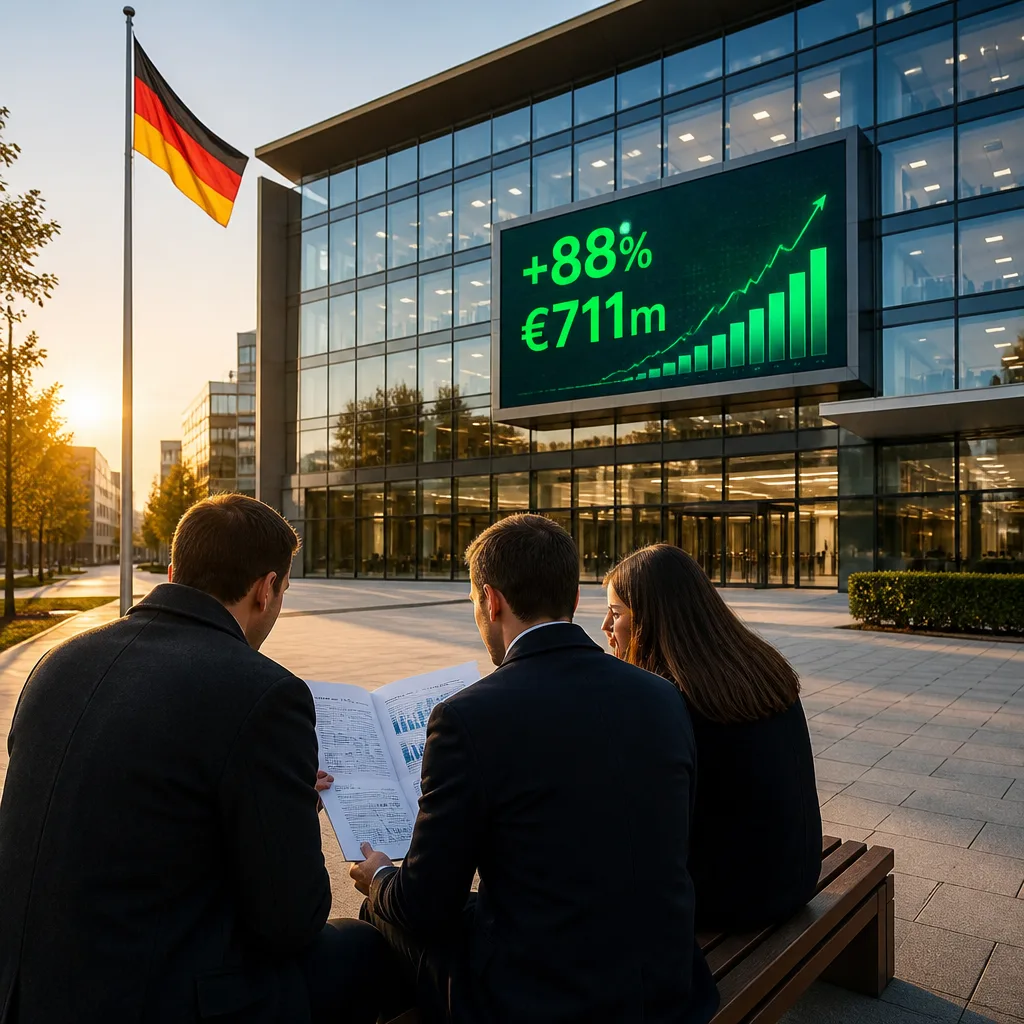
German state-controlled utility Uniper said on Tuesday that its adjusted core profit almost doubled in the first half of 2026, strengthening the government's hand as it moves to dispose of the bulk of its holding in what could be the biggest reshuffle in the country's energy sector since the 2022 crisis.
Stronger gas performance drives earnings rebound
The company reported an 88% increase in first-half adjusted core profit to €711 million and said adjusted net profit more than doubled to €388 million. Management attributed the improvement largely to the absence of the adverse effects on its gas business that had weighed on results a year earlier.
Uniper also raised the lower bound of its full-year 2026 guidance. It now expects adjusted core profit in a range of €1.1 billion to €1.3 billion, up from a previous lower estimate of €1.0 billion, while adjusted net income is anticipated at €500 million to €600 million, compared with the earlier guidance of €350 million to €600 million.
Market and policy implications
The figures matter beyond corporate boardrooms. Berlin is actively preparing a sale of most of its stake in Uniper; improved profitability will affect the valuation discussion and the timing of any transaction. A stronger earnings profile could encourage private buyers and reduce the perceived need for continued state support, while also influencing the terms on which any divestment is executed.
For households and businesses, the results offer only a partial signal. While a recovery in the gas business suggests fewer losses being socialised by the state, it does not automatically translate into lower consumer energy bills. Wholesale price dynamics, regulatory decisions and the pace of investment in low-carbon capacity will remain the decisive factors for prices and jobs in the sector.
- H1 adjusted core profit: €711 million (+88% year-on-year)
- H1 adjusted net profit: €388 million (more than doubled)
- 2026 guidance: adjusted core profit €1.1–1.3 billion; adjusted net income €500–600 million
Numbers at a glance
| Line | H1 2026 | Prior guidance / context |
|---|---|---|
| Adjusted core profit | €711m | Up 88% year-on-year; full-year now seen €1.1–1.3bn (was €1.0–1.3bn) |
| Adjusted net profit | €388m | More than doubled; full-year seen €500–600m (was €350–600m) |
The company’s improved performance follows volatile years for European gas markets and substantial state intervention in 2022. That intervention reshaped ownership and risk profiles across the sector; this latest set of results marks a step back towards normalisation for one of Germany's largest utilities.
What it means for jobs, investment and prices
A firmer earnings base can ease pressure on government balance sheets and may allow Uniper to accelerate investment plans without relying on further state support. That could be positive for jobs in construction and renewable projects over the medium term. But the translation of corporate profit into real-economy benefits is not automatic: capacity decisions, regulatory frameworks and the direction of any buyer after the state sale will shape employment outcomes.
Consumers should watch two things. First, whether any proceeds from asset disposals are used to reduce public exposure rather than to underwrite higher operational costs. Second, how the company and prospective owners manage wholesale exposure: improved trading results may indicate lower short-term volatility, but long-term price trajectories depend on supply, demand and decarbonisation policies.
Investors will be sizing up the refreshed guidance and the state’s timetable for selling its stake. A stronger headline performance helps the government's negotiating position, but it also raises the stakes: bidders will demand clarity on liability, regulatory commitments and the long-term strategy for gas assets in a decarbonising Europe.
The results were reported by Reuters, which noted the euro-US dollar conversion rate used in its reporting: $1 = 0.8666 euros. The improved numbers will now be parsed by officials in Berlin, bankers arranging any sale and by the markets that will bid for what could become one of the most consequential energy privatisations in recent German history.














