Britain's economy recorded a modest expansion in the second quarter of 2026, but economists and government officials say the resilience may be temporary if disruption linked to the Iran war persists. Official Office for National Statistics figures showed gross domestic product rose 0.4% between April and June, with a stronger-than-expected bounce of 0.3% in June.
Short-term boosts mask mounting downside risks
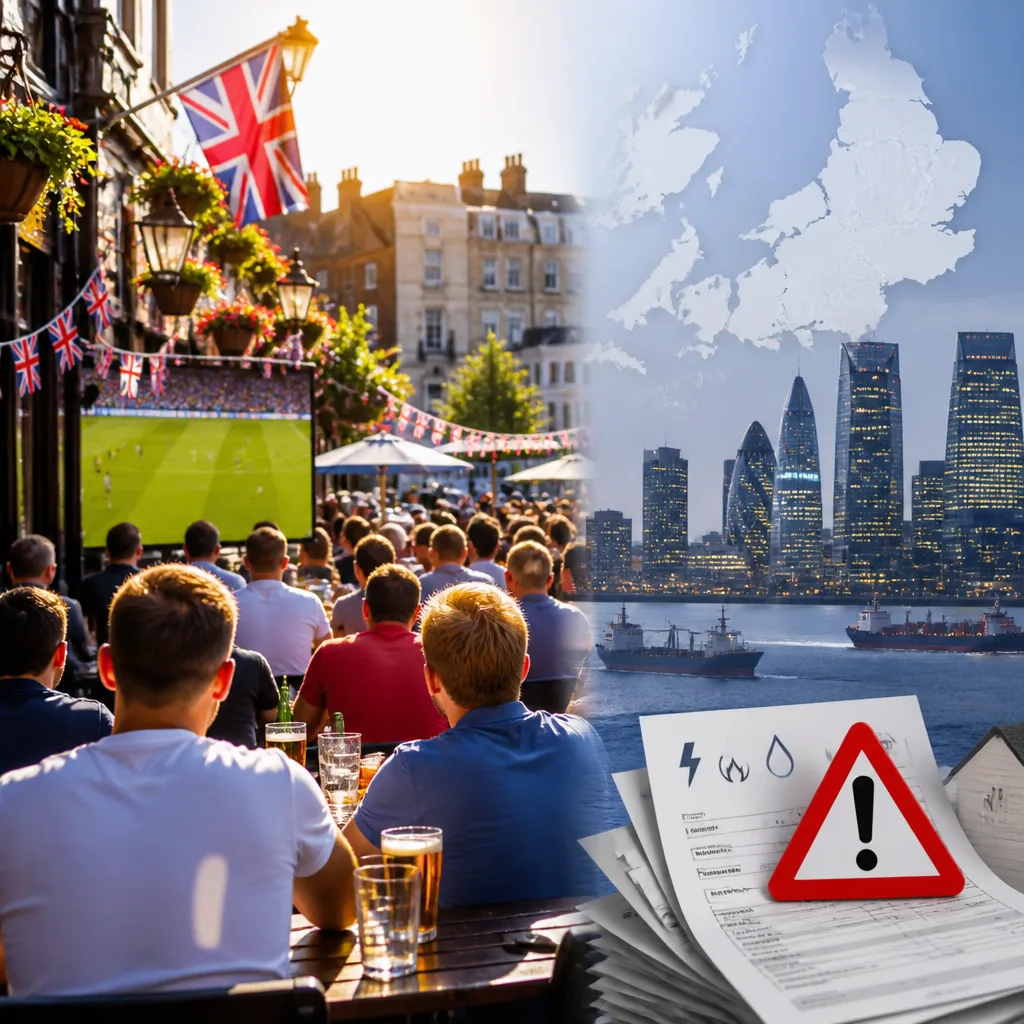
The jump in activity in June reflected consumer-facing sectors benefiting from two distinct stimuli: the FIFA World Cup, which began on 11 June and lifted spending on food and drink, television and advertising, and several days of record hot weather that supported retail, hotels and leisure. The quarterly expansion followed a stronger first quarter, when GDP grew by 0.6%.
“Growth remained ‘relatively robust’ in the quarter,” the ONS said.
But the data also contained weaker patches earlier in the quarter. May was revised to show no growth, down from a preliminary estimate of 0.1%, and April registered a 0.1% contraction. Analysts cautioned that the June uplift will not be sufficient to shield the economy if global energy and shipping costs remain elevated.
Treasury modelling and the Iran conflict
Officials have privately briefed ministers that a prolonged period of disruption to shipping in the Strait of Hormuz — linked to the Iran war — would materially weaken the outlook next year. Internal Treasury modelling, according to government sources, suggests UK GDP growth could be reduced to as little as 0.3% in 2027 if the situation persists through the end of 2026. Ministers were told to expect the economy to barely grow next year under that scenario.
Energy price pressure is a principal channel for the hit to households and firms. Ofgem’s energy price cap rose by 13% at the start of July, and regulators expect another increase in October as wholesale gas and power costs respond to international shocks. The Government has announced a temporary VAT cut on power bills to offset some of the increase, but forecasters warn the measure will not fully neutralise the squeeze on consumer spending power.
That squeeze is already a concern for independent forecasters. Matt Swannell, chief economic adviser to the Item Club, warned that growth will be “very weak” in the second half of the year as higher energy and fuel costs weigh on household budgets and consumption.
Which sectors helped — and which remain vulnerable
Hospitality, leisure and parts of manufacturing posted the clearest gains in June, benefiting from both event-driven and weather-related demand. Retailers and amusement and recreation businesses also saw higher activity.
- Hospitality and food and drink firms benefited from World Cup-related spending.
- Retail and some manufacturers were supported by prolonged hot weather.
- Higher energy and fuel costs threaten to erode household consumption later in the year.
| Period | Quarter-on-quarter change |
|---|---|
| Jan–Mar 2026 (Q1) | +0.6% |
| Apr–Jun 2026 (Q2) | +0.4% |
| June 2026 (monthly) | +0.3% |
| May 2026 (monthly, revised) | 0.0% |
| April 2026 (monthly) | -0.1% |
While headline growth held up in the second quarter, the combination of external supply risks, higher energy costs and the prospect of further Ofgem cap rises presents a clear downside risk to activity later in 2026 and into 2027. If the Iran-related disruption leads to sustained higher wholesale prices, the Treasury’s internal scenarios suggest a marked slowdown that would complicate fiscal and monetary planning.
For households, the immediate question is how much of the July and potential October price increases will be absorbed by government measures such as the VAT cut on energy bills, and how much will pass through to consumer spending. For policymakers, the challenge will be balancing support for struggling households without fuelling inflationary pressures that might prompt further interest-rate responses from the Bank of England.
In short, the latest GDP figures provide a welcome short-term reprieve, but the prospect of a sharp pullback in the final six months of 2026 has shifted the debate from whether the UK can grow to how policymakers should act if growth stalls.