
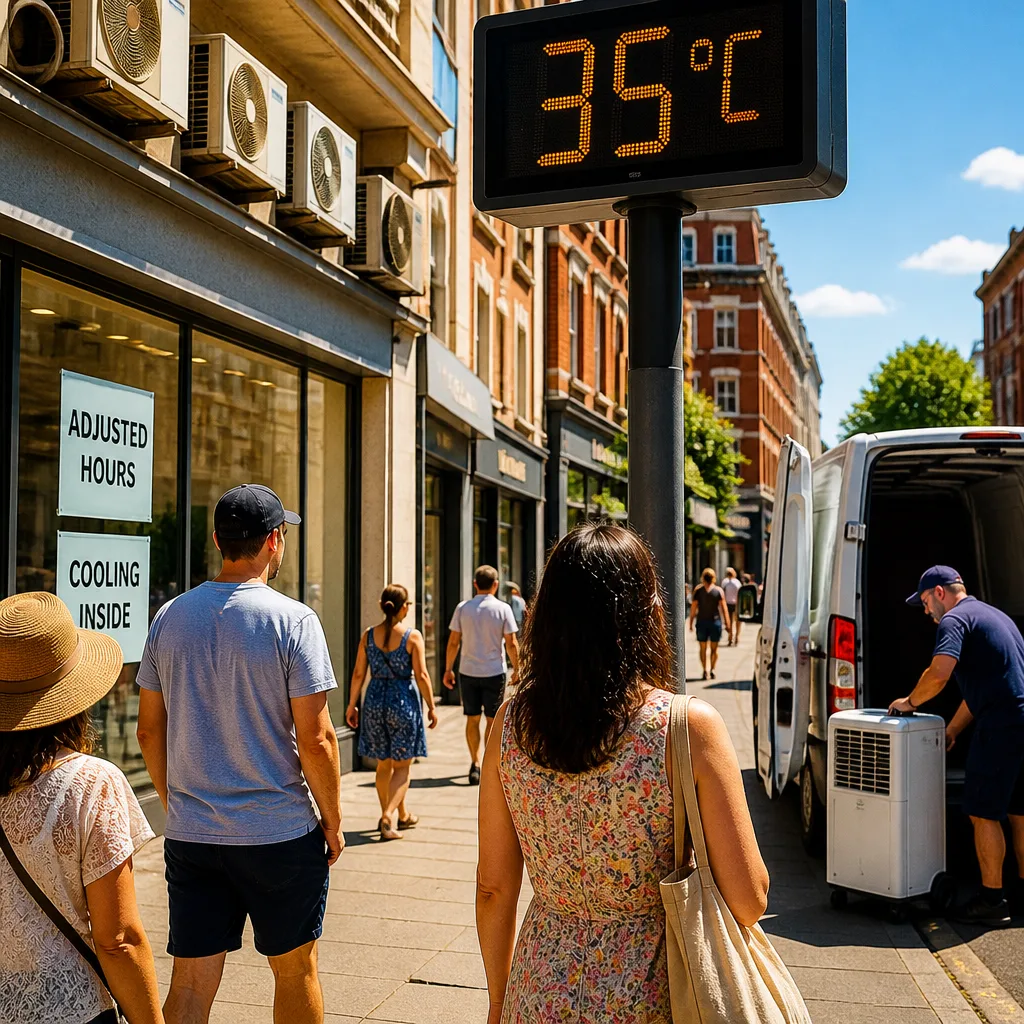
The intense heat waves that swept the United Kingdom this summer have prompted firms to change investment plans and consumers to rethink everyday behaviour, a Barclays survey published on Thursday shows. The findings underline how rising temperatures are now a commercial and operational issue as much as an environmental one.
Businesses moving money towards adaptation
Barclays reports that around 60% of companies are already investing in, or intend to invest in, technologies to adapt to extreme heat. That shift is visible in corporate clients’ accounts: Barclays observed a 4.3% rise in cash flowing into accounts of firms specialising in air conditioning.
“Extreme heat is becoming ‘a more regular operational challenge,’” said Jason Constable, head of real estate at Barclays U.K. Corporate Bank. “That presents a clear opportunity for heating and cooling, retrofitting, facilities management, and wider sustainability providers.”
The survey signals an acceleration of spending on cooling, retrofitting and facilities management. For companies this can mean higher near-term capital outlays to equip premises and worksites for higher temperatures. For households the effect will be seen in rising demand — and potentially higher prices — for cooling equipment and energy as merchants and suppliers respond.
Workplaces, schedules and staff welfare altered
Employers are already modifying how and when work gets done. The Barclays data show:
- 28% of businesses have introduced employee well‑being measures such as additional breaks;
- 23% now allow flexible or remote working to cope with heat;
- 21% have adjusted working hours to avoid the hottest parts of the day.
These changes have a direct bearing on productivity and labour costs. Extra breaks, altered shift patterns and more remote working may protect staff health but can also reduce billable hours in sectors where time on site is essential — notably construction and agriculture, which Barclays and other analyses identify as among the hardest hit.
Consumers shop and commute less in hotter weather
On the demand side, the survey found clear temperature thresholds for routine decisions: shoppers said they found temperatures above 25.1°C too hot to visit shops, while commuters reported they did not want to travel when it exceeded 24.2°C. These behavioural cut-offs matter for retail footfall, public transport revenue and city centre businesses that rely on daily commuters.
Reduced footfall and commuting as temperatures rise can translate into lower weekly takings for retailers and restaurants, and may accelerate the shift of spending online — with knock-on effects for high-street employment and property values.
Infrastructure strains and long-term risk
The survey comes after a summer that saw five heat waves and temperatures topping 38°C. Barclays highlights that the heat exposed weaknesses in critical infrastructure: schools, hospitals and public transport struggled under the strain. Scientists warn that such conditions will become more frequent, with the 2050s potentially seeing heat waves far more regular and temperatures that could reach 45°C in extreme scenarios.
| Measure | Share of firms |
|---|---|
| Investing in heat-adaptation tech | 60% |
| Employee well-being measures | 28% |
| Flexible/remote working | 23% |
| Adjusted working hours | 21% |
That combination of structural investment, higher consumer demand for cooling and recurring operational changes is likely to reshape costs for businesses and households alike. Firms in affected sectors face decisions about whether to absorb additional expense, pass it on to customers as higher prices, or change business models — all of which will influence real wages and employment dynamics.
For policymakers, the Barclays findings add to the evidence that climate-driven events are already affecting the economy in measurable ways. If heat becomes a recurring driver of working patterns and consumer spending, it will increase pressure on energy systems and urban planning, and may require targeted support to the most vulnerable industries and workers who cannot shift hours or work remotely.
While some companies stand to benefit — air‑conditioning installers, retrofitters and facilities managers among them — the net effect for the wider economy will depend on how quickly infrastructure is upgraded, how costs are distributed, and whether public and private investment keeps pace with changing climatic realities.














