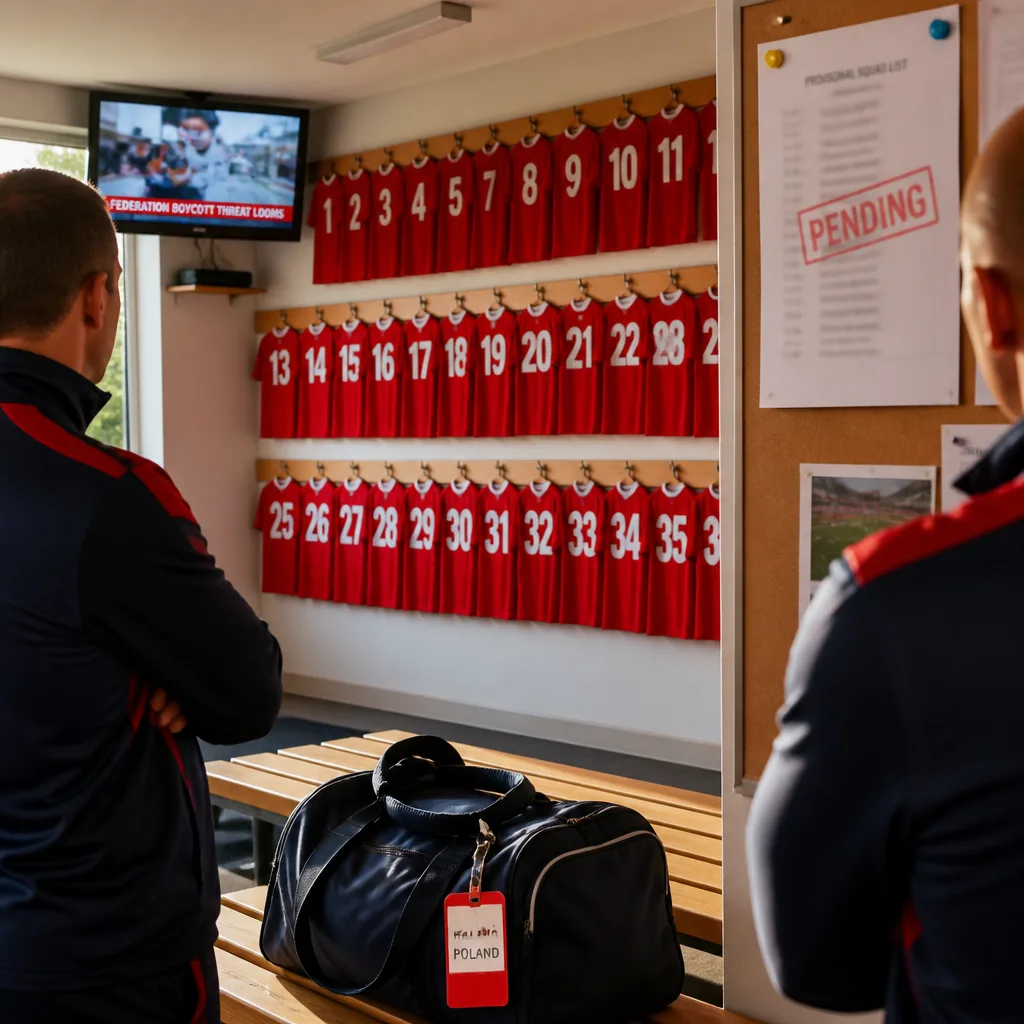
England’s place at next month’s Under-20 World Cup is uncertain after UEFA warned its member associations it could boycott FIFA tournaments following a dispute over governance and proposals to allow external investment in the World Cup.
Political row overshadows youth tournament
The Football Association is preparing for the tournament in Poland on the assumption that England will participate, but the final decision may rest on whether UEFA moves ahead with a boycott. The issue stems from a stand-off between UEFA and FIFA over a proposal by FIFA president Gianni Infantino to permit private investment in the World Cup.
UEFA told its members last month that all European teams would boycott FIFA competitions until the proposal was “abandoned in its entirety” and until there were “binding assurances” that FIFA would never again open its governance or competitions to private ownership. While the specific investment proposal was subsequently withdrawn, UEFA says it has not received the guarantees it demands and has therefore not ruled out further action.
“abandoned in its entirety”
The dispute has immediate consequences for young players and national team coaches. England manager Lydia Bedford has named a provisional squad of 36 players and must cut it to 21, but sources close to the camp say the FA expects to be told next week whether the selection process is still relevant.
Inside the England camp, the situation is being treated cautiously. Players such as Layla Drury, the 17‑year‑old Manchester United forward who scored in England’s recent 2-0 win over Portugal, have been allowed to continue preparing and earning selection on merit. The FA has briefed players on the political background, but team discussions have not focused heavily on the boycott threat.
What is at stake
The Under-20 World Cup is widely regarded within football as a key development tournament, offering young players international exposure at a global level. UEFA’s suggested boycott could affect several European teams that have qualified and would deprive squads and players of a valuable competitive platform.
- Players: Potential loss of international experience and visibility.
- National associations: Disruption to squad planning and selection.
- Governance: A test of UEFA’s leverage over FIFA and the broader question of private investment in football.
| Key moments |
|---|
| UEFA warned members it could boycott FIFA competitions over private investment proposals |
| FIFA withdrew the external investment proposal |
| UEFA says it has not received binding assurances and has not ruled out a boycott |
UEFA has framed its stance as a defence of the sport’s governance, saying it has lost confidence in Infantino’s leadership of FIFA. For its part, FIFA removed the contested proposal, yet UEFA remains unconvinced that similar proposals will not re-emerge without strict, legally binding guarantees.
That combination of unresolved mistrust and high-level political posturing has left a handful of teenagers — who are otherwise focused on securing a place in the final squad — caught in the crossfire. At a recent match in Lisbon where England beat Portugal 2-0, observers noted the players were trying to impress while the administrative dispute hovered over the camp.
For England’s coaching staff, the immediate practical questions are straightforward: whether to continue with normal preparation, when to reduce the squad and how to manage the disappointment of players should UEFA opt to withdraw from the tournament. The FA has told players it will continue to prepare as if they will go, but is awaiting clarity from UEFA.
The dispute raises wider questions for football supporters and administrators. If European federations do boycott FIFA competitions, the sporting calendar and future commercial arrangements could be unsettled. For the young players hoping to showcase their talents on a global stage next month, the prospect of missing out is a direct and personal consequence of a governance fight at the top of the sport.
At present, the outcome remains uncertain. National associations, players and staff must plan under a cloud of political disagreement, with the final decision likely to hinge on whether UEFA receives the legally binding assurances it seeks from FIFA.