
UAE presents structured approach to AI in criminal justice at UN congress
The UAE Public Prosecution used the opening day of the 15th United Nations Congress on Crime Prevention and Criminal Justice in Abu Dhabi to set out an institutional framework designed to govern the use of artificial intelligence in judicial work.
The congress, running from 26 September to 1 October at the Abu Dhabi National Exhibition Centre, brings together governments, international organisations, academics and civil society to discuss crime prevention, criminal justice and the rule of law under the theme: “Accelerating crime prevention, criminal justice and the rule of law: protecting people and planet and achieving the 2030 Agenda for Sustainable Development in the digital age”.
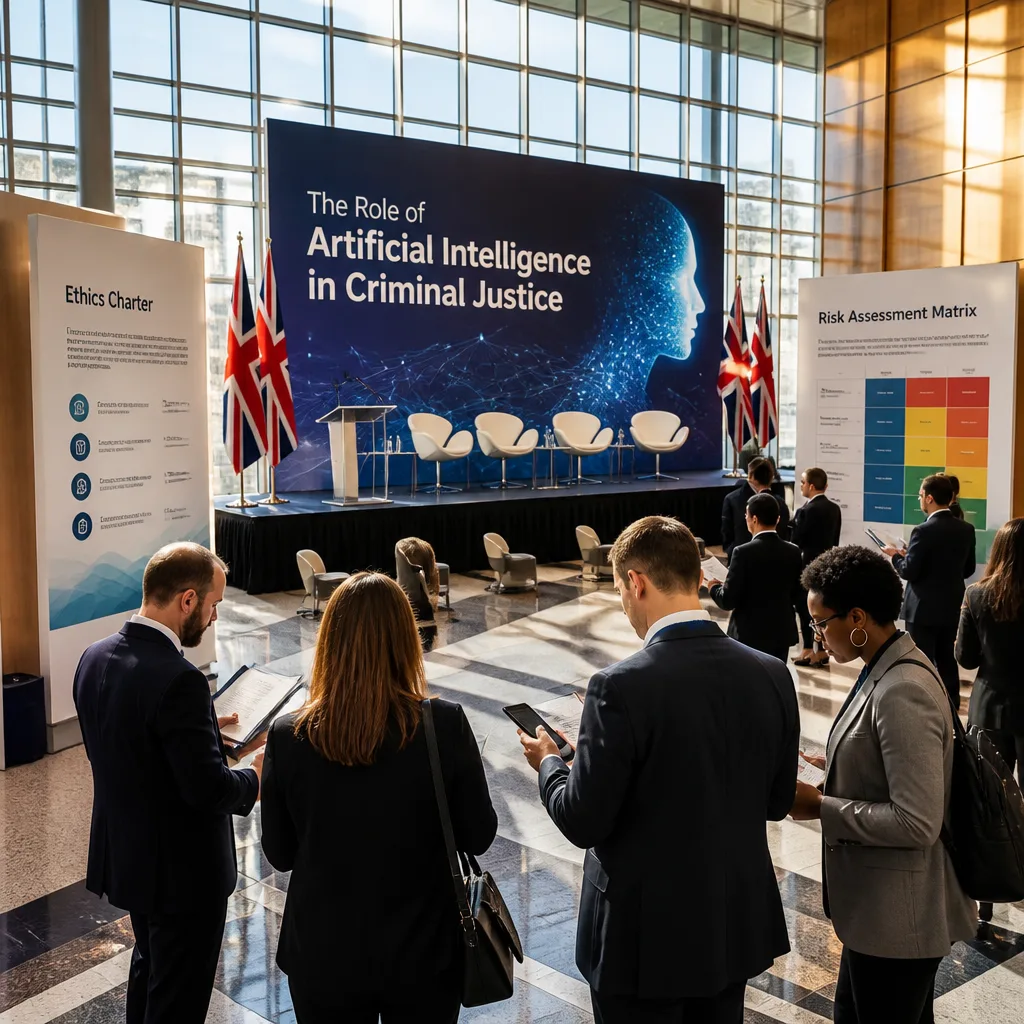
On the first day, a session entitled “Artificial Intelligence in Criminal Justice Systems” included a presentation from Chancellor Salem Ali Al Zaabi, the Chief Prosecutor and Head of Public Prosecution at the Office of the UAE Attorney General, who described his office’s move from ad hoc technological use to an integrated governance model.
“The framework is founded on legal legitimacy, institutional accountability and human oversight, with the aim of safeguarding the guarantees of justice and strengthening confidence in judicial outcomes.”
In statements reported by the Emirates News Agency (WAM), Al Zaabi said the framework was intended to ensure AI tools remain subject to the law and to human oversight and to reflect the particular demands of judicial work.
Components of the UAE framework
The Public Prosecution said the governance model comprises several specific elements designed to regulate the deployment and oversight of AI in prosecutorial and judicial processes.
- Dedicated strategy for AI application in judicial workflows.
- Ethics charter to set principled boundaries for technology use.
- Policy governing AI use within institutional procedures.
- Risk assessment matrix to identify and manage technological and legal hazards.
Al Zaabi explained that these measures aim not simply to accelerate administrative processes but to build a governance architecture that preserves core legal safeguards.
| Framework element | Purpose |
|---|---|
| Dedicated strategy | Define objectives and boundaries for AI deployment |
| Ethics charter | Establish normative principles for responsible use |
| Policy on AI use | Operational rules and procedures for institutions |
| Risk assessment matrix | Evaluate and mitigate legal and technical risks |
Implications for international cooperation and justice systems
The UAE’s presentation feeds into a wider international debate at the congress on how to harness technology while protecting procedural guarantees, victims’ rights and the rule of law. Speakers at the event are addressing emerging forms of crime, transnational judicial cooperation and fraud linked to the digital sphere, areas where AI is already affecting investigations and prosecutions.
Representatives attending included the UAE Attorney‑General, Dr Hamad Saif Al Shamsi, alongside international delegates from governments and organisations. The Public Prosecution emphasised that its approach is built on three pillars — legal legitimacy, institutional accountability and human oversight — reflecting concerns routinely raised by legal scholars and human rights bodies about algorithmic decision‑making in criminal justice.
While the UAE described the framework as a move beyond using technology merely to speed workflows, the details provided at the session will now form part of a broader conversation among delegates about standards, transparency and mutual legal assistance in an era where digital tools and data cross jurisdictions.
How other states and international bodies respond to proposals for institutional AI governance, and whether they adopt similar instruments such as ethics charters and risk matrices, will be watched closely by practitioners and rights advocates concerned that technological innovation does not outpace legal protections.
The congress continues until 1 October, with panels and workshops scheduled on a range of topics including access to justice, responsible use of technology and international judicial cooperation.














