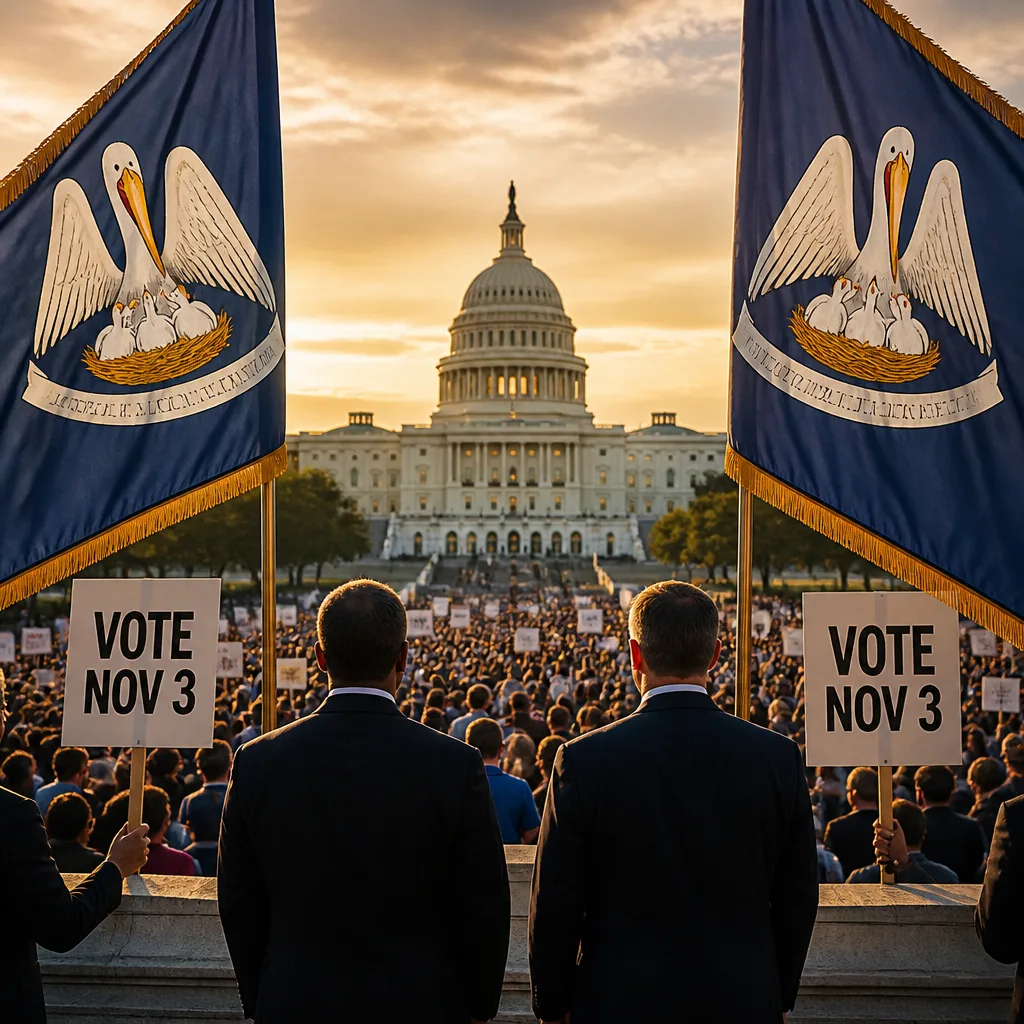
WASHINGTON — As voters prepare to head to the polls on 3 November, the fate of the US House of Representatives rests on razor-thin arithmetic and the influence of two congressmen from Louisiana.
National issues such as the economy, foreign policy and climate change have dominated the campaign cycle. Yet, as Tip O’Neill famously observed, local concerns remain decisive for many voters. Two Louisiana members of the House illustrate that overlap between district politics and national leadership.
Leadership and local roots
After an internal upheaval in 2023 that culminated in the removal of Kevin McCarthy as Speaker, a little-known Republican from Benton, Louisiana, emerged as the party’s choice to lead the chamber. Mike Johnson became Speaker following that contest. He was first elected to Congress in 2016 and is a graduate of Louisiana State University law school, according to his biography. His rise underlined how sudden shifts in House politics can elevate relatively unfamiliar figures to national prominence.
Also from Louisiana is Steve Scalise, long established in leadership circles and once a candidate for the speakership. Scalise represents a different profile: a recognised figure in congressional management and legislative strategy. He has previously served as majority leader and survived serious injury after being among the members shot at a congressional baseball practice in 2017.
“All politics is local.”
The quote from the former Speaker Tip O’Neill was used to emphasise that, despite headline-grabbing national debates, voters often decide on matters that affect everyday life — roads, taxes, health care, social security and crime. Both Johnson and Scalise carry those local expectations while shouldering national responsibilities.
House arithmetic and what is at stake
Control of the House depends on reaching a bare majority. There are 435 seats in total; a party needs 218 to command a majority. At present, Republicans hold exactly 218 seats and Democrats 213, with 4 vacancies and 1 Independent member noted in the current tally. Those vacancies and any shifts among undecided districts could alter control.
| Party | Seats (current) |
|---|---|
| Republicans | 218 |
| Democrats | 213 |
| Vacancies | 4 |
| Independent | 1 |
Given the close margin, a small number of contested seats will determine which party holds the speakership and sets the House agenda for the next Congress. That makes the contests in a handful of districts — and the performance of national leaders in campaigning — particularly consequential.
Local politics with national consequences
The Louisiana examples underline a recurrent feature of American politics: members who are rooted in their districts can rapidly acquire national prominence when internal party dynamics shift. Johnson’s selection after the 2023 intra-party fight that removed McCarthy transformed a regional figure into the presiding officer of the House. Scalise’s record and survival of the 2017 shooting have also shaped his standing inside the Republican conference.
- Local issues such as infrastructure and health care remain central to voters’ decisions, even amid national debates.
- Internal party contests can produce unexpected leaders with outsized influence on national policy.
- Small numbers of seats — and a handful of vacancies — will decide which party controls the House after 3 November.
As election day approaches, attention will focus on a limited number of battleground districts and on how senior figures, including those from Louisiana, deploy their influence to secure a congressional majority. The interplay of local voter concerns and the mechanics of House leadership will determine who sets the legislative priorities in the next session.