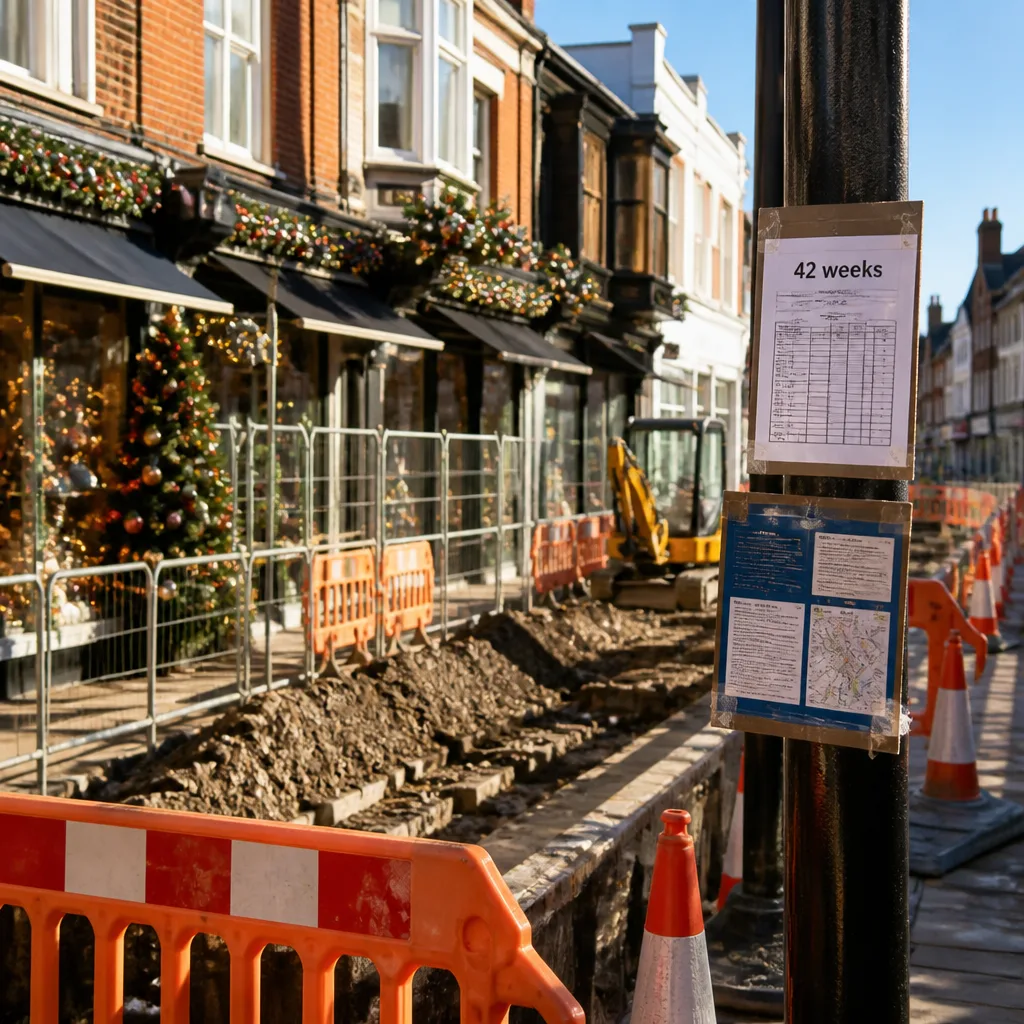
Independent businesses in Rawtenstall are warning that a prolonged programme of roadworks planned through the town centre — described by traders as lasting about 42 weeks — threatens to wipe out crucial Christmas trading and could force some firms to close.
Traders say timing will damage takings, jobs and confidence
Owners of pubs, bars, gift shops and other small firms in the town’s Bank Street area say the disruption will hit footfall during what should be their busiest months. They told local reporters they had sought assurances from councillors and MPs, but say the contractor’s schedule is now fixed and offers no flexibility for the retail peak.
"Well, I was horrified to discover, at the final 'meeting' the other day, where no feedback could be implemented as work schedule was finalised, that the 'phase' that would impact me greatly - as in literally ripping up the access and footpath outside our premises - was scheduled and non-negotiable for an initial six week period from November to January. The whole of Christmas trade impacted. This is devastating and could close us for good."
The owner quoted above, who runs a specialist beer and wine shop which opened last year, said traders had been "banding together" to raise concerns but felt let down by the lack of meaningful adjustment. While several business owners accept the long‑term improvements planned — wider pavements, new parking and loading bays and a one‑way system — they question why the most disruptive work must start in winter.
What is at stake for wages and local employment
Small retail and hospitality businesses typically rely on the autumn and winter trading period to generate a disproportionate share of annual revenue. Lost takings during the Christmas months can put pressure on cashflow, making firms less able to meet wage bills, rent and supplier invoices. Traders warned that a prolonged fall in turnover could lead to layoffs or closures, with local employees and casual seasonal staff particularly vulnerable.
- Duration: Traders cite approximately 42 weeks of roadworks affecting Bank Street.
- Disruptive phase: A non‑negotiable, initial six‑week period from November to January that will directly affect access and pavements outside premises.
- Planned upgrades: Wider pavements, new parking and loading bays, and a one‑way traffic system.
Traders say the proposed physical improvements could attract customers in the longer term, but argue that the sequencing and timing of works risks destroying businesses before those benefits materialise.
| Aspect | Traders' concern |
|---|---|
| Immediate impact | Loss of Christmas footfall; reduced takings |
| Employment | Risk to jobs and seasonal hiring |
| Longer term | Potential improvement to street but delayed benefits |
Business reaction and local engagement
One trader said she and others had been reassured initially that Christmas trade would be protected, but that the final schedule removed scope for changes. They report meetings where feedback could not be incorporated because the contractor’s timetable had been finalised. That has left businesses feeling they have little recourse and no planned support through the disruption.
For small firms, the difference between surviving and failing often comes down to a few weeks of strong sales. The prospect of a lengthened downturn raises questions about what mitigating measures local authorities and contractors can offer — for example, targeted marketing, temporary loading arrangements, or compensation schemes — and whether those possibilities have been properly explored in Rawtenstall.
As work begins, the immediate challenge for traders will be to communicate with customers and co‑ordinate with the council to minimise avoidable harm to takings and jobs. The long‑term, physical upgrades may benefit the town, but for now the timetable leaves an acute and immediate cost for independent businesses heading into the most important trading period of the year.