
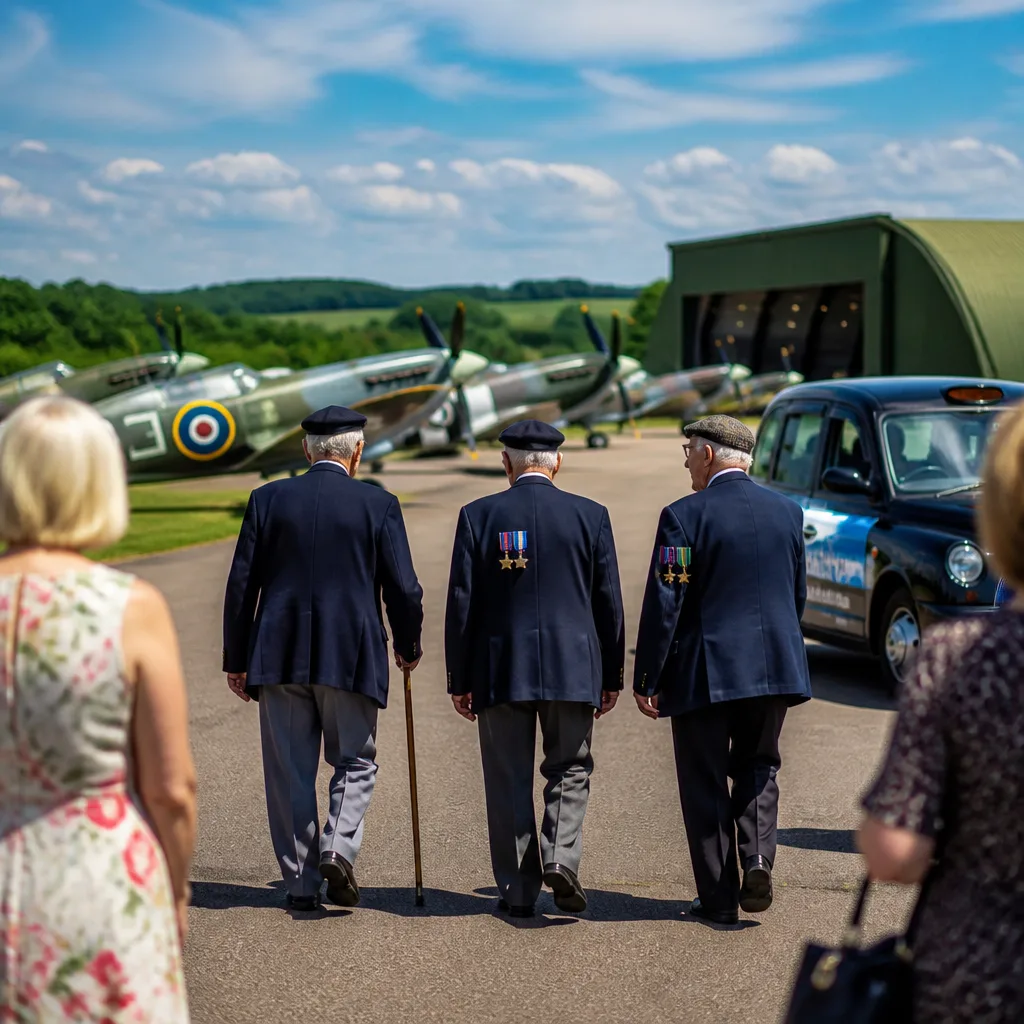
Three Second World War veterans with a combined age of 300 years boarded Spitfire aircraft and took to the skies above Kent on Thursday, in flights arranged by the Taxi Charity For Military Veterans at Biggin Hill.
Veterans reunited with family and comrades
Family members and fellow veterans watched as the three men — Paul Terry, 101 of the King’s Royal Rifle Corps; Alfred Cooley, 100 of the Highland Light Infantry; and Ivan Staines, 99 of the South Staffordshire Regiment — prepared to board the historic fighters. Photographs captured Mr Staines wearing his medals and playing with his great‑grandson, Alfie Rose, aged five, in the hangar.
The flights were paid for by the charity run by London black cab drivers, which organises trips and activities for those who served in the armed forces. The event combined the spectacle of vintage aircraft with moments of personal closure and celebration for men whose wartime service spanned Europe and the Middle East.
Service histories underlined by the flights
The three veterans served in different theatres and campaigns during the war. Details of their wartime records provided by organisers include:
- Ivan Staines, 99 — served in the Home Guard from 1942 to 1944; called up aged 18 for service in mainland Europe, transferred to the South Staffordshire Regiment and later deployed to Palestine.
- Alfred Cooley, 100 — signed up to the Highland Light Infantry’s 5th Battalion the day before D‑Day; after eight weeks’ training aged 18, he landed in liberated France and advanced through Belgium and the Netherlands towards the German border.
- Paul Terry, 101 — of the King’s Royal Rifle Corps; one of three brothers who all survived the war, he landed in Normandy the day after D‑Day and took part in campaigns across France, Belgium and Holland, including Operation Market Garden to secure Nijmegen Bridge and the fighting towards Arnhem.
Those details underline the range of experiences among Britain’s surviving wartime generation — from local defence with the Home Guard to frontline operations on continental Europe and deployment to Palestine.
“Today is the day my wonderful dad gets to fulfil his wish to fly in a Spitfire courtesy of the Taxi Charity For Military Veterans,”
The comment came in a statement from Ann Crossley, the daughter of Mr Cooley, passed on through the event organisers. She added that her father had made many new friends through the charity and was "loving every minute of it".
Commemoration, welfare and public memory
These flights operate at the intersection of commemoration and welfare. For veterans, an opportunity to fly in a Spitfire can be a deeply symbolic experience — a link to the machinery and moment of a conflict that shaped a lifetime. For charities and families, such events are also a way to affirm ongoing support for older veterans and to create visible public moments of remembrance.
Photographs from the event show veterans in conversation and sharing quiet moments ahead of departure — scenes that sit alongside the more dramatic imagery of historic fighters soaring over the Kent countryside. The Taxi Charity For Military Veterans, which funds such activities, has previously been active in organising outings for former service personnel, often using drivers and volunteers to facilitate access and companionship.
| Veteran | Age | Regiment / Unit |
|---|---|---|
| Paul Terry | 101 | King’s Royal Rifle Corps |
| Alfred Cooley | 100 | Highland Light Infantry, 5th Battalion |
| Ivan Staines | 99 | South Staffordshire Regiment (also Home Guard) |
While these flights provide individual joy and public interest, they also serve as a reminder of the dwindling number of living veterans from the Second World War and the importance of recording and honouring their experiences before they are lost to time.
Organisers said the day combined celebration and gratitude, with families expressing thanks for the chance to mark service in a memorable way. The flights from Biggin Hill, a site with its own aviation heritage, drew attention not only to the veterans' personal stories but to broader patterns of remembrance and care for those who served.
The event offered a rare, tangible link to an era whose veterans are increasingly few — a short but poignant flight that connected men in their centenarian years with the machines and memories of their youth.









