
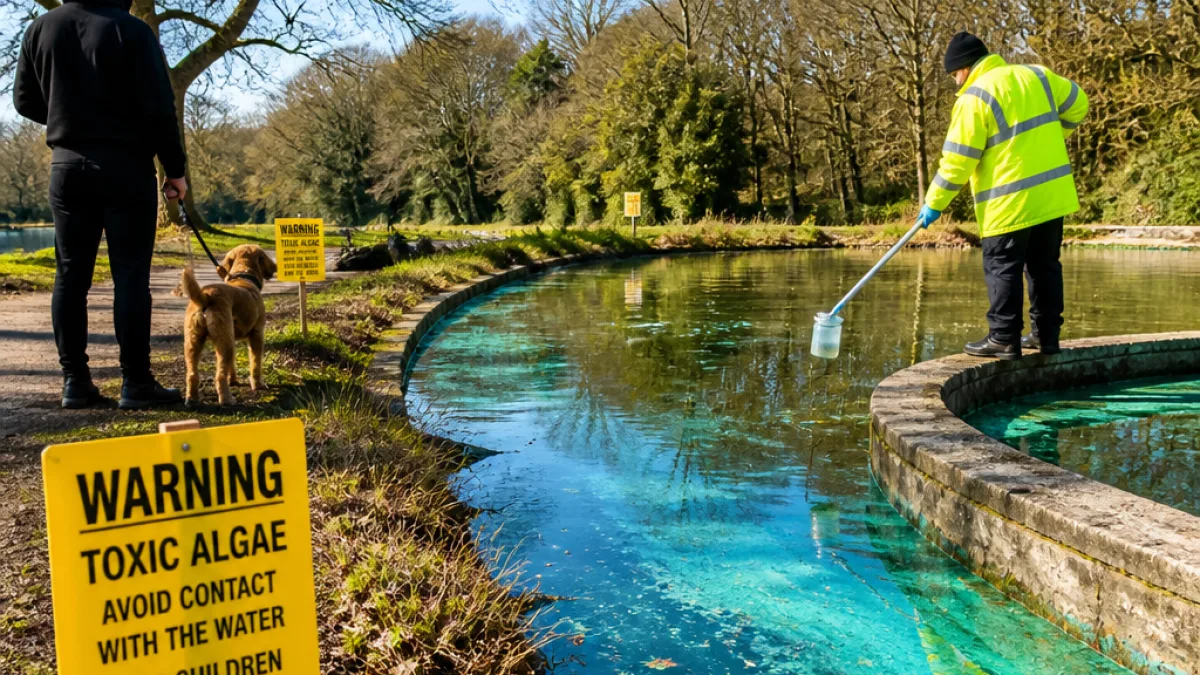
Public warned to avoid contact with water at Apley Woods
Telford & Wrekin Council has issued a warning to residents and visitors after a blue‑green algal bloom was identified in two pools at Apley Woods. The authority said testing will take place to establish whether the bloom is producing harmful toxins and placed signs at the site to alert the public.
The guidance specifically covers the duck pond and the historic bathing pool at Apley Woods. Council officers said the recent hot weather has encouraged the growth of algae in these waters, a phenomenon they described as a natural, seasonal occurrence in some ponds and still waters.
The council emphasised that, while many algal blooms are not dangerous, some can produce toxins that pose health risks to people and animals if swallowed, touched or inhaled at high levels. As a precautionary measure it is advising people not to allow pets into the water and to avoid any direct contact until testing is complete and further advice is issued.
"The recent hot weather has encouraged an algal bloom at Apley Woods Duck Pond and Apley Woods historic bathing pool. As some algae can be toxic to humans and animals if touched, swallowed or inhaled in high levels, we are advising people not to let pets in the water and to avoid contact with the water," a council spokesman said.
Signs have already been erected at the two locations and the council has reported the bloom to the Environment Agency, which will assist with monitoring and laboratory analysis. The speed at which results are returned can vary, but residents should expect to see follow‑up information from the council once tests confirm whether toxins are present.
- Sites affected: Apley Woods duck pond; Apley Woods historic bathing pool.
- Immediate advice: Do not let pets enter the water; avoid touching or swallowing water; keep children away from the affected pools.
- Action taken: Signs placed; incident reported to the Environment Agency; samples to be tested.
Blue‑green algae are actually cyanobacteria, microscopic organisms that can multiply rapidly under warm, calm conditions. They can form visible scums or discoloured patches on the water surface. Symptoms in animals exposed to toxic blooms can include sickness and, in severe cases, fatality; in humans, exposure can cause skin irritation, gastrointestinal problems or respiratory symptoms, though such outcomes are uncommon and usually associated with significant exposure.
Local dog owners are particularly vulnerable because dogs are inclined to swim, drink from, or lick algae‑contaminated water. Residents who walk their pets through Apley Woods are urged to keep dogs on leads near the water and to rinse and dry animals thoroughly if they do make contact so that any residue is removed.
| Location | Advice |
|---|---|
| Apley Woods duck pond | Do not allow pets in water; avoid contact; follow signage |
| Apley Woods historic bathing pool | Do not allow pets in water; avoid contact; follow signage |
Health and environmental officials typically manage such incidents through monitoring and, where necessary, issuing public‑safety notices or temporary closures. In many cases, blooms subside naturally as temperatures fall and conditions change; in others, longer‑term management may be required if blooms recur frequently.
Telford & Wrekin residents who notice dogs or wildlife in distress after contact with the water are advised to contact the council and seek veterinary help for affected animals. The council will update the community once test results are available and any further controls or restrictions are decided.














