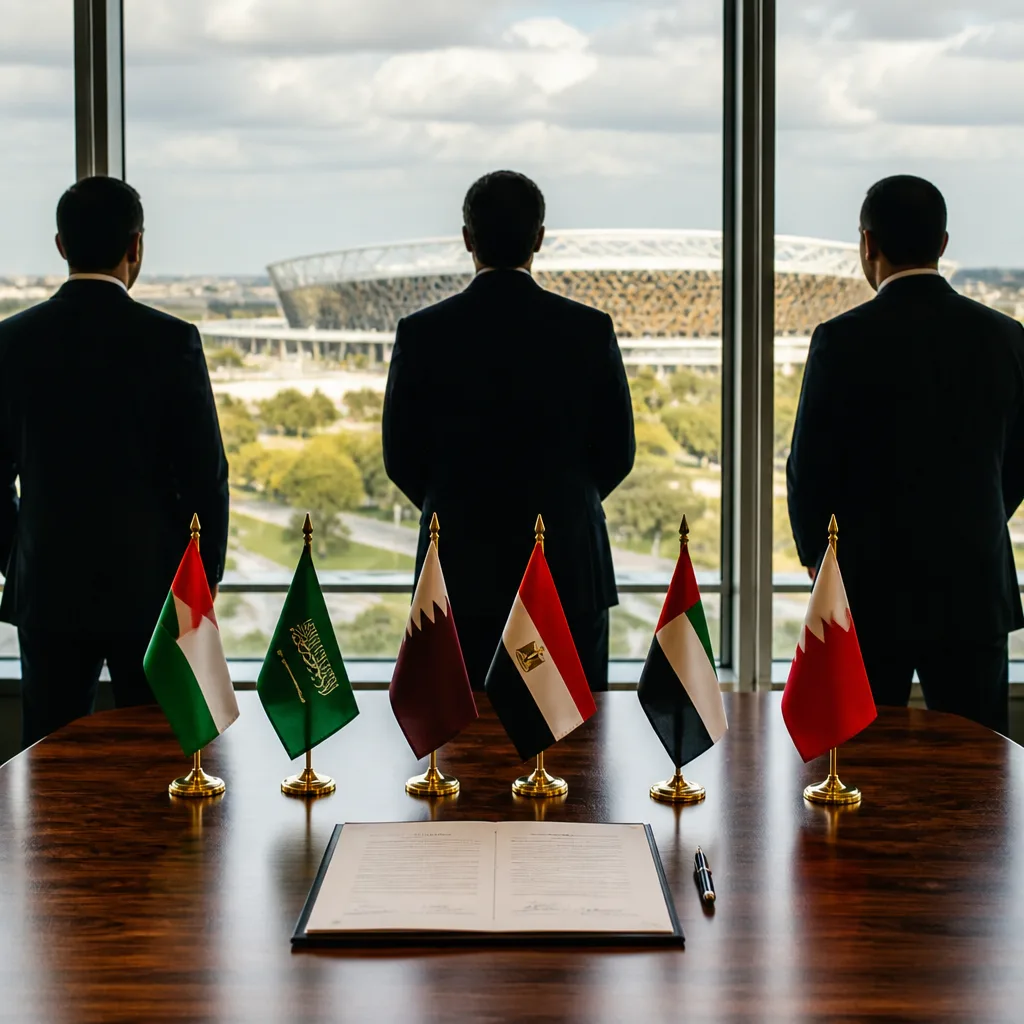
Six Arab national football federations have issued a joint statement expressing support for FIFA president Gianni Infantino, days after his controversial proposal to sell a portion of the World Cup’s commercial rights was abandoned and drew sharp criticism from several global confederations.
Backing from the Arab world
The statement, signed by the presidents of the federations of Qatar, Lebanon, Morocco, Sudan, Egypt and Mauritania, praised Infantino’s efforts to develop the game and affirmed confidence in his leadership. The move adds to a growing array of endorsements for the Swiss administrator at a moment when his presidency has come under unprecedented pressure.
“Recognising the important role of Arab football in bringing people together and strengthening cooperation among football associations across the Arab world, we … express our full support for Mr Gianni Infantino, president of FIFA, and reaffirm our confidence in his leadership and continued commitment to the development of football worldwide.”
The statement also noted appreciation for what the signatories described as Infantino’s work to expand opportunities across regions and to strengthen football’s role in community building.
Context: the aborted investment plan and institutional opposition
Infantino had proposed carving out the commercial rights to the World Cup and selling a 20% stake to private investors, a plan reportedly expected to raise about $4.2bn. That proposal was later shelved amid intense scrutiny and pushback.
Opposition has emerged most visibly from three continental confederations — UEFA, the Asian Football Confederation (AFC) and CONCACAF — which have publicly called on Infantino to resign over the initiative. The controversy has prompted a broader governance debate inside FIFA and raised questions about how the sport’s top body should balance commercial deals with the interests and oversight of member associations.
What the Arab federation statement does and does not say
The joint text framed the signatories’ support in terms of football development and regional cooperation rather than addressing the disputed commercial proposal in detail. It emphasised continued cooperation with FIFA and a desire to work towards a “stronger and more prosperous future for world football.”
Four of the six federations that signed the statement are also members of the FIFA Council, the organisation’s main decision-making body. The statement did not identify those four by name.
- Signatories: Qatar, Lebanon, Morocco, Sudan, Egypt, Mauritania.
- High-profile mentions: Qatar (host of the 2022 World Cup) and Morocco (co-host of the 2030 World Cup) were among the signatories.
- Contested proposal: The shelved plan involved selling 20% of World Cup commercial rights to private investors.
| Federation | Notable context |
|---|---|
| Qatar | 2022 World Cup host |
| Morocco | 2030 World Cup co-host |
| Lebanon | Signatory |
| Sudan | Signatory |
| Egypt | Signatory |
| Mauritania | Signatory |
The intervention from the Arab federations is likely to complicate the optics of the dispute. Supporters argue that Infantino’s commercial initiatives could increase investment in the game and widen participation; critics argue that such deals risk concentrating power and diminishing transparency and accountability within football’s governance structures.
How the balance of power within FIFA evolves ahead of next year’s presidential election remains uncertain. Infantino is seeking re-election, and the backing of regional blocs and council members can be decisive in internal votes. At the same time, public rebukes from major confederations have heightened scrutiny of FIFA’s approach to governance, commercialisation and the distribution of revenues.
For now, the joint statement from the six Arab federations is the latest development in a fast-moving story that touches on sport, geopolitics and the governance of a global institution with enormous commercial and cultural influence.