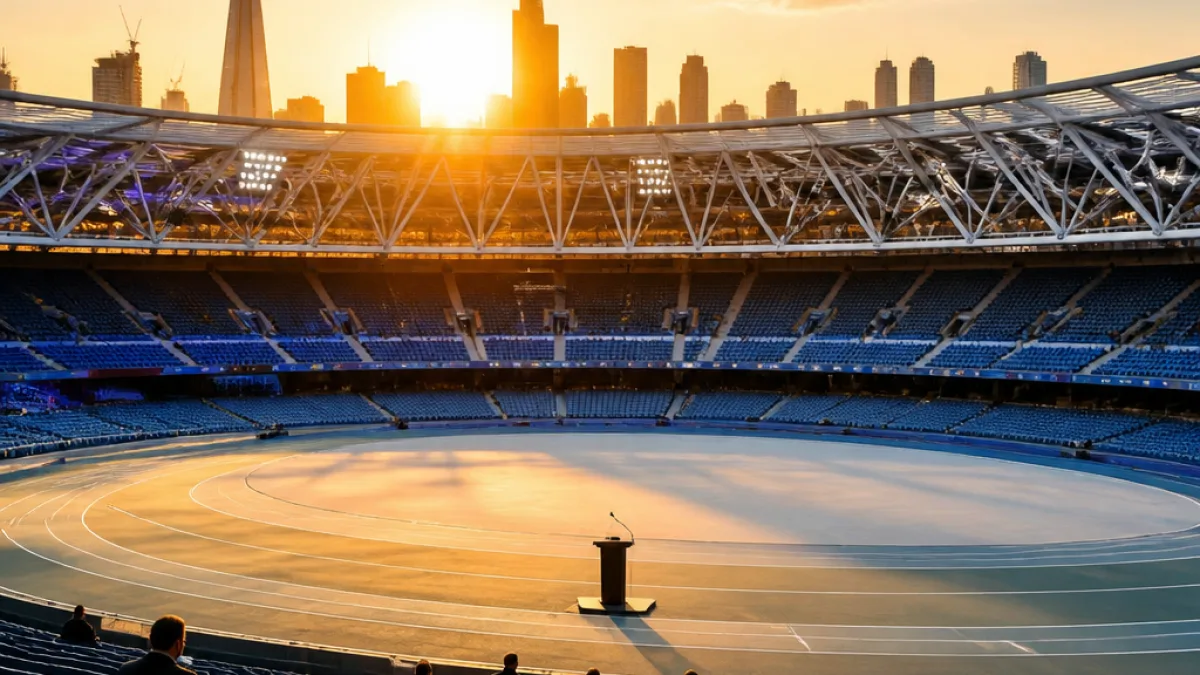
Sebastian Coe, president of World Athletics, has sought to reassure Londoners and organisers that recent reports of empty seats at the European Athletics Championships in Birmingham will not harm the capital’s bid to stage the 2029 world championships.
Coe points to London’s track record
Speaking about sparse turnouts earlier in the week in Birmingham — which have prompted debate over ticketing and marketing — Coe highlighted London’s history of selling major athletics events. He said the capital had repeatedly demonstrated the ability to attract full stadia during previous high-profile competitions.
“We had London in 2012, London in 2017, London will point to having sold out Diamond League five months before the event took place … I think back to 2017 in London, we started on a Friday night and we had the advantage of Mo Farah being the centrepiece.”
Coe acknowledged that starting a championship on a weekday and local conditions can make filling seats more difficult, but argued those are separate issues from a city's long-term capacity to host and promote a world-class event.
How the decision will be made
He explained that he will not be casting the deciding vote himself. Instead, an evaluation panel will assess the candidate cities and make a recommendation to the World Athletics Council. The council, Coe said, will then hear the case and interrogate the submissions before reaching a conclusion.
The four shortlisted cities — London, Munich, Nairobi and Rome — will be judged against a range of metrics, according to Coe, who described the process as intended to remove purely cosmetic considerations and focus on objective evaluation.
| Candidate city | Context mentioned |
|---|---|
| London | 2012 Olympics, 2017 worlds, Diamond League sales cited |
| Munich | Shortlisted |
| Nairobi | Shortlisted |
| Rome | Shortlisted |
Context: Birmingham crowds and wider audience figures
European Athletics has defended the Birmingham event, noting strong overall interest. The governing body reported peak audiences totalling more than two million viewers and a 20% market share on the BBC for coverage, figures it said demonstrated substantial engagement despite variable attendance at certain sessions.
Local reactions in London are mixed. Business and hospitality sectors in the capital have argued that staging major athletics events boosts tourism and trade. Community groups and volunteer organisers point out that legacy benefits — from increased sports participation to upgraded facilities — are often realised over years rather than immediately.
Practical implications for London
- If selected, London would need to present detailed plans to accommodate athletes, media and spectators and to demonstrate legacy and community impact.
- The evaluation panel will judge technical and financial proposals as well as projected audience engagement.
- The World Athletics Council will take the final decision after reviewing the panel’s findings; that vote is due next month.
For Londoners watching the process, the contrast between Birmingham’s momentary attendance challenges and the capital’s event history is likely to shape public debate. Supporters of hosting in London point to sold-out meetings, established transport links and event infrastructure as strengths. Critics will press organisers to show how they will maintain high attendance across all sessions, not just headline nights.
As the evaluation moves forward, the spotlight will remain on how each city addresses ticketing strategy, marketing, scheduling and the spectator experience. Coe’s public defence of London was a reminder that reputations built over successive major events carry weight, but the final decision will rest on the technical appraisal to be delivered to the council next month.
This article is produced for local readers following developments that could bring another major international sporting event back to the capital.