Joe Fagan, a recently elected Scottish Parliament member and candidate for the Scottish Labour leadership, has launched a sharp critique of his party’s handling of budget negotiations, saying that abstention on two successive SNP Budgets effectively allowed the minority government to impose its fiscal plans.
Abstention seen as strategic failure
Fagan, who entered Holyrood in May, told supporters that by taking what he described as a passive stance Labour had “put politics and tactics ahead of real outcomes for working people”. He argued that the party must adopt a more assertive posture to shape spending priorities and secure tangible benefits for households.
“For two Budgets in a row, while other parties forced concessions from the SNP, we sat on the sidelines,”
The criticism comes in the wake of a bruising May election for Labour in Scotland. Under the leadership of Anas Sarwar the party recorded its worst result since devolution, returning just 17 MSPs. Sarwar subsequently resigned to accept a seat in the House of Lords and a ministerial role in the UK government led by Andy Burnham, moves that have provoked internal anger for his choice not to remain and review the party’s defeat.
Five tests, one immediate focus: buses
Launching his campaign against fellow contenders Michael Marra and Monica Lennon, Fagan said he would offer the Scottish Government a different kind of engagement when budgets are negotiated. He set out five tests that, he said, would determine whether Labour should support a future Budget — the first of which centres on public transport.
- Improved funding for buses — Fagan demanded that the Scottish Government provide the cash and pursue the necessary legal steps to bring buses “back under public control”, an approach consistent with his previous support for franchise models.
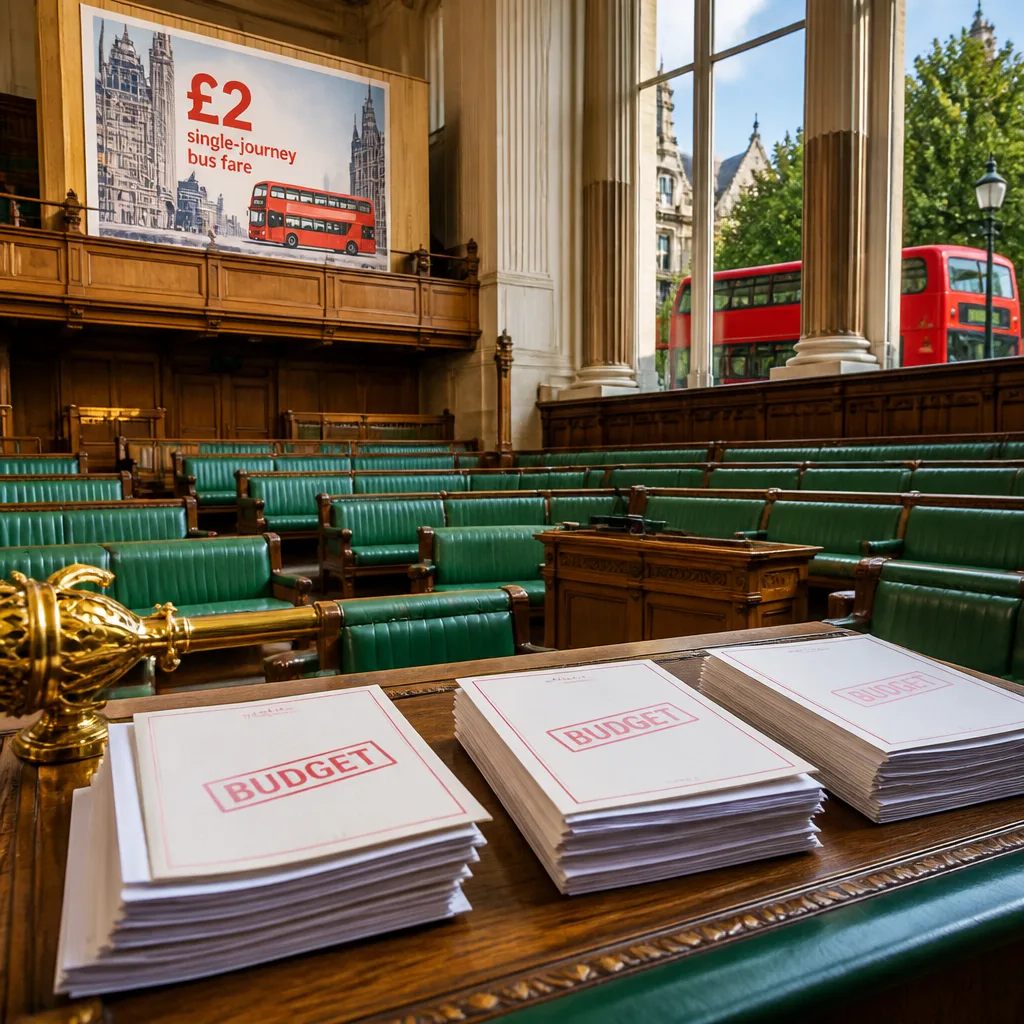
- Permanent £2 single fare cap — he called for a sustained cap on single-journey bus fares across Scotland.
Those proposals are explicit attempts to tie fiscal negotiations to household costs and everyday services. A permanent £2 fare cap would directly affect commuter and low-income household budgets, while increased public funding for buses would have implications for municipal and regional spending priorities.
What this means for wages, prices and jobs
Fagan’s line frames budget bargaining as a lever to protect living standards. Lower fares would ease pressure on households’ transport spending, a visible component of household budgets often felt alongside rising food and energy costs. Pressing for franchising or public control of bus services would also reshape procurement and employment arrangements in the sector, potentially altering the structure of local bus contracts and the terms under which drivers and support staff are employed.
However, the proposals also imply a need for increased public subsidy or reallocation of existing funds, which will be central to any negotiation with the SNP minority government. That raises questions about trade-offs elsewhere in public spending and the practicalities of delivering services while controlling pressures on public finances.
Political consequences and internal divisions
Fagan framed his intervention as a corrective to what he called a “painful defeat” in May. His position implicitly challenges the strategic choices of the party’s recent leadership and adds to tensions over the direction Labour should take in Scotland as it seeks to recover support.
| Metric | Detail |
|---|---|
| May election result | 17 MSPs — worst since 1999 |
| Leadership contenders named | Joe Fagan, Michael Marra, Monica Lennon |
For business and consumers, the coming leadership contest and how Scottish Labour chooses to engage with SNP budgets will matter. If Fagan’s tests — starting with buses and a fare cap — are adopted, negotiations could produce more consumer-facing interventions that ease costs for commuters but will require funding decisions that reverberate through local government and public-sector budgets.
As the contest develops, attention will fall on whether other figures in Scottish Labour embrace a more confrontational approach to budget votes or continue to prioritise tactical abstention — a choice that, according to Fagan, has already exacted a political and economic price.