
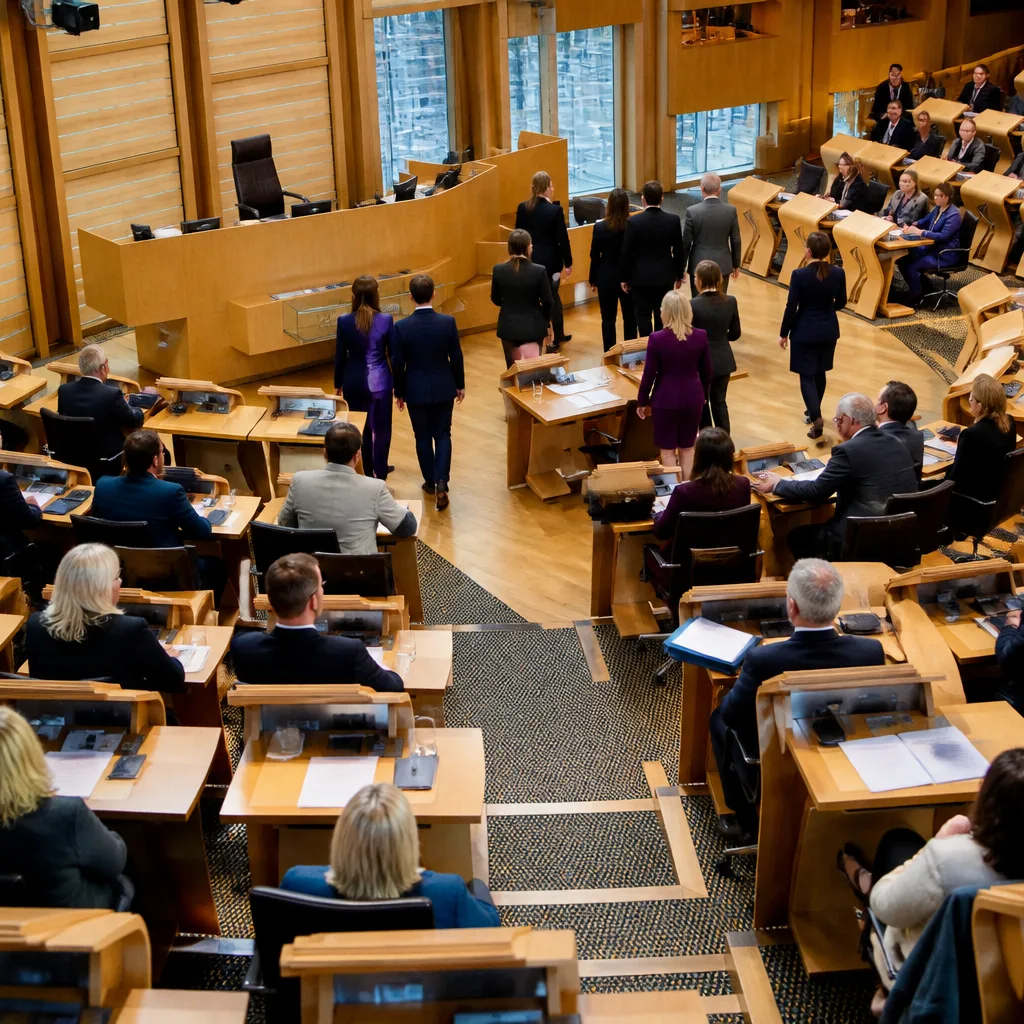
The Scottish Parliament was rocked by a walkout from Reform Scotland members after a debate on independence that exposed deep divisions among parties and within the chamber over procedure and priorities.
Speaker interventions and political manoeuvring
Michael Marra, leader of Scottish Labour, backed the motion but framed the discussion as largely about internal SNP priorities rather than immediate improvements to people’s lives. His amendment, which the chamber approved, kept the substance of the SNP minister's statement while placing a requirement to step up efforts to tackle child poverty.
The debate saw stark disagreement about the legitimacy of using a parliamentary majority as a pathway to a referendum. Finance Secretary John Swinney argued that a majority of pro-independence MSPs in Holyrood equated to a mandate to set a date for a referendum, underlining what he described as the nation’s "fundamental right to decide our future." He also highlighted demographic shifts he said had altered the electorate since the 2014 referendum.
"My party believes it is for the people of Scotland to decide when there is an independence referendum," Swinney told MSPs.
Opposition response and memory of 2014
Scottish Conservative leader Russell Findlay urged the SNP to accept the 2014 result, when Scots voted to remain in the UK. He invoked the margin recorded in that contest and appealed to the authority of that settled decision. Labour’s Marra acknowledged the existence of a route to another referendum but emphasised consensus-building rather than unilateral action.
Marra said Scotland could become "a fairer and stronger nation without being a separate state," warning against risks to currency, defence, markets and public finances should independence be pursued, and calling for policies that directly address poverty and inequality.
Claims about changing electorate and timing
Swinney drew attention to population changes since the last referendum. He estimated that by 2029 there would be more than one million people in Scotland who had not been eligible to vote in 2014 owing to their age, and warned that by 2030 younger cohorts would include people not yet born at the time of the previous poll.
Those demographic points were deployed to support the SNP’s broader argument that circumstances had shifted sufficiently to justify renewed consideration of independence. Critics, however, dismissed this as a political tactic rather than a plan for immediate improvement to living standards.
- Labour amendment retained the ministerial statement and added emphasis on tackling child poverty.
- Reform Scotland MSPs staged a walkout in protest during the debate.
- SNP claims a simple Holyrood majority constitutes a mandate for a future referendum; opponents cite the 2014 result.
| Reference point | Figure |
|---|---|
| 2014 independence referendum | 55% no vs 45% yes |
| Estimated ineligible new electorate by 2029 | 1,000,000+ |
The walkout by Reform MSPs highlighted frustration among minor parties at what they characterised as a staged debate focused on constitutional positioning rather than concrete policy responses to economic pressures facing households. Holyrood business resumed after the protest, but the incident underlined the fraught atmosphere in which Scotland’s constitutional future continues to be debated.
As parties reposition ahead of future electoral battles, Westminster will be watching closely. The question of who has the authority to call a referendum — a devolved parliament with a pro-independence majority, or the UK Government under the terms set out in 2014 — remains unresolved politically and is likely to return to centre stage.












