
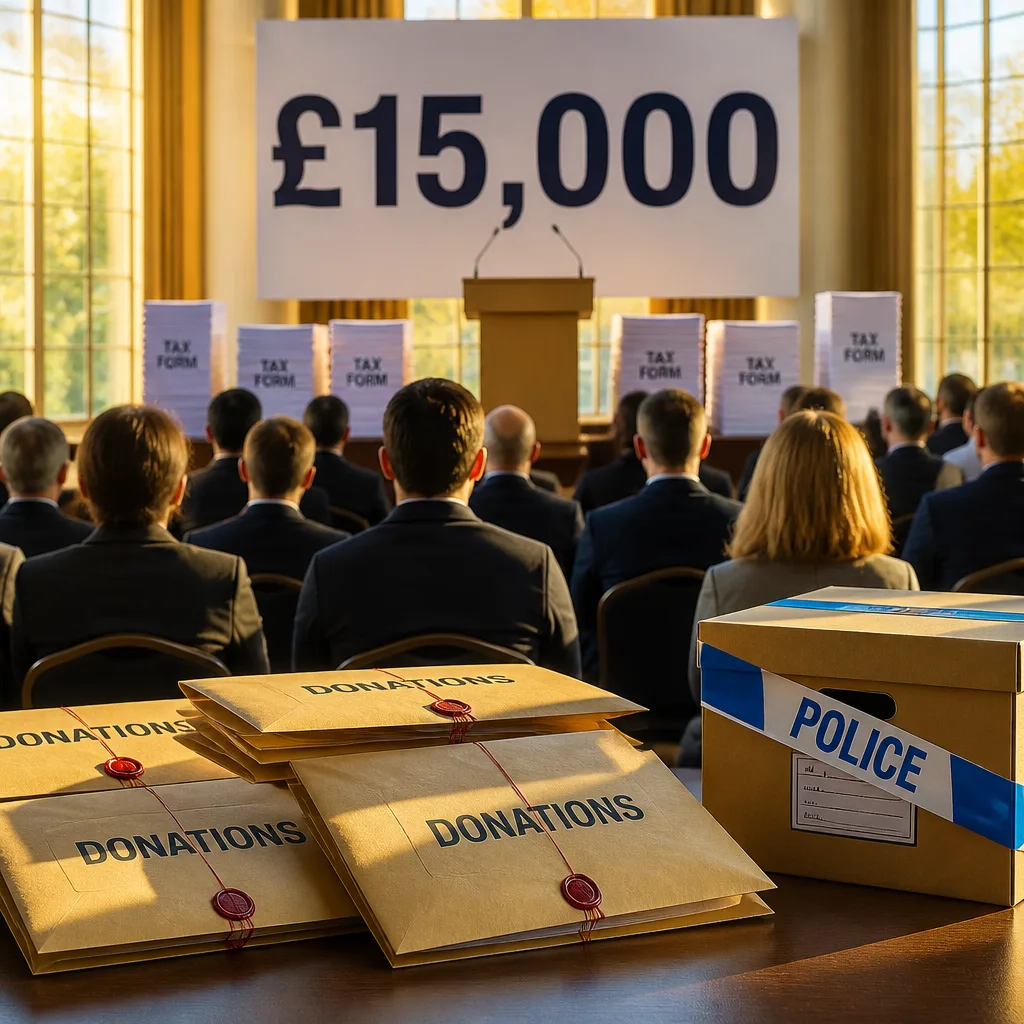
Reform UK has pledged to raise the tax-free personal allowance to £15,000 and to enact the change within its first 100 days in government, while the party confronts a controversy over alleged attempts to find ways around rules on overseas donations.
Tax pledge unveiled as conference flagship
The policy was presented by Robert Jenrick, the party's economic spokesman, as a central commitment at Reform's conference. Jenrick said the immediate introduction of the measure would put "money that people really need right now" into the pockets of households, according to broadcast reporting.
Reform UK estimates that moving the threshold to £15,000 – an increase it described as a £2,430 rise for many taxpayers – would save the bulk of earners about £500 a year and would remove around 2.9 million people from paying income tax entirely. The party has said the measure would cost roughly £17.7 billion.
Funding controversy overshadows announcement
The conference announcement came amid fresh scrutiny of the party's funding after undercover reporting by Verbatim Investigations aired material suggesting senior Reform figures discussed routes to obtain donations from non-UK sources.
In response, the party suspended two senior aides. Jenrick told the BBC that party leader Nigel Farage had acted swiftly and that the members were suspended pending an internal inquiry. Farage himself told reporters the party had "done nothing wrong" and that no illicit funds had been taken.
"In fact no money was taken at all," the Reform leader said, according to the broadcaster.
The undercover reporting included suggestions that donations could be channelled in ways that would avoid breaching electoral law. UK electoral rules require that donors to political parties be UK-registered voters or companies registered in the UK.
One of the scenarios filmed involved the payment of up to £500,000. Farage has maintained the party's actions were lawful. Two aides named in the footage have denied wrongdoing, and one said he would step away from politics to clear his name.
Official responses and inquiries
Labour and the Liberal Democrats have referred the matter to the Metropolitan Police. The Electoral Commission said it was considering "all relevant information, in line with our regulatory remit" and was in contact with law enforcement.
Cambridge University confirmed it was looking into the matter after one of the figures implicated was identified as an associate professor at the university's Faculty of Divinity. The individual said he would cooperate fully with the party's internal investigation.
Political and fiscal implications
The tax-cut vow offers Reform a headline economic policy and seeks to position the party as a vehicle for rapid tax relief. But the funding questions complicate that message, placing emphasis on compliance and transparency at a time when political donations are under heightened scrutiny.
If the policy were implemented as described by Reform, analysts and independent forecasters would be likely to assess affordability and potential trade-offs with public spending or other tax measures. The party's own figures were circulated at conference and form the primary published estimate of cost and beneficiary numbers.
- Policy: Raise personal allowance to £15,000.
- Timing: Pledged implementation within 100 days of government formation.
- Estimated impact: ~£500 annual saving for most taxpayers; ~2.9 million people potentially removed from income tax.
- Estimated cost: £17.7 billion, according to Reform estimates.
| Item | Figure (Reform estimate) |
|---|---|
| Personal allowance proposed | £15,000 |
| Increase for many taxpayers | £2,430 |
| Average annual saving (most taxpayers) | £500 |
| People ceasing to pay income tax | 2.9 million |
| Estimated fiscal cost | £17.7 billion |
The coming days are likely to see further scrutiny from electoral regulators and possibly criminal investigators, while Reform seeks to press its economic message to delegates and the wider electorate.












