Recorded sexual crimes in Renfrewshire rose by 63.7% in the first three months of the 2026/27 financial year, police told councillors, a jump the force says is almost entirely explained by a change in how offences are identified and investigated.
Policing changes lift recorded offences and detections
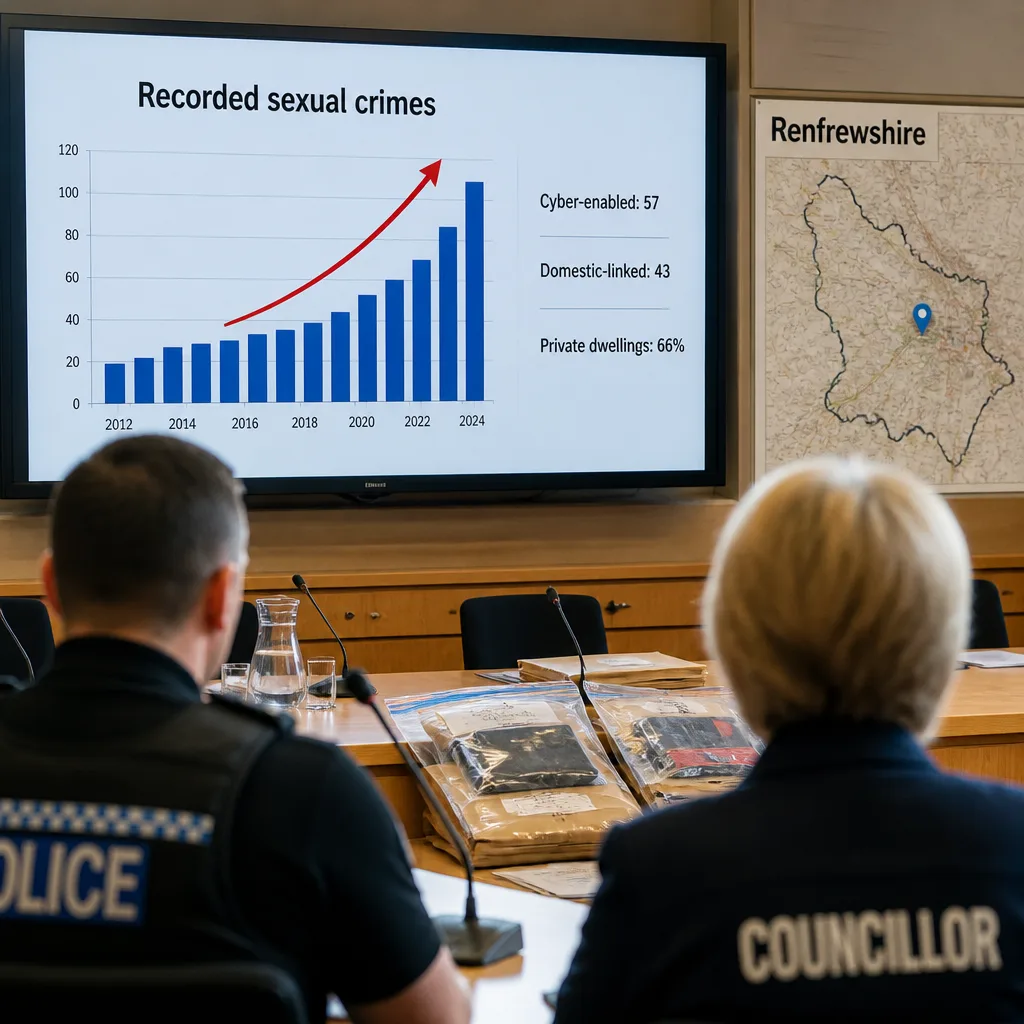
Police Scotland figures presented to Renfrewshire Council’s Police and Fire and Rescue Scrutiny Sub-Committee show 167 sexual crimes were recorded between 1 April and 30 June 2026, compared with 102 in the same period a year earlier. The increase markedly exceeded the national rise of 4.5%.
Chief Superintendent Rhona Fraser told councillors the rise was “almost exclusively attributable to a refreshed method of tackling group 2 crime within Renfrewshire and Inverclyde division with our partners.”
“There has been a reported increase of 63.7 percent within the reporting period and this is almost exclusively attributable to a refreshed method of tackling group 2 crime within Renfrewshire and Inverclyde division with our partners.”
The committee heard that alongside the rise in recorded offences there had been a marked improvement in the clearance of cases: the detection rate for sexual crime in Renfrewshire was reported as 80.8% for the period, compared with 43.1% in the same quarter the previous year.
Breakdown of offences and context
Police figures given to the committee included detail on the nature and setting of the reported crimes:
- 167 total sexual crimes recorded, 1 April–30 June 2026.
- 57 incidents identified as cyber-enabled — almost double the number recorded in the same period last year.
- 43 sexual offences linked to domestic abuse, up from 32 the year before.
- More than a quarter of the recorded sexual offences related to non-recent reporting.
- Approximately two-thirds of reported sexual crimes took place within private dwellings.
The material presented to councillors did not attribute the numerical rise to a single factor such as an increase in offending. Instead, police described the numbers as reflecting a “refreshed approach” to identifying and recording Group 2 offences — the classification used for sexual offences in Police Scotland records.
| Period | Recorded sexual crimes | Detection rate |
|---|---|---|
| 1 Apr–30 Jun 2025 | 102 | 43.1% |
| 1 Apr–30 Jun 2026 | 167 | 80.8% |
Implications for victims and public confidence
Officials emphasised that increases driven by recording practice and investigative prioritisation can be interpreted in different ways. A higher number of recorded offences can indicate an increase in reporting by victims, improved identification by police or — in the less welcome interpretation — rising incidence. The force’s account places weight on the first two explanations.
For survivors and campaigners, changes in recorded figures matter because they shape perceptions of whether the criminal justice system is responsive. An uplift in detection rates to 80.8% will be cited by police as evidence of stronger investigative outcomes, while the rise in cyber-enabled reports — 57 in the quarter — reflects national concerns about online offending and the challenges it poses for policing and victim support.
Councillors were given the figures as part of routine scrutiny; the data will inform local oversight of policing priorities and the partnership work needed to support victims, pursue offenders and prevent offending. Police Scotland framed the results as a positive step in performance against Group 2 crime, noting partnership activity across Renfrewshire and Inverclyde.
At a national level, the Renfrewshire example underscores how recorded crime statistics can be affected by procedural changes and resource allocation. It also highlights the continued prominence of cyber-enabled offending and domestic-context sexual crimes in local policing workloads.