
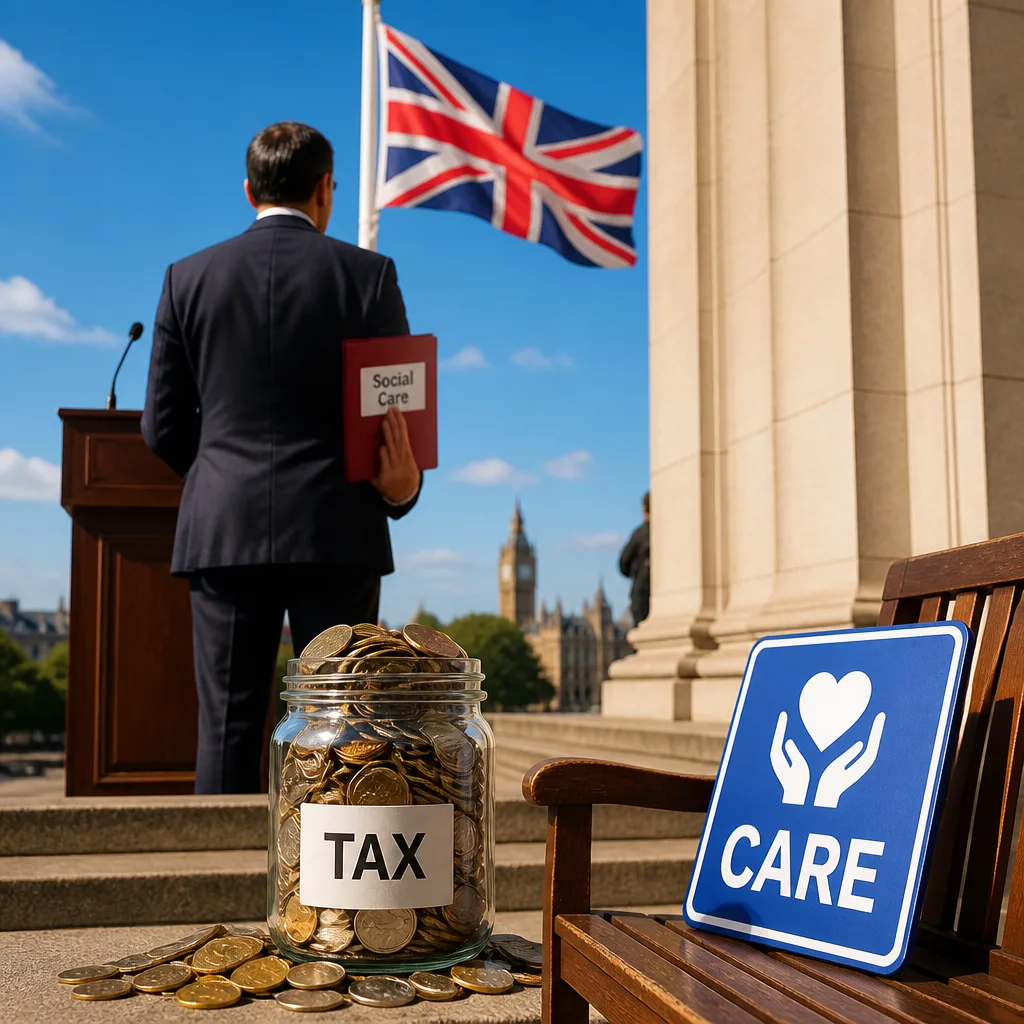
The prime minister has announced plans to offer free social care services to everyone in England, saying he will set out his “vision” for a system modelled on the NHS and stressing that everyone would contribute and everyone would be covered.
Policy pledge and funding caveat
Speaking to the BBC's Sunday with Laura Kuenssberg, the prime minister said he wanted a system that operated on the same principles as the NHS because, in his view, that was the only way it could be made to work. He acknowledged, however, that implementing such a programme would be expensive and that financing it could require tax rises.
“I am talking about a system that works on NHS principles because that is the only way you can make it work,”
The prime minister said changes must be introduced “carefully, without putting extra strain on the public purse” and that the government’s review, being carried out by Baroness Casey, would advise on “the best way of doing it”. He told the BBC that “nothing is off the table at this moment in time” in relation to how reforms might be paid for, and did not rule out tax increases, accepting they may be “difficult or unpopular” for some.
Political reaction and context
The prime minister has already made reforming social care one of his flagship policies, and he plans to present the detailed proposals to voters ahead of the next general election, according to his BBC interview. Shadow Home Secretary Chris Philp criticised the plan on the grounds it would require more tax rises, and said the Conservatives would not support it.
The prime minister has also cited personal experience as a spur for action: his father, Roy, who had Alzheimer’s, died earlier this month. He used that experience when describing his ambition to change the system, but has so far not provided a full funding blueprint.
How the current system works
Adult social care supports people to live independently, including help with bathing and eating, but unlike the NHS it is not currently free at the point of use in England. Under current rules in England and Northern Ireland, people with savings above a threshold are not eligible for council support with care costs; different eligibility arrangements exist in Wales and Scotland.
| Jurisdiction | Current notable threshold or rule |
|---|---|
| England and Northern Ireland | Savings above £23,250 make people ineligible for council help with care costs |
| Scotland and Wales | Different eligibility rules apply |
The prime minister pointed to existing models elsewhere in the UK. He noted that Scotland already provides free personal care to all adults assessed as needing help for tasks such as eating and bathing, and said it was inequitable that people in England did not receive the same provision.
Next steps and uncertainties
Baroness Casey’s review has been asked to recommend the “best way of doing it”, but officials have not yet published a costed plan. Estimates cited in public debate suggest that extending free social care to everyone in England would carry substantial costs, though the prime minister stopped short of endorsing any particular funding mechanism.
- Policy aim: universal, free personal social care in England.
- Funding: prime minister admits tax rises could be required; details not yet published.
- Implementation: subject to advice from Baroness Casey’s review and further government decisions.
As the government prepares to set out its full proposals, the debate will focus on how to balance the ambition of universal coverage with the fiscal constraints facing Whitehall and the political challenge of asking voters to accept potential tax increases.












