
Oldham’s big green gamble: industry to ecology
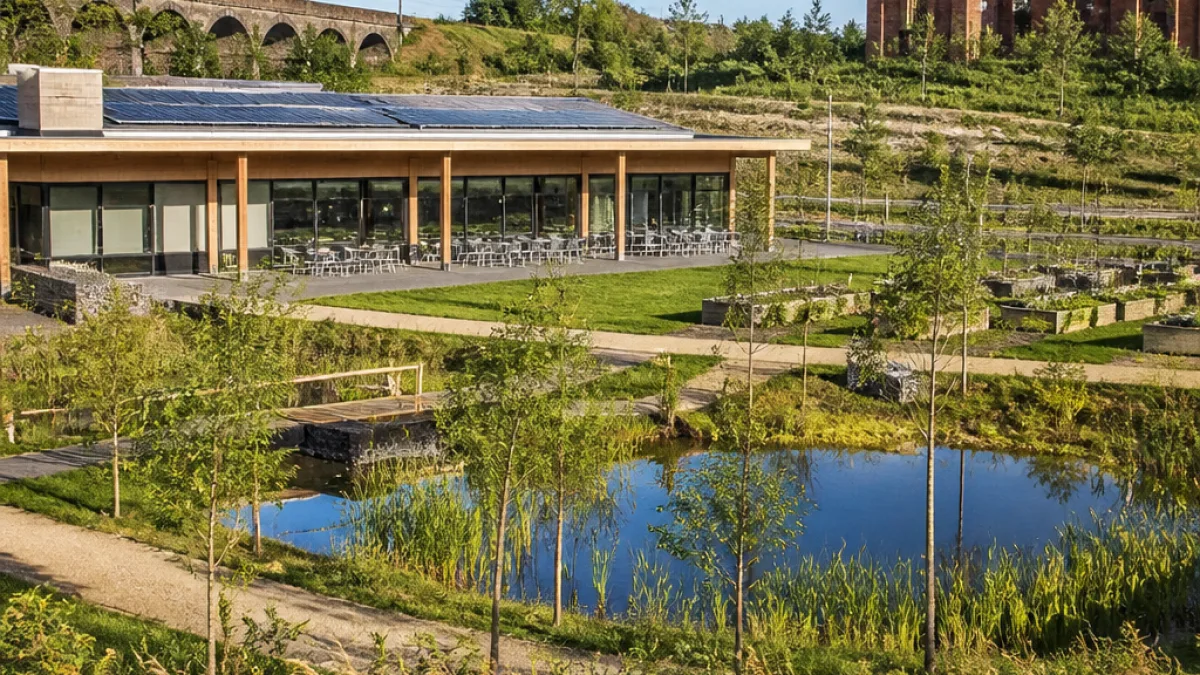
The newly opened welcome centre at Northern Roots is the visible start of what organisers hope will become the UK’s largest urban farm and eco‑park over the next four years. Built on 160 acres of former industrial land to the south of Alexandra Park, the project is a high‑profile attempt to show how nature and community can be central to town regeneration.
The development has been under way for five years and represents a £13m investment in parts of Oldham that were once home to a cotton mill, coal mines and a railway line. The site now contains community gardens, an events arena and facilities for teaching forestry skills, alongside purpose‑built visitor amenities.
- Visitor centre features: café, shop, production kitchen, performance and exhibition space, classrooms and meeting rooms.
- Environmental features: more than 2,000 new trees, six ponds and a wildflower meadow.
- Health and community: an ambition to deliver 300 nature‑based health prescriptions a year in partnership with local GPs, hospitals and cancer recovery services.
Practical aims — jobs, skills and flood reduction
Project leaders say the site will create opportunities for skills training and employment while improving biodiversity and local resilience to climate impacts. Ponds have been installed with the specific aim of capturing water to help reduce flood episodes in Oldham town centre — a practical intervention with direct local consequences.
The site also includes initiatives such as a butterfly‑breeding programme and other created wildlife habitats, underlining a clear conservation agenda alongside the social aims.
"We're trying to show how you can nourish and nurture this land, so that it looks after us," said Anna Da Silva, Chief Executive at Northern Roots.
Da Silva described Northern Roots as a lesson in what regeneration could look like across Greater Manchester, pointing to other post‑industrial spaces that could be recovered for nature, jobs and community benefit. She highlighted tree planting both for carbon capture and to improve air quality for local residents.
| Feature | Detail |
|---|---|
| Site area | 160 acres |
| Investment | £13m |
| New trees planted | Over 2,000 |
| Ponds | Six |
| Annual nature‑based prescriptions | 300 (target) |
Local context and next steps
For Oldham residents this is more than a new park. It is a test case for re‑using derelict land in ways that combine conservation, health and practical town planning. The visitor centre opening is the start of public access to facilities that include a production kitchen and performance space — elements intended to broaden the site’s use for community events and learning.
The project’s stated ambition to work with healthcare partners to offer what it describes as a "natural health service" is significant. If delivered at scale, 300 nature‑based prescriptions a year could mean a steady flow of referrals from GPs and hospitals for patients to benefit from outdoor activity and therapeutic programmes in the park.
At the same time, Northern Roots is being presented as an example other parts of Greater Manchester could follow — land currently "used and abused", in the words of its chief executive, that might be reclaimed to provide green jobs and environmental benefits.
There will be practical challenges. Maintaining a large urban green space, developing reliable partnerships with health services, and turning conservation work into sustainable employment all require long‑term funding and dedicated management. But the scale of Northern Roots means, if successful, it will be a blueprint for how post‑industrial towns in the North West can combine nature and regeneration.
The welcome centre opens to the public this weekend. For Oldham, the project is a statement: a long industrial past is being deliberately repurposed to try to secure a greener, healthier future for the town.









