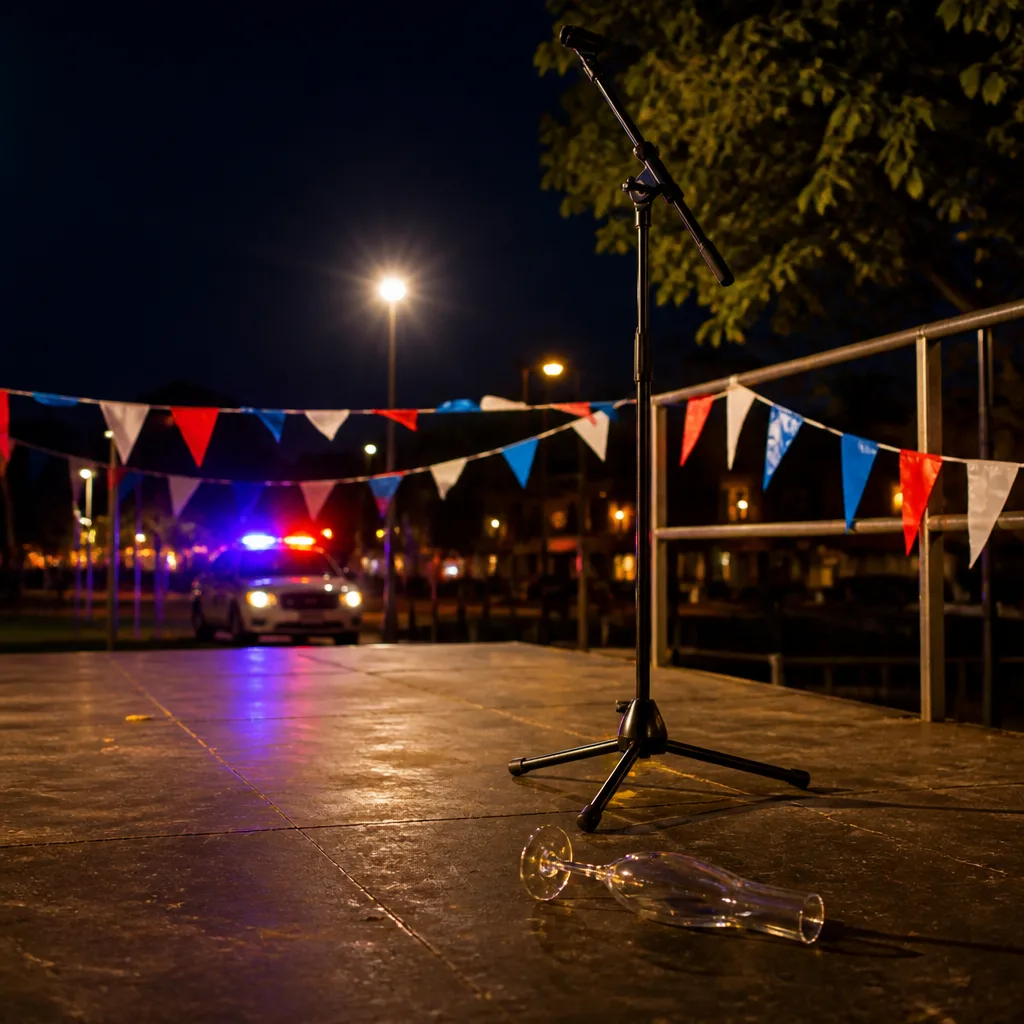
Nigel Farage did not appear to give a publicly announced victory speech after what has been described as an overwhelming by-election victory that he himself forced. Organisers and supporters had expected a celebratory address, but Farage did not take to the stage and his campaign gave a brief explanation for his absence.
Party claim and policing dispute
The campaign said Mr Farage had been "partying through the night" rather than delivering interviews or attending the count. At the same time, questions emerged about a separate claim by Mr Farage that he had been warned by Essex Police about a security threat.
Essex Police were reported as having no knowledge of the security warning Mr Farage said he had received. That discrepancy has become the central point of public and media scrutiny following the result.
"partying through the night"
Media and presentation
The episode has prompted commentary about Mr Farage's public presentation and choice of media platforms. He has frequently been associated with broadcast and online outlets and with a populist public persona; some commentators say he leans towards environments in which he expects sympathetic coverage.
Observers note the contrast between the performative elements of a by-election victory — speech-making, post-result interviews and media scrutiny — and the decision to avoid those routines. The missing victory speech, coupled with the disputed account of a police warning, has drawn attention to the difference between on-stage triumph and off-stage explanation.
What we know and what remains unclear
- Result: Mr Farage secured a decisive by-election win that he had triggered.
- Attendance: He did not appear to deliver a promised victory speech or give expected media interviews.
- Campaign statement: The campaign said he was "partying through the night."
- Police account: Essex Police were reported as having no record or knowledge of the warning Mr Farage said he had received.
The combination of these elements — a strong electoral showing, absence from customary post-victory rituals, and a contested claim about a police warning — leaves a number of factual questions unresolved in public reporting. Chief among them is whether a formal warning was communicated to Mr Farage and, if so, why Essex Police report no knowledge of it.
| Claim | Public account | Reported response |
|---|---|---|
| Victory speech | Promised | Not delivered |
| Evening activity | "Partying through the night" (campaign statement) | Used to explain absence from media duties |
| Security warning | Mr Farage said he had been warned by Essex Police | Essex Police reported no knowledge of such a warning |
Implications
The episode has reputational implications for several institutions and actors. For Mr Farage, the decision not to present himself to what would normally be a public forum of scrutiny may affect perceptions among both supporters and critics. For Essex Police, the divergence between a high-profile political claim and the force's reported lack of awareness creates a demand for clarification about procedures for sharing intelligence or threat information with public figures.
Finally, the case touches on the relationship between politicians and sympathetic media outlets. The absence of routine scrutiny can intensify questions about access to information and the mechanisms through which claims about security and safety are relayed and verified.
As matters stand, those who seek a fuller public account may look for statements from Mr Farage's campaign and from Essex Police that reconcile their differing accounts, or for further reporting that establishes whether any formal warning was issued and how it was communicated.