
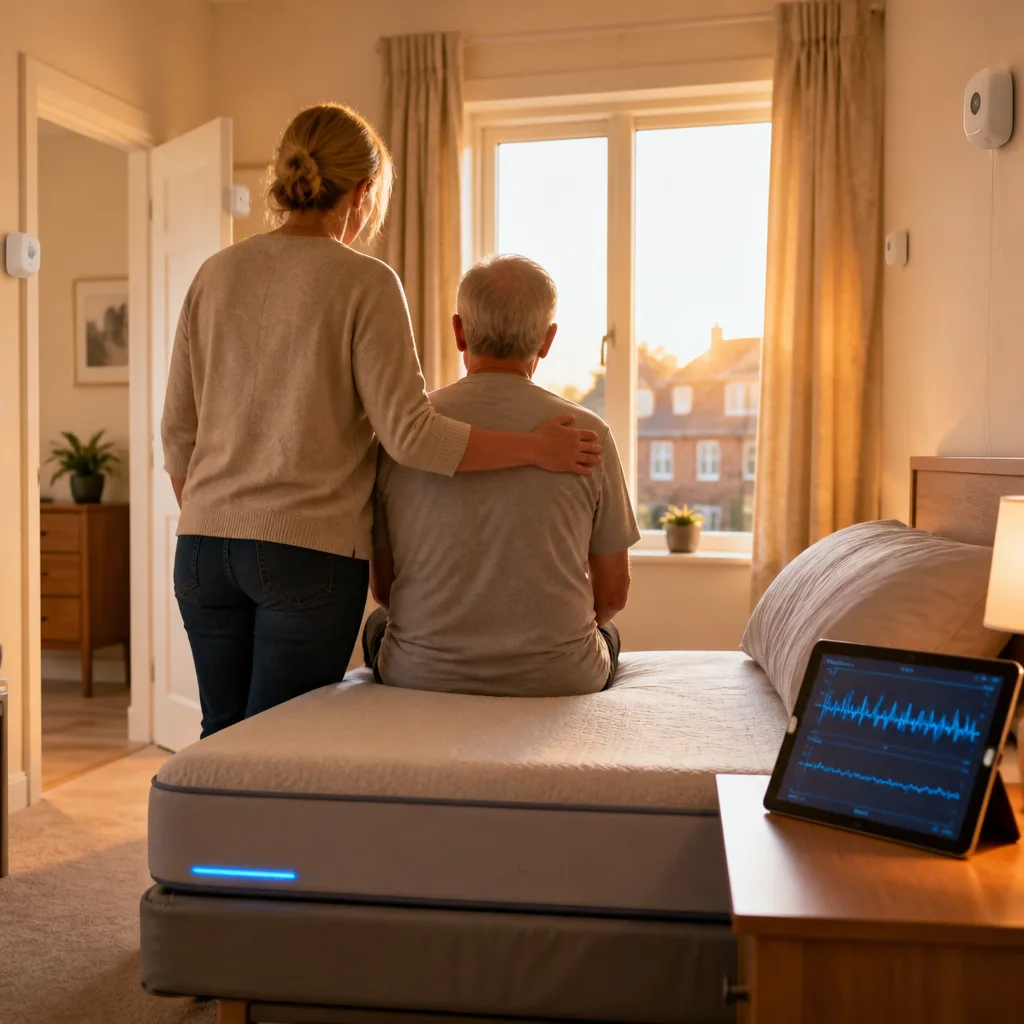
Homes fitted with sensors and a smart mattress are being used in an NHS-supported trial to monitor people with dementia, with data relayed to clinical teams to help keep patients safe and reduce preventable hospital admissions.
High-tech monitoring in everyday life
Jyoti and Bharat Patel, in their 70s and living in west London, are among more than 250 families participating in the project run by the UK Dementia Research Institute (UK DRI) and Imperial College London, funded by the medical research charity LifeArc. Their house has sensors in every room. A smart mattress tracks heart rate and breathing. The information is sent over the internet to a dedicated team of doctors, nurses and other clinical specialists who use it to understand how people are coping at home.
The couple, former professional magicians who met in 1977, say the monitoring gives them peace of mind. Jyoti was diagnosed with Alzheimer’s in 2021 after Bharat noticed changes in her performance on stage two years earlier. He described the early signs that prompted them to seek medical help:
"Normally she used to set my stage up and everything was perfect, but I saw something I was looking for and it wasn't there, so I thought something is wrong."
"I didn't know it [was] dementia but I knew it was something which [was] unusual," Jyoti has said.
What the technology records
The trial combines passive sensors with clinical oversight. Devices record movement and routines around the home and physiological signals from sleeping patterns. Clinicians aim to spot changes that could signal deterioration, unmet needs or emerging health problems so they can intervene early.
| Device | Monitored data |
|---|---|
| Room sensors | Movement, routines and activity patterns |
| Smart mattress | Heart rate and breathing during sleep |
Potential benefits and considerations
Researchers and clinicians involved say the approach could allow more people with dementia to remain at home safely for longer by:
- Identifying early signs of deterioration or health events so treatment or social support can be offered before a crisis;
- Reducing preventable hospital admissions that often follow falls, infections or unmanaged symptoms;
- Providing reassurance to families and carers about daily safety and wellbeing.
At the same time, the trial raises questions that policymakers and clinicians will need to address if the technology is rolled out more widely. These include the governance of continuous data collection in private homes, how alerts are prioritised by clinical teams, integration with existing NHS services and the costs of installation and maintenance compared with current care pathways.
Project backers say the trial’s clinical team model — doctors, nurses and specialists reviewing data — is central to turning raw sensor feeds into actionable care. How that model would scale across the health service, and how it would interface with social care provision, are likely to be key considerations for NHS decision-makers.
Human stakes in a changing system
For families such as the Patels the interventions are personal: they want dignity, continuity and safety in everyday life. For the NHS and policy makers the stakes are systemic — finding approaches that allow people to live at home while managing demand on hospitals and community services.
As the trial continues, its findings on effectiveness, cost and acceptability will inform debate about whether similar technology should be adopted more widely across the health and care system. For now, participants say the monitoring has delivered confidence at a time when both the condition and the strain on carers are increasing.















