
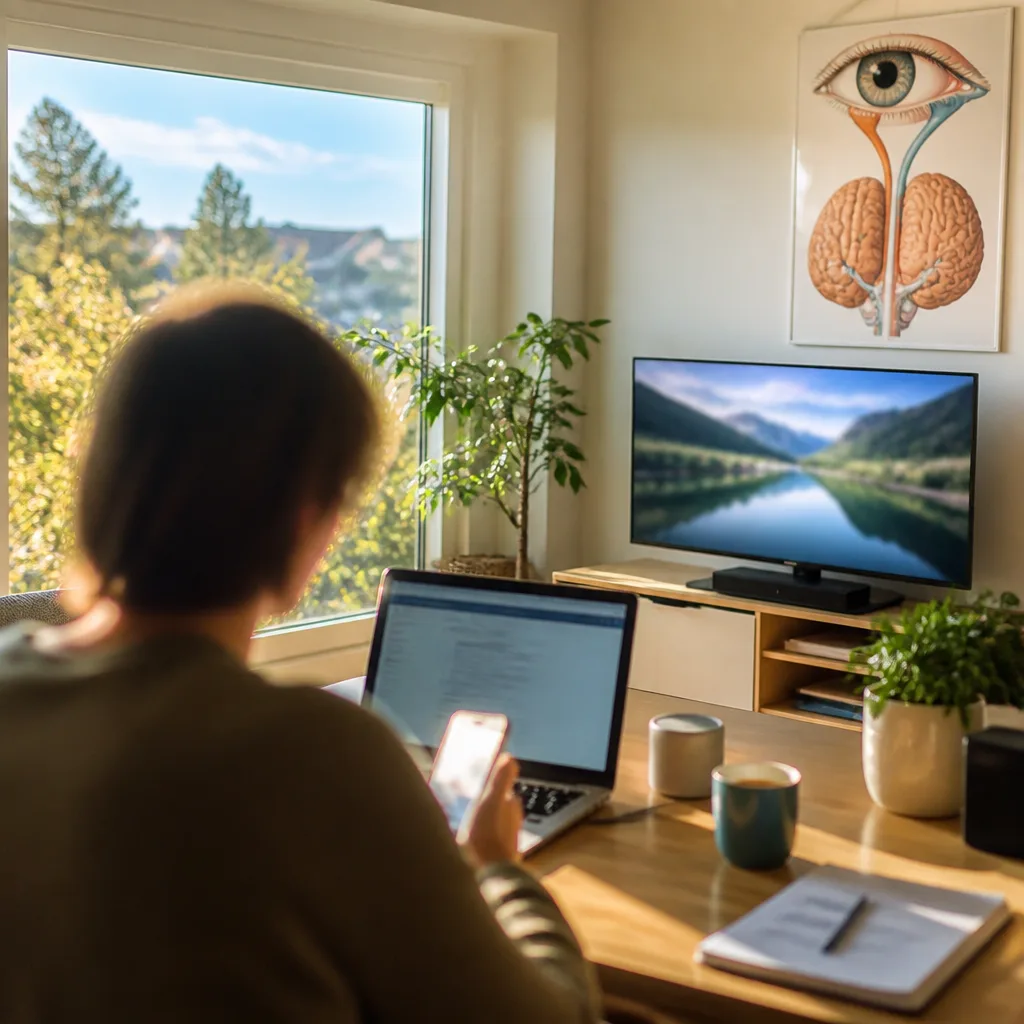
Modern routines are changing how our eyes and brain work together, and clinicians are paying closer attention to the whole visual system rather than focusing only on the eyes themselves. For much of human history people spent their days looking at shifting landscapes, speaking face-to-face and focusing on objects at a variety of distances. Today, daily vision is dominated by near-focused activity: checking phones on waking, hours at computer screens for work, and evenings spent watching television or scrolling social media.
Seeing involves more than the eyeball
Vision is a collaborative process. Light enters the eye and reaches the retina, a light-sensitive layer at the back of the eye, which begins to sort incoming information — brightness, colour, edges and motion — before transmitting those signals to the brain along the optic nerve. The brain then integrates these inputs to construct the images we perceive. This sequence happens so rapidly that it feels instantaneous.
Many of the visual tasks common today require the eyes and brain to perform a high number of rapid, minute adjustments. When viewers move between multiple digital devices — phone, laptop, smartwatch, car display and television — the eyes do not glide smoothly across content. Instead they execute hundreds of tiny, quick movements every minute, pausing briefly to gather information. The brain stitches those snapshots together into a continuous picture.
Why today's visual demands are different
The modern visual environment presents fast-changing, high-contrast images, pop-up notifications and competing elements across multiple screens. That environment asks the visual system to repeat the same micro-movements and processing tasks almost continuously throughout the day. Eye specialists say the concern is not simply the quantity of screen exposure but the qualitative change in how eyes are used from morning to night.
- Historical pattern: variable viewing distances, outdoor scenes, face-to-face interaction.
- Contemporary pattern: prolonged near work, frequent device switching, repetitive micro-movements.
- Clinical focus shift: from treating the eye in isolation to assessing eye–brain visual processing as a system.
That shift has implications for how clinicians assess and advise patients. Rather than attributing symptoms solely to hours logged in front of a screen, practitioners are examining how modern visual behaviours might contribute to fatigue, discomfort or other vision complaints by changing the patterns of eye movement and neural processing.
| Then | Now |
|---|---|
| Looking at varying distances, outdoors and in motion | Near-focused tasks on multiple digital displays |
| Less repetitive micro-movements | Hundreds of tiny, rapid eye movements each minute |
For the public, the practical takeaway is that small changes to the way we use our eyes across the day could matter as much as the total number of screen hours. Interventions that encourage variation in focal distance, regular breaks and more outdoor viewing are already common advice, but the narrative is expanding to include how the brain manages and assembles visual information under new demands.
Clinicians and researchers are increasingly framing eye health in terms of systemic visual performance — how eyes and brain collaborate — rather than treating symptoms as isolated ocular issues. That perspective may influence future guidance on preventing and managing visual discomfort linked to modern lifestyles.
For now, being mindful of how often you switch between devices, creating regular opportunities to look at distant scenes, and allowing short rests from high-intensity visual tasks may help rebalance the pattern of visual use that has become common in contemporary life.














