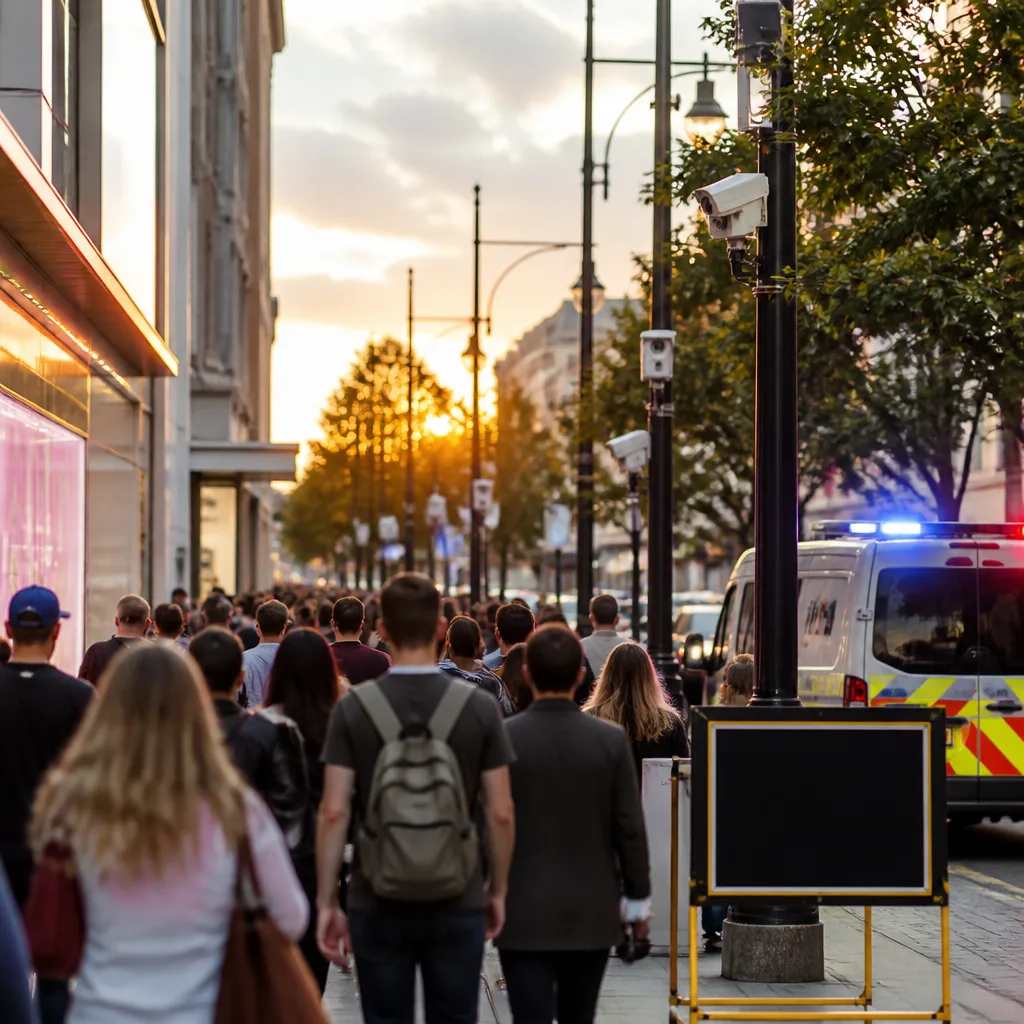
The Metropolitan Police intend to install permanent live facial recognition (LFR) cameras on Oxford Street, scanning the faces of shoppers and tourists and matching images against a watchlist of wanted suspects. The scheme would be among the first in the country to introduce continuous LFR infrastructure on a major public thoroughfare rather than operating from temporary vans.
How the system would operate
Officials said the devices would most likely be fixed to street furniture such as lampposts, replacing the ad hoc model of deployment used to date. The Met has been testing LFR at specific sites and intends to proceed cautiously rather than implementing an immediate wholesale rollout across the West End.
- Location: Oxford Street (West End, London)
- Deployment: Permanent cameras mounted on street furniture
- Purpose: Real-time scanning against a watchlist of wanted suspects
- Partners: Metropolitan Police and Oxford Street Development Corporation
During a routine City Hall session, London’s mayor described close cooperation between the Met and the street development body over the proposed use of LFR as part of plans to pedestrianise the area. The mayor emphasised a measured approach, saying the Met is "very good at testing on individual sites before rolling out" and that a large-scale 'big bang' deployment would be avoided.
“The Met is working really closely with the Oxford Street Development Corporation about how, when we pedestrianise that street, we use LFR in a sensible way… What we do not do is a big bang as it would be a disaster.”
Human rights concerns and calls for transparency
Human rights organisations have strongly criticised the plan, warning that permanent LFR in one of the country’s busiest shopping and tourist destinations would substantially increase routine surveillance in public spaces. Critics say the technology scans everyone who passes by, irrespective of suspicion, and have urged full transparency about usage, safeguards and oversight.
“The prospect of permanent live facial recognition cameras being introduced on Oxford Street marks a significant expansion of surveillance in public spaces,”
The same organisation also drew attention to the Government’s repeated promise of a legal framework for LFR, arguing that the Met should not accelerate deployments ahead of national legislation. That point highlights an unresolved tension: police forces seeking operational tools to tackle crime, and civil liberty advocates demanding statutory limits and independent monitoring.
Precedent and testing
The Met has previously used mobile LFR systems in specific events; one such deployment involved a police van at Notting Hill Carnival on 25 August 2025. Those targeted trials have informed the force’s approach, but they also fuel debate about extending the technology from event-based operations to continuous public surveillance.
| Stakeholder | Role |
|---|---|
| Metropolitan Police | Operational deployment and testing of LFR |
| Oxford Street Development Corporation | Partner on pedestrianisation and CCTV infrastructure |
| Human rights organisations | Critique, demand safeguards and legal framework |
| Government | Promised national legislation on LFR |
Policing officials argue LFR can help locate wanted individuals in crowded public spaces, potentially preventing crime or enabling quicker arrests. Opponents counter that widespread facial surveillance risks chilling lawful behaviour, misidentification and unequal impacts on particular communities.
As the proposal advances, the balance between public safety and civil liberties will be central to debates in City Hall, Westminster and among Londoners who use Oxford Street. The law has been cited as a necessary baseline by those calling for controls; until a statutory framework is enacted, transparency about how watchlists are compiled, how matches are vetted and how data are retained will remain key demands from campaigners and oversight bodies.
Any formal decision on permanent deployment has implications beyond central London: it would set a precedent for other busy public spaces around the country and could shape national policy discussions about the role of biometric surveillance in everyday policing.