
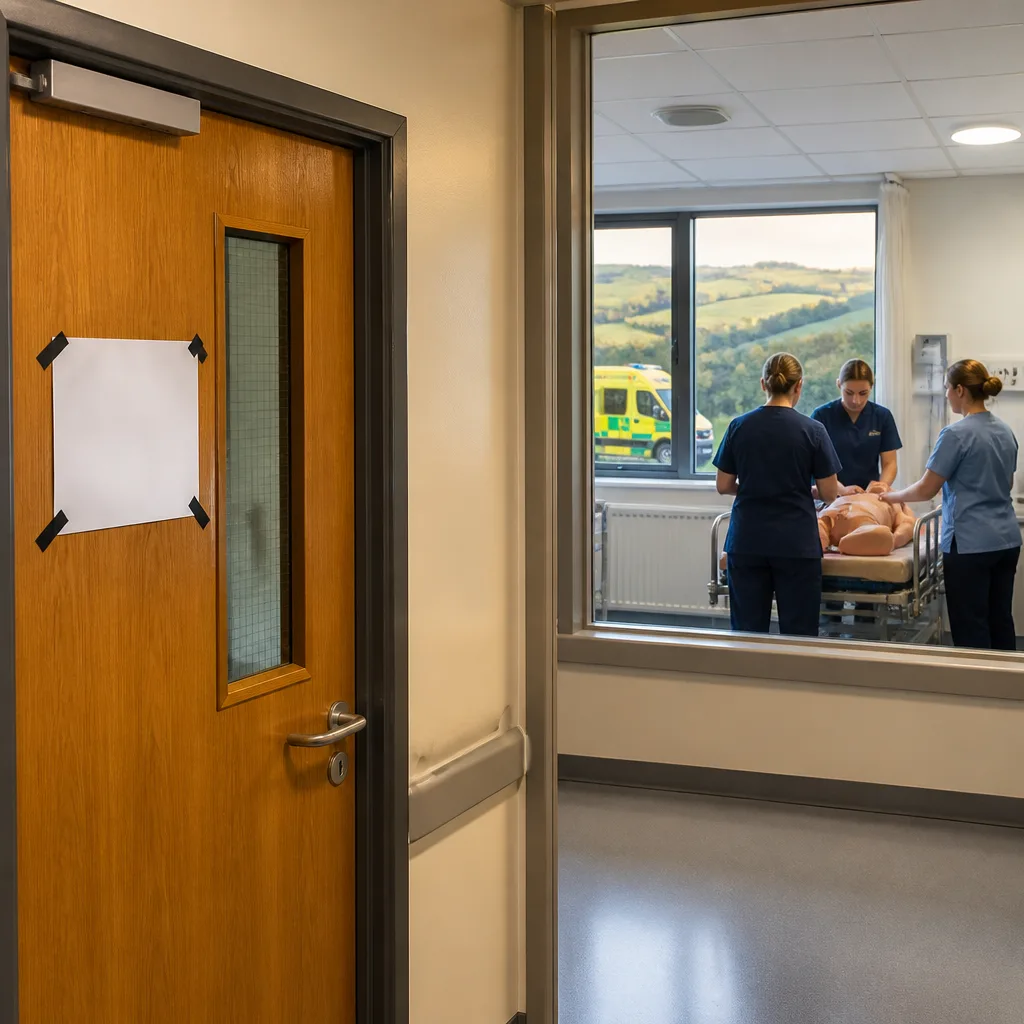
North Devon District Hospital’s maternity service has been suspended indefinitely, leaving pregnant women in one of England’s most remote areas facing journeys of more than 50 miles to the nearest labour ward and raising concerns about the safety of mothers and newborns.
Staff shortages trigger emergency response
The Royal Devon University Healthcare NHS Foundation Trust described the suspension at the Barnstaple hospital as temporary but could not say when services would resume. The closure follows staffing shortfalls that the trust says make it unsafe to continue routine maternity care.
Local medics told the Guardian that emergency department teams at the hospital have been given an intensive, last-minute course in managing obstetric complications in case women in active labour cannot reach Exeter in time. The training covered acute scenarios such as shoulder dystocia and postpartum haemorrhage, conditions that require specialist skills and equipment.
“There’s been a crash course in learning how to deal with emergencies such as shoulder dystocia or postpartum haemorrhage. It’s been an intense time and we’re all pretty shocked,”
The doctor, speaking on condition of anonymity, added that staff are competent but concerned by the prospect of being asked to manage deliveries and neonatal collapse without on-site obstetric or neonatal specialists.
Travel times and local impact
Women in labour now face a journey of at least an hour and a half to reach the nearest maternity unit in Exeter — a trip that can be far longer in summer when tourist traffic clogs regional roads. Some expectant mothers have told reporters they may consider leaving the area to give birth, while others fear they could be forced to deliver at home or in roadside laybys.
- Distance to nearest maternity unit: more than 50 miles
- Typical travel time in labour: at least 1.5 hours
- Service status: suspended indefinitely (temporary, no date for return)
The closure also places extra strain on the emergency department, which already manages a high volume of patients over the summer months because of tourist numbers and serves a large elderly population, compounding resourcing pressures.
| Hospital | Nearest maternity unit | Approx. travel time |
|---|---|---|
| North Devon District Hospital (Barnstaple) | Exeter | At least 1.5 hours (more than 50 miles) |
Wider NHS pressures and patient safety concerns
The temporary suspension at Barnstaple speaks to wider workforce and capacity issues affecting maternity services across the NHS. When local labour wards close or scale back, the result is longer journeys for women, increased risk during transfers, and a heavier workload for remaining units and ambulance services.
Clinicians warned that the emergency department will have to cope with potential obstetric emergencies without immediate access to obstetricians or neonatal teams on site. That unfamiliarity with urgent maternity care is a particular concern, according to the doctor who spoke to the Guardian: the emergency team is used to managing trauma and acute medical problems but not routine obstetric collapse.
At present the trust has not provided a timeline for restoring services. The uncertainty leaves expectant parents and local health professionals seeking reassurances about contingency arrangements, transport support and the criteria for reopening the unit.
Patients and campaigners will be watching closely for further detail from the trust and for any regional or national interventions to address staffing shortfalls, prevent avoidable harm and ensure equitable access to maternity care in rural areas.















