
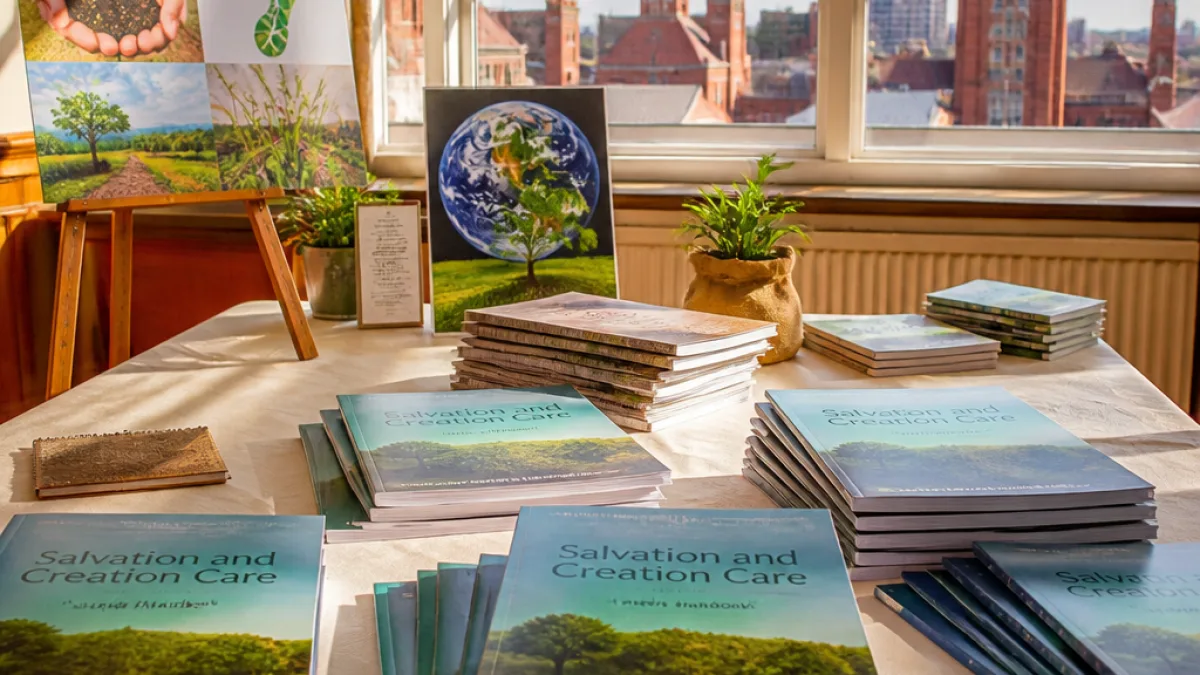
The Diocese of Salford, working with The University of Manchester, has published a suite of free formation resources aimed at helping Catholic parishes, schools and clergy in and around Manchester to connect theological teaching with practical action on environmental care.
Course materials designed for parishes, priests and laypeople
Published ahead of The Season of Creation, the materials—collectively titled Salvation and Creation Care—were developed in collaboration with Professor Peter Scott of The University of Manchester. They are intended for a wide audience: parish groups, deaneries, schools, colleges, clergy and lay participants across the diocese and beyond.
The resources place care for the natural world within the broader Christian narrative of salvation, focusing on three central themes: communion, reconciliation and redemption. That theological framework is used to encourage reflection on the relationship between God, humanity and the whole created order, and to prompt practical changes at community level.
"The resources place care for creation within the wider Christian understanding of salvation. Their central themes—communion, reconciliation and redemption—invite participants to consider the relationships between God, humanity and the whole created world,"
Material is offered at different levels of engagement so groups can choose what suits them. The diocesan announcement sets out three core strands designed for particular settings and purposes.
- Parish course: A ready-to-run, three-session course for parishes, deaneries, schools and colleges, with short videos, a participants' booklet and a leader's handbook.
- Formation for priests: A three-session programme structured around the Catholic method of see, judge and act, to help clergy develop preaching, pastoral guidance and encouragement for practical action in their parishes.
- One-session lay resource: A session designed to build ecotheological awareness among lay participants and to connect theological reflection with local practice.
How it will be used locally
The materials are designed to be flexible: the parish course can be run across three evenings, used as part of a retreat or delivered during an away day. No prior specialist knowledge is required of course leaders, which makes the package accessible to parish volunteers and school staff as well as clergy.
For clergy wishing to host the formation course or to discuss implementation, the diocesan note provides a direct contact: peter.scott@manchester.ac.uk. The resources also include three short videos available on YouTube, each aligned to one of the central themes—communion, reconciliation and redemption—to support group discussion and reflection.
| Resource | Intended audience | Format |
|---|---|---|
| Salvation and Creation Care: A Course for Catholic Parishes | Parishes, deaneries, schools, colleges | Three sessions; videos; booklet; leader's handbook |
| Salvation and Creation Care: Formation | Priests | Three sessions; see, judge and act framework |
| Exploring God’s Creation in Catholic Theology | Lay participants | One session; ecotheological introduction |
The work responds to growing interest among faith communities in translating environmental concern into action. By rooting the conversation in theological themes rather than technical instruction, the resources aim to make environmental stewardship a pastoral priority—something to be preached about, taught in schools and enacted through parish-level initiatives.
Local clergy and educators in Manchester and the wider Salford diocese who want to adopt the material can access it free of charge, making it straightforward for smaller parishes with limited budgets to take part. The diocesan Environment team emphasises that the materials are suitable for varying levels of engagement, encouraging incremental steps as communities seek to reduce their environmental impact and involve congregations in practical care for creation.
This collaboration between an academic department at The University of Manchester and the Diocese of Salford represents a local effort to connect scholarship with parish life, and to give churches tools to play a practical role during The Season of Creation and beyond.











