
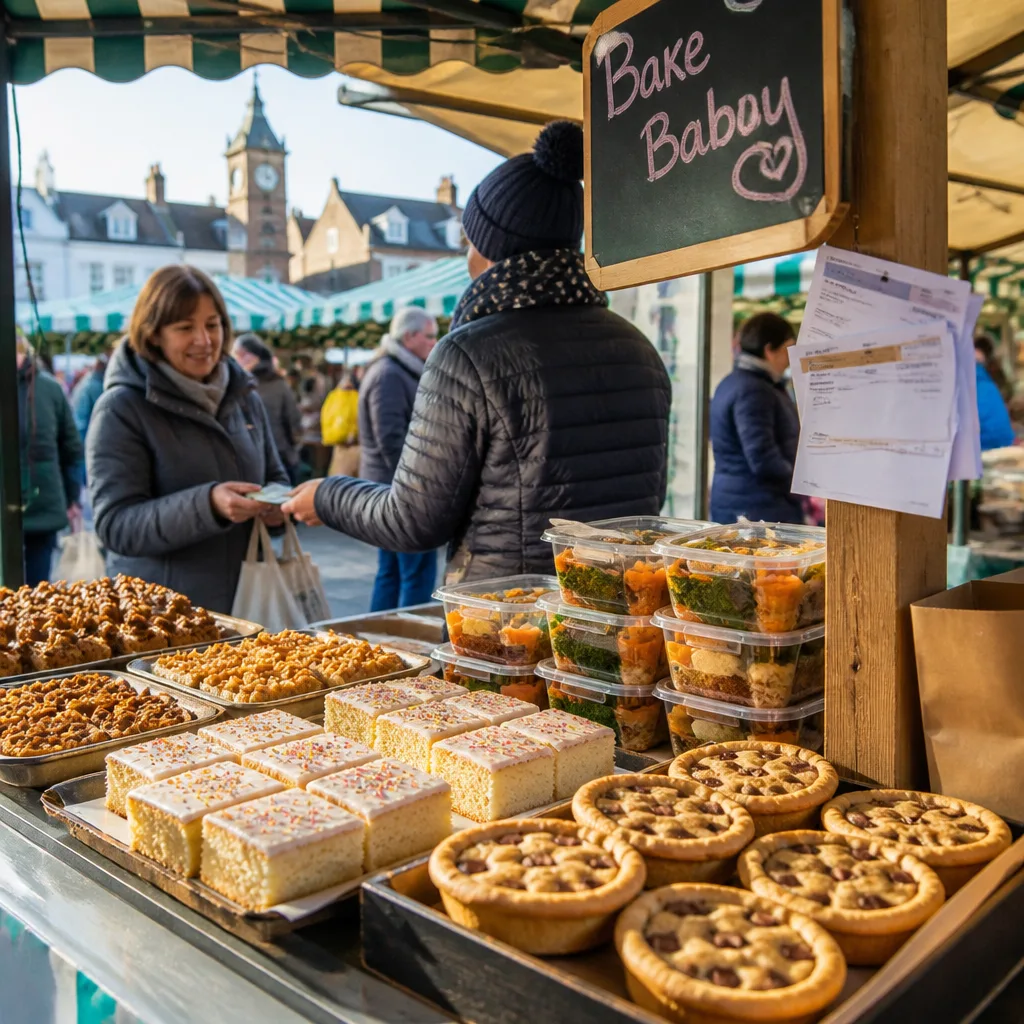
A home baking venture launched during the Covid lockdown has moved from doorstep deliveries to a permanent presence at Oswestry Market, but the owner warns that turning a hobby into a viable business exposes entrepreneurs to the harsh realities of inconsistent demand and running costs.
From kitchen to market stall
The business, trading as Bake Baby, was founded by Abi Smith after she began baking while pregnant during the pandemic. Initially operating from home, she posted photographs of her cakes on Facebook and made contactless deliveries, wearing masks and gloves. The venture has since expanded to a stall at Oswestry Market where Smith sells a mix of traditional sweet bakes and more health‑conscious meal-prep options.
"It started as a lockdown hobby when I was pregnant, I was craving sugar. I started baking, posting photos on Facebook and people were just going mad for it."
Products on offer include nostalgic items such as "school cake", cornflake tarts and deep filled cookie pies, alongside what Smith calls Buff Box Meal Prep — a line aimed at customers watching macronutrients.
| Product category | Examples |
|---|---|
| Traditional bakes | School cake, cornflake tarts, cookie pies |
| Meal prep | Buff Box Meal Prep (healthier options) |
Security, social media and the economics of small business
Smith is candid about the uncertainty that accompanies home-based food enterprises. She temporarily paused Bake Baby after the lockdown period and returned to employment at Costa Coffee because weekly orders can be wildly inconsistent — "one week you'll get loads of orders and the next week you won't get any", she said — a reality that many sole traders and micro-business owners face when deciding whether to scale up or keep a fallback wage.
"When you're just a home baker it's not the most secure job, because one week you'll get loads of orders and the next week you won't get any,"
That instability links directly to wages and household finances. For someone juggling childcare — Smith has two children — the need for predictable income often outweighs the freedom of self-employment. Returning to paid work at a high-street chain provided a steadier pay packet while she rebuilt confidence in the business model.
Smith also highlighted how crucial footfall and visibility are to a stall's survival. She said businesses face an uphill struggle to cover costs associated with premises, notably business rates and utility bills, unless they benefit from a surge in online attention. "You have to make sure you're getting that custom in and I just feel unless you're viral on social media you're not gonna get that custom in forever," she added.
Presentation and customer reach
Having secured a stall, Smith invested in transforming the space with bright colours, particularly pink, to attract passing shoppers — a reminder that retail success at markets often depends as much on presentation and impulse purchases as it does on product quality.
- Diversification: Offering both indulgent bakes and healthier meal-prep boxes widens potential customer bases.
- Income volatility: Home bakers can face sharp week-to-week swings in orders, pushing some back into salaried work.
- Costs of premises: Business rates and bills remain a significant barrier for small enterprises moving from home to market or shopfront.
The Bake Baby story is familiar to many UK micro-entrepreneurs: creativity and skill can generate demand, but translating that into reliable earnings requires navigating the twin challenges of acquiring regular customers and covering the fixed costs of trading space. For policy-makers and business support bodies, the experience underlines why targeted help — from affordable short-term stalls to clearer guidance on rates relief — can make the difference between a hobby and a sustainable source of employment and income.














