
Hospital’s five-decade evolution celebrated for local impact
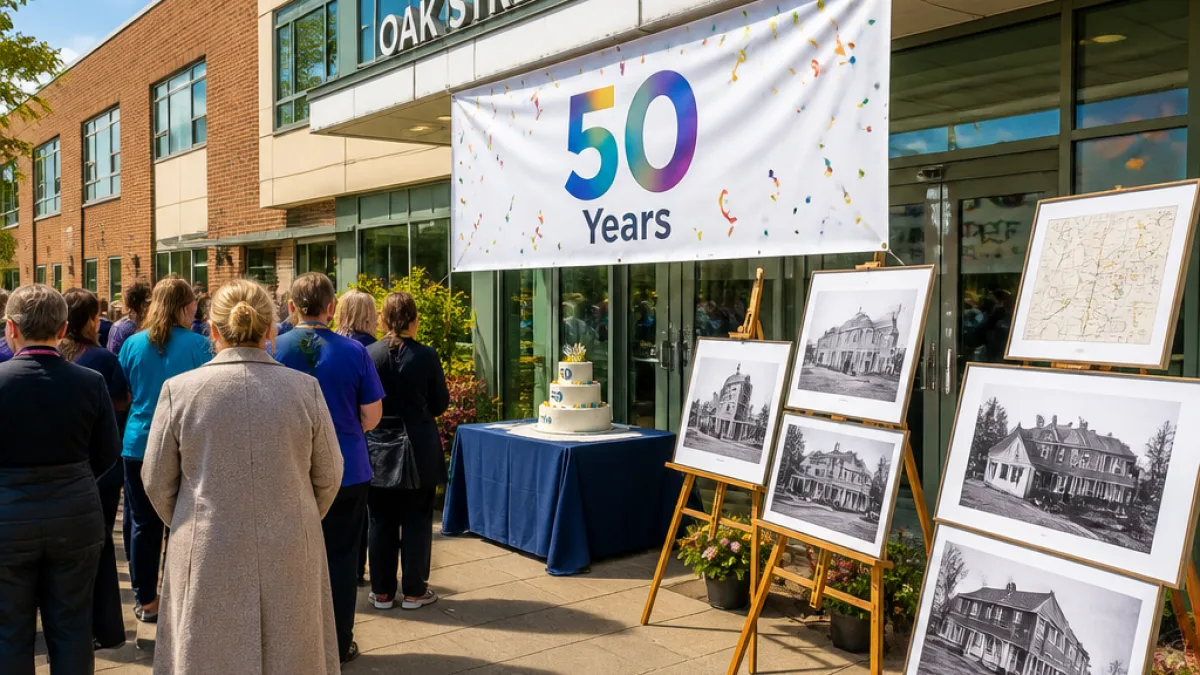
The 50th anniversary of Livingston Regional Hospital has been marked by a local historian who said the facility’s development from a modest clinic to a regional medical centre represented a major turning point for its community. The hospital officially opened at its current Oak Street address in 1976, having previously operated out of an academy dormitory and a building on University Street.
Those changes, the historian said, allowed people who previously travelled to larger cities for treatment to receive care much closer to home. The hospital has also been credited with expanding local employment and acting as an important economic driver for the area.
- Opened at current Oak Street location in 1976.
- Previously operated from a former Livingston Academy dormitory and a facility on University Street.
- Developed from Lady Ann Hospital under Dr Bryant Nivins before later relocations.
Overton County historian Ronald Dishman, who was born at the hospital, emphasised the benefits the medical centre provided to local families. He said it reduced the need to travel to cities such as Nashville or Knoxville for medical care, while also providing local jobs and contributing tax revenue.
"It opened the door for so many people that didn’t have to travel to Nashville, Knoxville or somewhere else," Dishman said. "It opened it for employment, but it also opened the doors for medical care and to be able to do treatment here in Livingston, Overton County."
Dishman traced the institution’s roots to a facility known as Lady Ann Hospital, which was led by Dr Bryant Nivins. The practice was temporarily closed when Dr Nivins served in World War II, before the hospital later moved to premises on University Street behind H. Roberts school and then to the present-day area known colloquially to long-standing residents as Jam Holler.
He described the 1976 relocation as a watershed moment for local healthcare and employment. "Families didn’t have to travel as far," Dishman said. "They got to stay right here in the county ... and they got to be treated and cared for." He added that the hospital’s expansion over five decades included the introduction of specialised services and medical technology that had previously been available only in larger cities.
Community role beyond healthcare
Dishman highlighted the hospital’s wider civic role, noting its support for local schools and county organisations. According to his account, the facility brought visiting doctors into the locality, treated employees well and participated actively in community events and programmes.
He said the hospital "support[ed] community organisations and, groups and the schools" and that it was willing to "open their door" and take part in county life — a stance he suggested helped solidify the institution’s place at the centre of local society.
| Aspect | Details cited |
|---|---|
| Opening at current site | 1976, Oak Street |
| Earlier locations | Lady Ann Hospital; academy dormitory; University Street |
| Community contributions | Local employment, tax revenue, school and organisation support |
While this account comes from a different Livingston in the United States, the themes are nevertheless pertinent to discussions here about the role of regional hospitals: access to specialist services close to home, the economic contribution of health employers, and the value of institutions that embed themselves in community life. For readers in Livingston, Scotland, the hospital’s five-decade history elsewhere serves as a reminder of the broader social and economic effects a stable local medical centre can exert.
The historian’s testimony, based on personal memory and local records, underlines how healthcare infrastructure can change travel patterns for patients, expand employment opportunities and become a civic partner over time. No additional operational or financial figures for the hospital were provided in the account.
Further anniversary events or official statements from the hospital were not included in the material supplied by the local historian.














