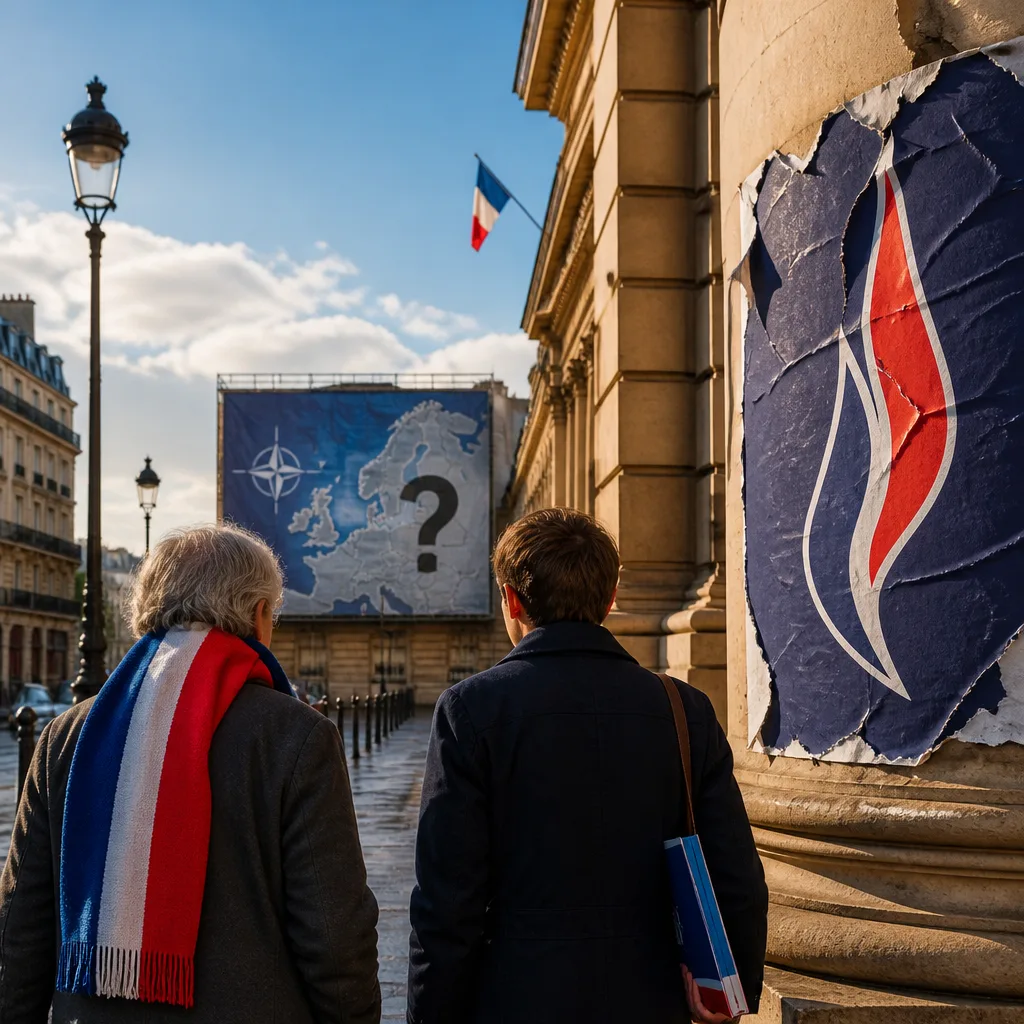
The unexpected lifting of a partial election ban on Marine Le Pen has reopened the contest to lead France and prompted fresh debate over the National Rally’s intentions for the country’s foreign and defence policy, a leading analyst said.
Candidate reversal unsettles party plans
Jean‑Yves Camus, a French political scientist who specialises in far‑right movements, told EUobserver that a court decision which shortened Le Pen’s sanction changed the calculus inside the National Rally. Until 7 July, it was unclear whether Le Pen or the more recently prominent Jordan Bardella would be the party’s presidential candidate.
Camus said Bardella had been preparing for a presidential campaign for more than a year. The court’s decision, he argued, "surprised them greatly" and stripped Bardella of what some in the party had hoped would be a clean break from Le Pen’s leadership.
“If Le Pen wins the presidential election, he will become her prime minister, at least according to what she said earlier,”
The quote, attributed to Camus’s description of remarks within the party, underlines internal tensions. Some figures close to the National Rally are said to view Bardella as – in Camus’s words – too young for the highest office. Bardella will be turning 31 next month, a fact Camus highlighted when comparing European precedents.
| Figure | Age (noted) |
|---|---|
| Jordan Bardella | 31 |
| Sebastian Kurz (Austria) | 31 (as cited example) |
Policy implications for NATO and the EU
Camus set out broader questions about what a National Rally victory might mean for France’s international posture. He suggested the party is interested in changing aspects of France’s traditional foreign policy, and that a Le Pen presidency could result in significant shifts.
Observers and governments across Europe will be watching for signals on two fronts: relations with the European Union and France’s role within NATO’s command structures. The interview raised the possibility that a far‑right administration might seek to deviate from longstanding policies.
Succession and strategy within the National Rally
The account provided by Camus also illuminates an internal dynamic in which the question of who leads the party is not merely personal but strategic. For months Bardella emerged as the likely successor to the Le Pen generation, offering the party a different public face. The court ruling, Camus said, removed that certainty and placed the movement in an unfamiliar position ahead of next year’s presidential poll.
- Le Pen’s eligibility: A court decision shortened her ban, allowing her to enter the race.
- Bardella’s stalled ambitions: Months of preparation for a presidential bid were disrupted by the verdict.
- Potential power arrangement: Le Pen has suggested Bardella would serve as prime minister if she were elected.
Camus noted that Bardella has yet to win election in his own right and that some in the party question his experience. He declined to predict electoral outcomes, focusing instead on the institutional consequences of leadership changes and the policy directions those might produce.
For London and other European capitals, the election is significant because France is a leading military power on the continent and a permanent member of the UN Security Council. Any serious prospect of a change in Paris’s commitment to existing alliances will be monitored closely by NATO and EU partners.
The case also underlines how legal and judicial developments can reshape political horizons. The timing of the court decision, and Le Pen’s consequent choice to run, has altered the internal balance of the National Rally and injected uncertainty into a contest that will have ramifications beyond France’s borders.
Camus’s analysis does not attempt to forecast the result. It does, however, sketch the dilemmas facing a party that must reconcile leadership succession with strategic priorities at a moment when Europe’s security arrangements are under scrutiny.