
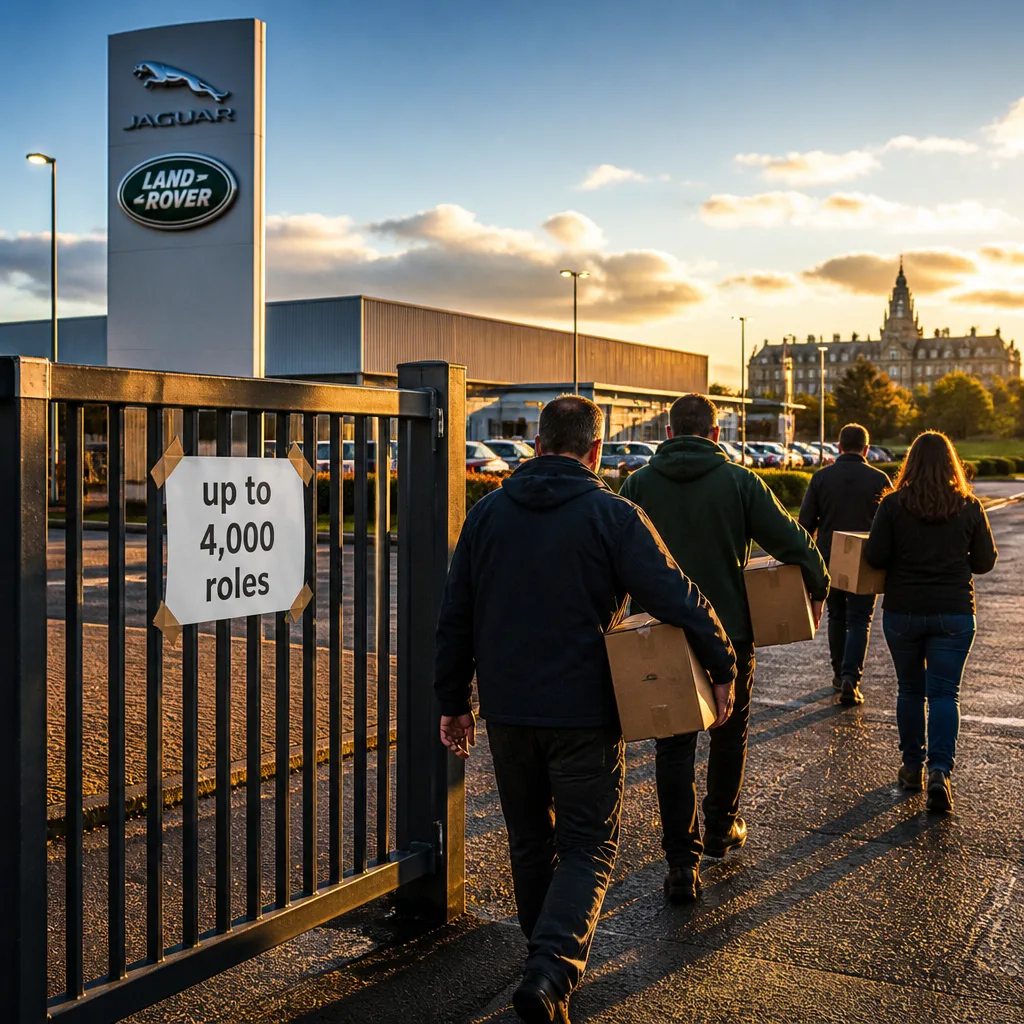
Jaguar Land Rover (JLR) has told staff to expect a voluntary redundancy programme potentially affecting up to 4,000 roles, as the UK’s largest carmaker moves to implement £1.7bn of cost savings over two years. The measures, which represent almost 12% of JLR’s 34,000-strong UK workforce, come amid a slump in sales and wider sector headwinds.
Government declines to underwrite jobs
Before crunch talks between JLR, union leaders and government officials, the business secretary, Jonathan Reynolds, signalled ministers would not prop up the company with public funds to avoid redundancies. On the BBC’s Laura Kuenssberg show he said it was not his job to “intervene and run businesses” and rejected the idea of a taxpayer-funded bailout.
“Not if it’s to bail people out. If this is about making sure over time that workforce is right to make the business as competitive as possible, that’s the conversation we need to have,” Reynolds said.
The government stance sets a clear boundary between industrial strategy support and direct rescues. For workers and local economies that depend on JLR sites, the rejection of a bailout narrows the options available to limit job losses.
Why JLR is cutting jobs
JLR, owned by India’s Tata Motors, pointed to a difficult trading backdrop as it seeks to protect margins and restructure costs. The company has already warned of a sales slump exacerbated by a cyber-attack last year and the impact of tariffs imposed during the Trump administration. Sources told media the redundancies are likely to be weighted towards more senior management and research and development roles, rather than production-line staff.
Company briefings indicate staff were informed on Friday that a voluntary redundancy scheme had begun, with further details expected as soon as Monday and the possibility that compulsory redundancies could follow if targets are not met.
What this means for wages, prices and jobs
At face value, a reduction of up to 4,000 roles is primarily a jobs story. But it also has broader implications. Fewer R&D staff could slow model development, which over time could affect product competitiveness and pricing power. Cuts in higher-paid management and technical roles may reduce immediate wage costs for the company, but could also lead to longer-term increases in outsourcing or offshoring of higher-value functions.
For workers, the voluntary nature of the initial programme may spare some compulsory redundancies, but voluntary exits often attract more senior, experienced staff who command higher pay. That can depress average wages remaining in the firm and potentially raise recruitment and training costs later, if roles need to be re-filled.
- Scale: Up to 4,000 redundancies — almost 12% of the UK workforce of 34,000.
- Cost savings: £1.7bn to be cut over two years.
- Likely focus: Management and R&D roles rather than shop-floor production, according to sources.
| Metric | Figure |
|---|---|
| UK workforce (approx.) | 34,000 |
| Potential job cuts | Up to 4,000 |
| Share of workforce | ~12% |
| Planned savings | £1.7bn over two years |
JLR’s spokesperson characterised the moves as an attempt to “make the business as competitive as possible” in a challenging global market, saying the company needed to adapt to evolving conditions. The firm’s largest UK plant is in Solihull in the West Midlands, and the scale of the plan means regional economies that host JLR facilities could feel acute effects.
The situation will also test political promises. Labour mayor Andy Burnham has pledged to “reindustrialise” Britain; significant job losses at a flagship UK carmaker will be an early and tangible test of how such ambitions translate into protecting existing employment when private owners and market pressures push for cost reduction.
Union leaders will press both the company and ministers for mitigation measures at the upcoming talks. With ministers resisting direct cash assistance, attention is likely to shift to retraining, redeployment support and targeted regional interventions to soften the local impact — measures that are cheaper than a full-scale bailout but may not prevent significant job losses.
For now, the immediate question is how many staff accept voluntary redundancy and whether that suffices to meet Tata’s cost-saving targets. If not, compulsory redundancies could follow, extending the economic uncertainty for thousands of workers and their communities.