
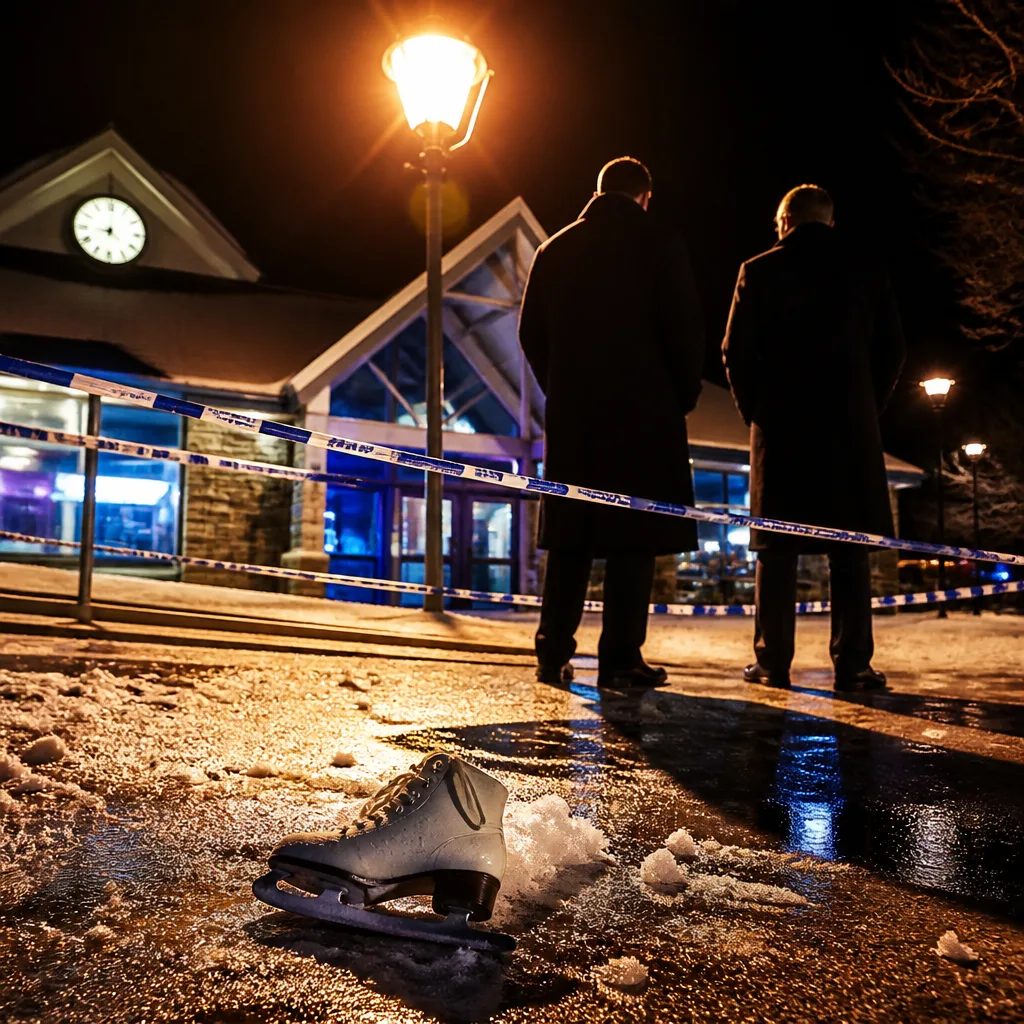
ITV will broadcast a six-part crime drama that follows two senior investigators whose probe into the death of a 16-year-old figure skater increasingly points to internal failings and alleged cover-ups within their own team.
Plot and creative team
Adapted from a novel by Charlotte Langley and scripted by Megan Gallagher (writer of All Her Fault), the series positions DI Emma Crane and DI Tom Radley at the heart of an enquiry that quickly grows beyond a tragic death into a tangled institutional crisis.
"As DI Emma Crane and DI Tom Radley dig deeper into what starts as a tragic death that sends shockwaves through the town of Wakestead, a murder enquiry soon spirals into a tangled web of lies, institutional cover-ups and moral compromise."
The central roles are played by Michelle Keegan as DI Emma Crane and Douglas Booth as DI Tom Radley. Publicity material describes a narrative that tests trust inside the force as well as the detectives’ ability to pursue justice.
Cast and characters
The production assembles an ensemble that mixes familiar television faces with other performers. Principal casting and the characters they portray are listed below.
- Michelle Keegan — DI Emma Crane
- Douglas Booth — DI Tom Radley
- Matilda Freeman — Sophie Madsen (the 16-year-old whose death triggers the inquiry)
- Ian Hart — DCI Kenneth Walker
- Gavin Spokes — DC Joel Stevens
- Josh Bolt — DC Douglas James
| Actor | Role |
|---|---|
| Joe Armstrong | Kyle Frasier |
| Nathan Mensah | DC Lewis Brimah |
| Ceallach Spellman | PC Callum Drummond |
| Vikash Bhai | Kapil Manek |
Additional credited performers include Suanna Braun, Jamie Kenna, Anya McKenna-Bruce, Karen Ascoe, Nigel Boyle, Aaron Anthony, Annabelle Dowler, Grace Saif and Cache Vanderpuye, among others.
Themes and wider context
Producers describe the series as exploring how a routine investigation can fracture trust and expose systemic problems. The storyline touches on issues often examined in contemporary policing dramas: institutional accountability, the pressures on frontline investigators and the moral compromises that can occur within a team under intense scrutiny.
- Institutional scrutiny — the plot centres on allegations of cover-up and corruption within a police unit.
- Professional ethics — detectives' duty to the case is tested against internal politics.
- Public interest — the death of a young person and the community response form a core element of the narrative.
Crime drama has long been used as a vehicle to examine real-world policing issues, and the series joins a crowded field of recent productions that interrogate institutional behaviour without presuming outcomes. As with any fictional portrayal, observers in policing and criminal justice will likely scrutinise how realistically and responsibly such themes are handled.
ITV has released promotional material including a trailer for the series. The programme has been compared by some commentators to other hard-hitting north-of-English police dramas because of its emphasis on moral complexity and institutional tension.
Broadcasters and creative teams frequently cite novels and contemporary events when shaping police stories for television. This production credits Langley’s novel as the source and Gallagher as the writer shaping the adaptation.
The series is likely to generate discussion about depictions of police culture and the responsibilities of storytellers when representing sensitive subjects such as the death of a child and allegations of wrongdoing within a public service. Viewers and critics will watch both for the performances of the leads and for the manner in which the programme balances dramatic imperatives with the realities of criminal investigation.














