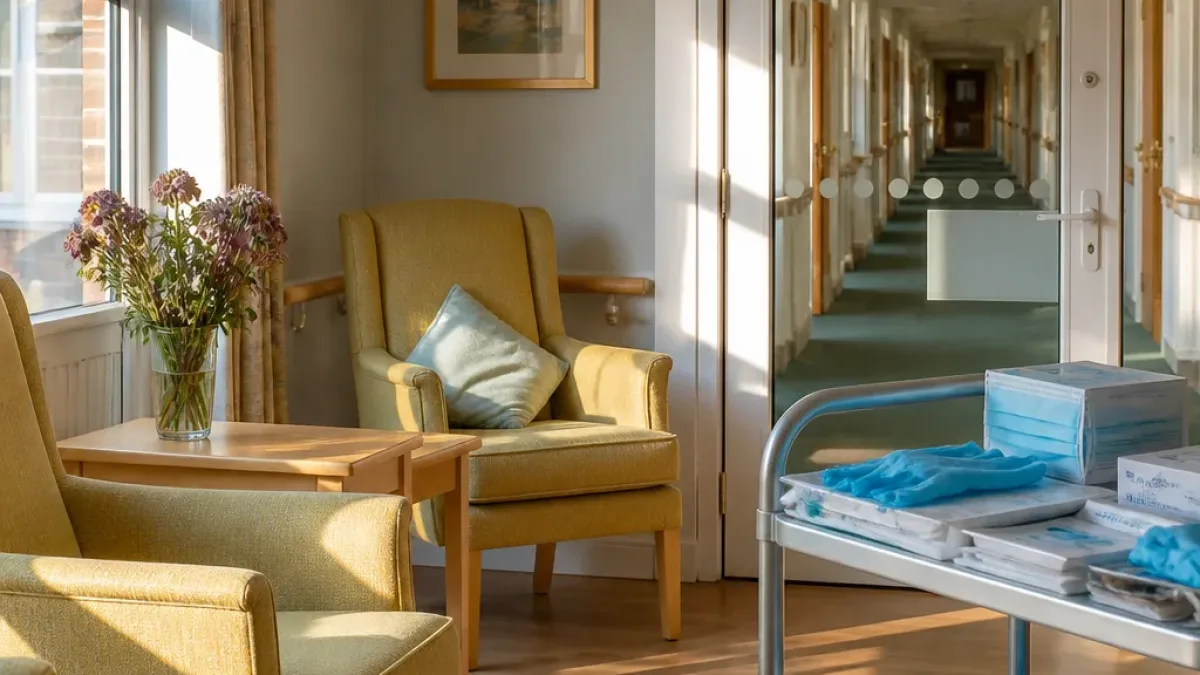
The public inquiry into the UK’s Covid-19 response has found that government missteps left care homes dangerously exposed, allowing the virus to spread “like wildfire” among elderly and vulnerable residents. The report, led by Lady Heather Hallett, says the adult social care sector was treated as an afterthought during the crisis and that decisions taken to protect hospital capacity sometimes came at the expense of people in care settings.
Failures in policy and protection
Lady Hallett said a serious omission was the failure to require isolating patients discharged from hospitals into residential care without testing, a policy that accelerated transmission among residents and staff. The inquiry also criticised restrictions on visits, which it found caused “immense emotional harm” and left many residents feeling profoundly isolated and abandoned.
“The adult social care sector as a whole appeared to be something of an afterthought, where the mantra of ‘protecting the NHS’ sometimes came at the expense of the users and providers of care,”
The report concentrates on adult social care and residential homes and is the sixth in a planned series of ten reports from the inquiry. It details how measures designed to free up NHS beds at the start of the pandemic — including discharging patients into care homes before mandatory testing was introduced — created environments conducive to rapid viral spread.
Human cost and scale
Between March 2020 and July 2022, more than 43,000 people died from Covid-19 in UK care homes, according to the inquiry’s findings. The report highlights not only the death toll but the emotional consequences for families who were often prevented from being with dying relatives, leaving many burdened with persistent guilt.
The inquiry so far has proposed 55 recommendations aimed at improving future pandemic preparedness for the care sector. It has become the most costly public inquiry in the nation’s history, with spending to date exceeding £200m.
Accountability and evidence
Former health secretary Matt Hancock appeared before the inquiry and accepted responsibility for the government’s choice to discharge hospital patients into care homes at the pandemic’s outset. The policy led to approximately 25,000 patients being moved into care settings in March and April 2020 before mandatory testing was introduced on 15 April 2020. The policy was later judged unlawful by the High Court.
Hancock said the decision was the “least worst decision to a terrible problem”.
The inquiry emphasises that care homes received inadequate protection precisely when they most required support. It concludes that this lack of appropriate safeguarding and the operational choices made by authorities contributed to conditions allowing rapid transmission of the virus within residential care facilities.
- More than 43,000 care home deaths from March 2020 to July 2022.
- About 25,000 patients discharged into care homes in March–April 2020 before mandatory testing.
- The inquiry has issued 55 recommendations and has cost over £200m so far.
| Metric | Value |
|---|---|
| Care home deaths (Mar 2020–Jul 2022) | 43,000+ |
| Patients discharged into care homes (Mar–Apr 2020) | ~25,000 |
| Recommendations in this report | 55 |
| Inquiry cost to date | £200m+ |
The report’s findings are a direct challenge to how the government balanced protecting hospital capacity with safeguarding residents in social care. It underlines systemic weaknesses in provision, planning and communication between health services and care providers at the pandemic’s most critical moments.
As the inquiry continues to publish further sections of its work, the recommendations in this report are likely to shape debate on how the UK organises, funds and protects adult social care in future health emergencies. The scale of loss and the emotional harm documented will also intensify calls for clearer accountability and concrete reforms to prevent a repeat of the same mistakes.