A visible sign of a wider problem
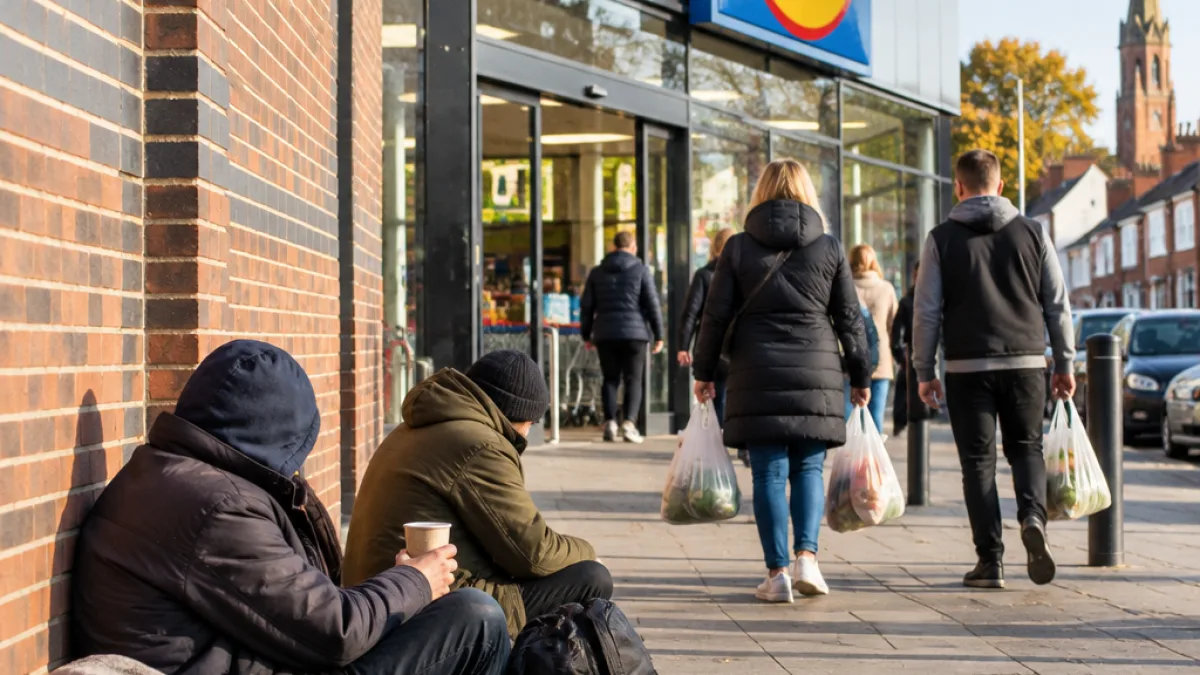
A supermarket on Dudley Road has become the setting for a stark account of homelessness in Birmingham, after a reporter encountered people asking for help outside the store. The Lidl is in Winson Green, Birmingham, rather than the town of Dudley, but the scene reflects pressures across the wider West Midlands urban area.
One man approached outside the shop and asked for assistance. When he was offered food or a drink instead of money, he requested a Robinson’s Fruit Shoot and a vegetarian falafel. He declined a bottle of water when that was the only drink available. A second person sleeping rough was nearby, sitting against a wall with a paper cup.
The account is not an isolated snapshot. Official figures cited in the report show that the number of people recorded as sleeping rough in Birmingham increased by 15 per cent over a year. The total rose from 59 people counted on one night in autumn 2024 to 68 on the corresponding count a year later.
Personal circumstances behind the figures
The 52-year-old man, who was originally from Bristol, described a chain of events that had left him living on the streets. He said his wife had died and that he then spent a decade drinking.
“My wife passed away and I ended up drinking for 10 years.”
His explanation places an individual experience alongside the wider figures, although the report does not establish that his circumstances are representative of every person sleeping rough in Birmingham. It does, however, underline how bereavement and alcohol dependency can form part of a complicated route into homelessness.
Pressure on homelessness services
Further data cited in the report indicates the scale of demand facing the local authority. Between January and July, 7,231 people approached Birmingham City Council either as homeless or because they were at risk of losing their accommodation. That figure covers people seeking help or facing homelessness, rather than indicating that all were sleeping rough.
The distinction matters. Rough sleeping is the most visible form of homelessness, but many more people may be threatened with losing their home or moving between temporary arrangements. The figures therefore point to a broader housing and support challenge than the number seen on a single night can show.
Advice on helping safely
Birmingham City Council has urged members of the public not to give money directly to people begging. Instead, it recommends donations to Change into Action, a scheme through which local charities can offer practical support intended to help people leave the streets.
- Rough sleeping in Birmingham rose from 59 to 68 people in the cited annual comparison.
- The increase was reported as 15 per cent.
- Change into Action was identified as an alternative route for donations and practical assistance.
The council’s position reflects a difficult balance. People approached on the street may need immediate food, drink or compassion, while longer-term progress can require specialist help with accommodation, health, addiction and other circumstances. The report does not provide a breakdown of how many people received support or moved into housing after being referred to services.
| Measure | Reported figure |
|---|---|
| Rough sleepers, autumn 2024 | 59 |
| Rough sleepers, one year later | 68 |
| People approaching Birmingham City Council as homeless or at risk, January-July | 7,231 |
For people in Dudley and neighbouring communities, the episode is a reminder that homelessness is visible on well-used routes across the conurbation, including the road that bears Dudley’s name. But the figures and personal testimony also show why a single street encounter cannot explain the whole crisis. The immediate need is plain; the harder question is whether available services can provide enough sustained support to prevent people returning to the pavement.