
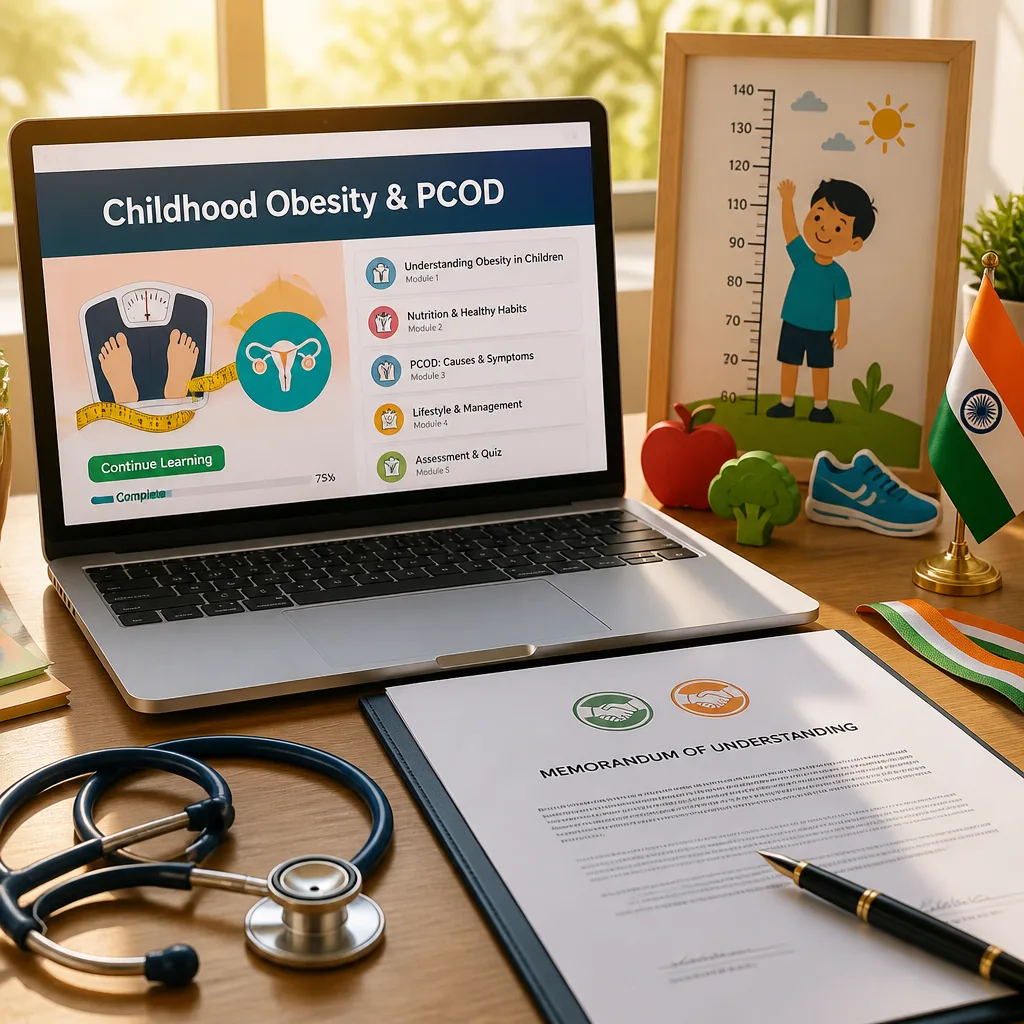
As lifestyle disorders such as obesity, diabetes, fatty liver disease and polycystic ovarian disease (PCOD) climb in India, two national health organisations have agreed to create structured digital learning for patients and caregivers. The Healthy Indian Project (THIP) has signed a Memorandum of Understanding with the Indian Society of Lifestyle Medicine (ISLM) to develop evidence‑based patient education programmes focussed on Childhood Obesity and PCOD.
What the partnership will do
Under the terms of the partnership, ISLM will act as the knowledge partner, providing scientific review and academic oversight. THIP Academy — the digital patient education arm of THIP — will be responsible for designing the curriculum, producing the learning materials and delivering the courses through a self‑paced online platform.
Organisers say the programmes will go beyond traditional leaflets and one‑off awareness drives. Instead, they will be built as structured learning experiences that patients and carers can access at any time, combining multiple learning methods to support long‑term behaviour change.
- Expert‑led videos to explain conditions and treatments;
- Interactive modules to teach practical skills such as dietary planning and activity goals;
- Assessments to check understanding and personalise learning; and
- Practical guidance for day‑to‑day management.
Why digital patient education matters
Healthcare professionals increasingly accept that medicines alone are rarely sufficient to manage chronic, lifestyle‑driven diseases. Long‑term outcomes depend heavily on patients’ knowledge, skills and sustained behaviour change — areas that standard clinical encounters often struggle to address.
The THIP–ISLM collaboration reflects a broader trend: medical societies are extending their role beyond academic conferences and journals to improve public understanding of disease, while digital education platforms are being used to deliver credible, evidence‑based information directly to the public.
| Feature | Purpose |
|---|---|
| Curriculum design | Structured, evidence‑based learning |
| Delivery | Self‑paced online platform |
| Academic oversight | Scientific review by ISLM |
Clinical context and implications
Lifestyle medicine — an approach that integrates nutrition, physical activity, sleep, stress management and other behavioural strategies — is gaining recognition across specialities. Clinical guidelines increasingly recommend these interventions alongside pharmacological treatment for a range of chronic conditions.
By producing accessible, structured education aimed at both patients and caregivers, the new programmes aim to support earlier intervention and sustained self‑management. For childhood obesity, in particular, improving family knowledge and day‑to‑day practices can be pivotal to altering a child’s long‑term health trajectory. For PCOD, patient understanding of dietary, exercise and stress‑management options can complement medical therapy and improve outcomes.
Digital learning also offers practical advantages in a country as large and diverse as India. Self‑paced modules mean materials can be accessed regardless of local clinic schedules or geographic barriers. If widely adopted, such programmes could help standardise the quality of patient information on complex, chronic conditions.
While the agreement between THIP and ISLM is an early step, it underlines a shifting landscape in public health communication — from one‑way awareness campaigns to interactive, evidence‑led education that aims to change behaviour over time. The real test will be whether these courses reach the people who need them and whether they translate into measurable improvements in management and prevention.














