
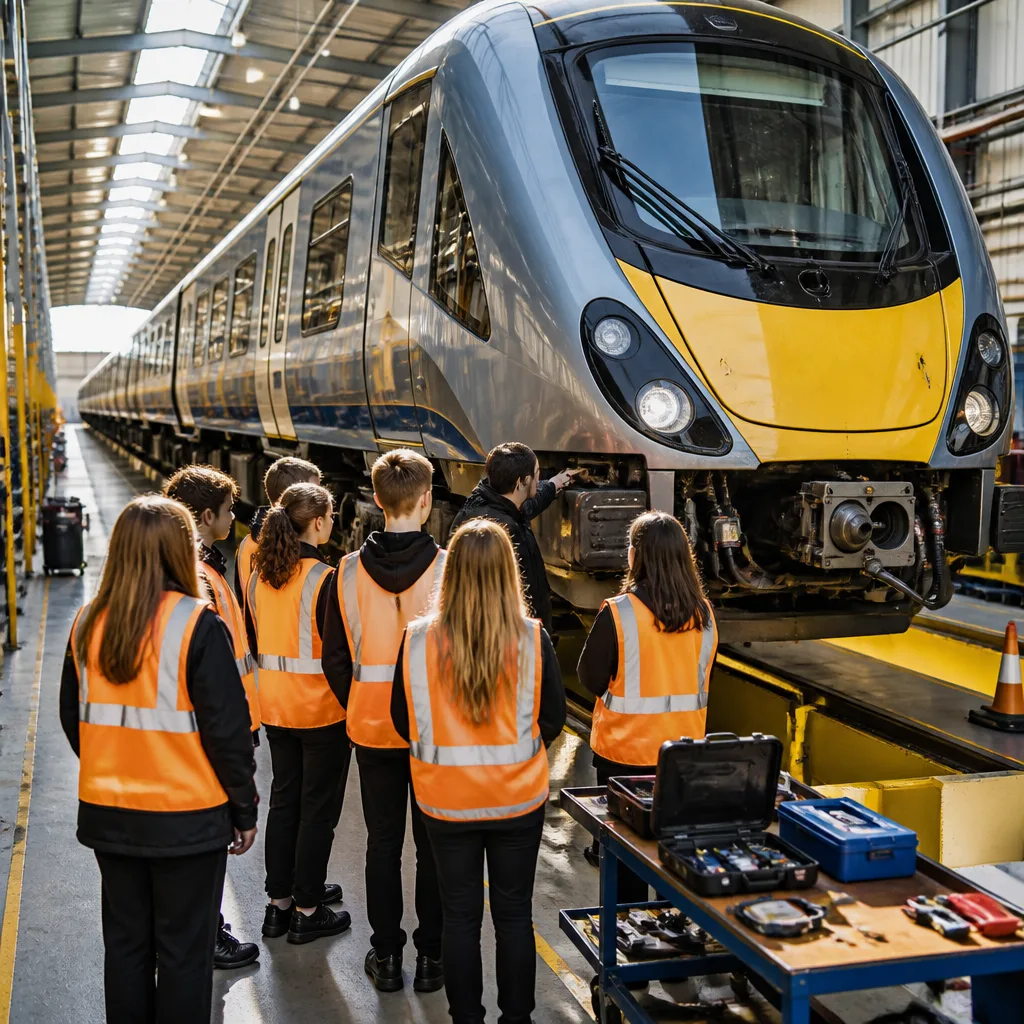
Hitachi Rail hosted 20 young people at its Bounds Green depot in London for a day designed to give pupils a direct view of careers in engineering and rail maintenance, the company and its charity partner said.
Practical experience to widen routes into engineering
The visit delivered EDT’s Industrial Cadets Bronze Routes into STEM programme, enabling participants to observe maintenance on modern trains and learn how a depot supports operators to keep services running. Organisers said the activities aimed to raise aspirations, build confidence and showcase the variety of routes into engineering.
During the day, students met Hitachi Rail staff, who explained their career paths and offered practical advice about entering the railway industry. The engagement formed one strand of Hitachi Rail’s longer-term commitment to skills and STEM education in the UK.
Part of a broader skills and education effort
Hitachi’s involvement in education extends beyond single visits. The firm helped co-found the South Durham University Technical College, has donated equipment to support rail engineering courses at a London college and provides apprenticeships across its UK sites.
The company also highlighted recent activity across the rail sector aimed at opening up opportunities to younger people. In April, fourteen Year 8 students visited East Midlands Railway headquarters in Derby to explore careers, and in February the minimum age to become a train driver in the UK was lowered from 20 to 18, potentially broadening access to operational roles.
- Hands-on depot visit for 20 students at Bounds Green, London
- Delivery of EDT’s Industrial Cadets Bronze programme
- Longstanding commitments: co-founding a technical college, equipment donations, apprenticeships
- Related sector moves: Year 8 visits to Derby, lowering of train driver minimum age
| Initiative | Detail / Date |
|---|---|
| Depot visit | Bounds Green, London — 20 students (date not specified) |
| East Midlands Railway visit | April — 14 Year 8 students visited Derby HQ |
| Train driver age change | February — minimum age reduced from 20 to 18 |
| Education partnerships | Co-founded South Durham UTC; equipment donations; apprenticeships |
Why industry engagement matters
Policymakers and employers have repeatedly emphasised the need to broaden participation in STEM to secure future skills for infrastructure and manufacturing. The rail sector, which combines engineering, safety-critical systems and customer-facing roles, is a particular focus because it requires technicians and engineers with specialised training.
Practical workplace contact — such as depot visits, cadet programmes and apprenticeships — is known to help young people understand career options and the qualifications they need. For employers, early engagement can build a pipeline of talent that is more likely to choose and stay within the sector.
Hitachi Rail’s combination of school engagement, formal partnerships with education providers and on-site apprenticeships reflects a multi-pronged approach to tackling skills shortages. While individual visits are valuable, the real test is whether such interventions lead to sustained increases in recruitment, diversity and retention across the industry.
By showcasing roles on modern trains and in depot operations, the company aims to make technical careers tangible to young people who might otherwise not consider engineering. The lowering of the train driver age threshold to 18 this year further widens the range of entry points available to those completing secondary education.
As the UK plans significant investment in transport and infrastructure over the coming years, initiatives that connect employers with schools will remain central to ensuring the workforce is prepared. Hitachi Rail’s recent work at Bounds Green is one visible example of how an employer can try to influence the future labour market by combining outreach with longstanding educational partnerships.









