Hampshire and Isle of Wight Constabulary has begun a pilot scheme that will deploy volunteer-operated drones to assist policing in rural areas, a move the force says is intended to strengthen evidence gathering and improve response times for offences that disproportionately affect farming and estate communities.
Volunteer pilots to support live incidents
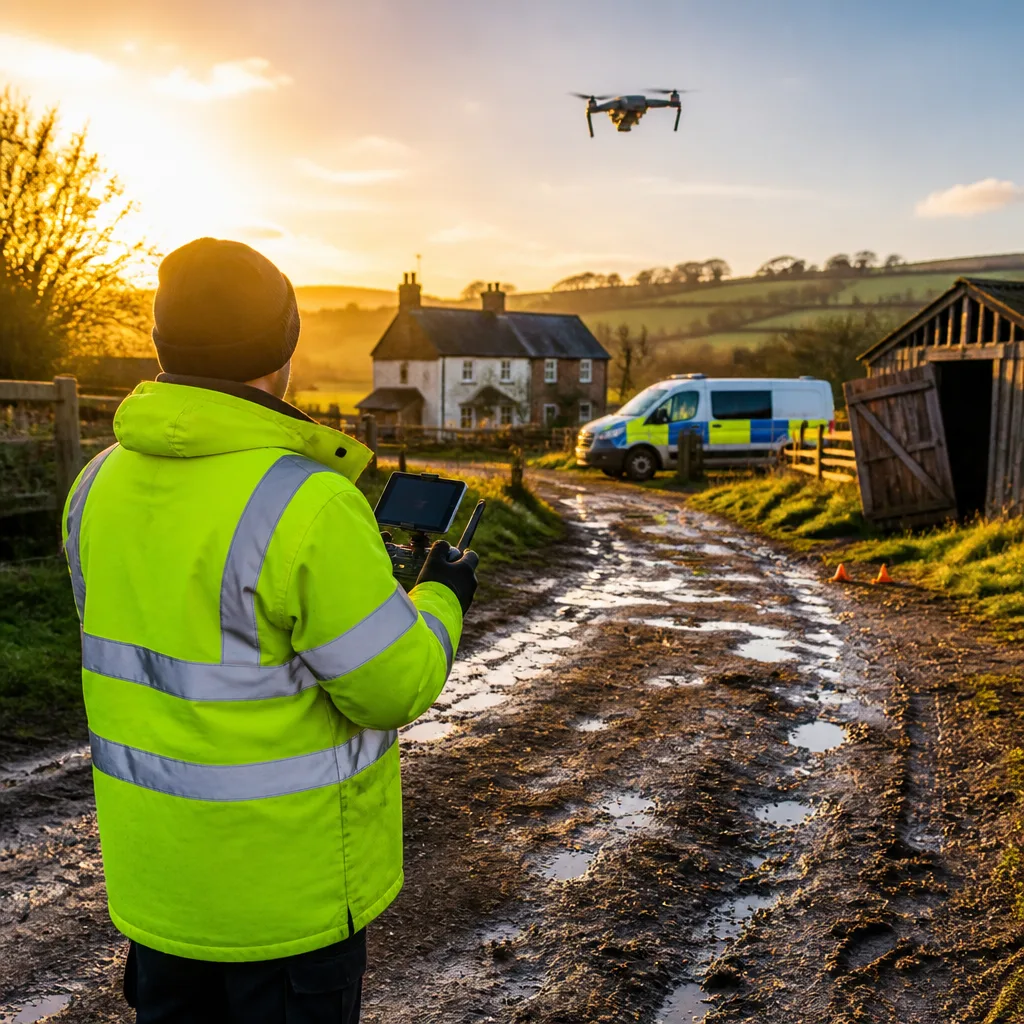
The initiative, believed to be the first of its kind in the country, involves volunteers who have completed a bespoke drone operators’ course and will be available to support live police incidents across rural Hampshire. Initially five volunteers are involved in the pilot, with plans to expand the number of participants if the scheme proves successful.
Detective Inspector Stu Ross, who is leading the project, framed the scheme as a partnership between the police and rural communities to tackle crime that causes persistent disruption for land-based businesses and residents.
"Rural criminals cause continued misery to farmers, landowners, gamekeepers and estate owners across the county, and indeed across the country," said the officer. "It’s crucial that we all come together as a police service, as a partnership and as a community to tackle this."
Uses and aims
The force said the drones will be used for evidence gathering and to provide a rapid aerial response in incidents including hare coursing, poaching and non-dwelling burglaries. The project also aims to improve information sharing between police and rural stakeholders by employing advanced technology tailored to countryside policing needs.
Police and Crime Commissioner Donna Jones, who contributed funding for the pilot, described the scheme as a practical way to support communities affected by rural crime and indicated that, if the trial meets expectations, she intends to extend the model across the whole force area.
"Rural crime is a blight on business and rural communities across our two counties. I am pleased to fund this drone pilot, which will help rural communities, landowners, farmers and the police work together to prevent crime," Ms Jones said.
Local funding and community-led approach
The scheme has been supported financially by multiple local bodies, reflecting the community-led nature of the pilot. Test Valley Borough Council and the North Wessex Downs National Landscapes 'Farming in Protected Landscapes' programme are among the contributors alongside the police and crime commissioner.
Stewart MacDonald, the councillor responsible for community-led projects at Test Valley Borough Council, said the council was proud to back the initiative, which he described as a collaboration between local volunteers and the police.
- Current volunteers: 5 trained operators taking part in the pilot
- Primary operational uses: evidence collection, rapid response to rural incidents
- Potential expansion: force-wide roll-out under consideration if pilot succeeds
| Stakeholder | Role |
|---|---|
| Hampshire & Isle of Wight Constabulary | Project lead; operational integration |
| Police & Crime Commissioner (Donna Jones) | Funding and strategic support |
| Test Valley Borough Council | Local funding and community partnership |
| North Wessex Downs NWDNL - Farming in Protected Landscapes | Financial support |
The force has emphasised training and regulation: each volunteer has passed the specially developed course required to operate drones in support of policing activity. Organisers said volunteers will operate the aircraft under the direction and oversight of police to ensure legal and evidential standards are met.
While technological assistance in policing is not new, the novelty of this pilot lies in its formalised use of trained community volunteers to execute police-directed drone operations in a rural setting. Observers will be watching whether the approach can improve detection and prosecution rates for crimes that are often dispersed and hard to police due to the geography and scale of rural areas.
If the pilot meets its objectives, the PCC has indicated the model could be adopted across the full force area, potentially offering a template for other forces considering similar community-integrated, technology-led responses to rural crime.
The force has not published any operational figures for incidents attended using the drones during the pilot to date. Further evaluation is expected as the scheme develops and more volunteers are brought on board.