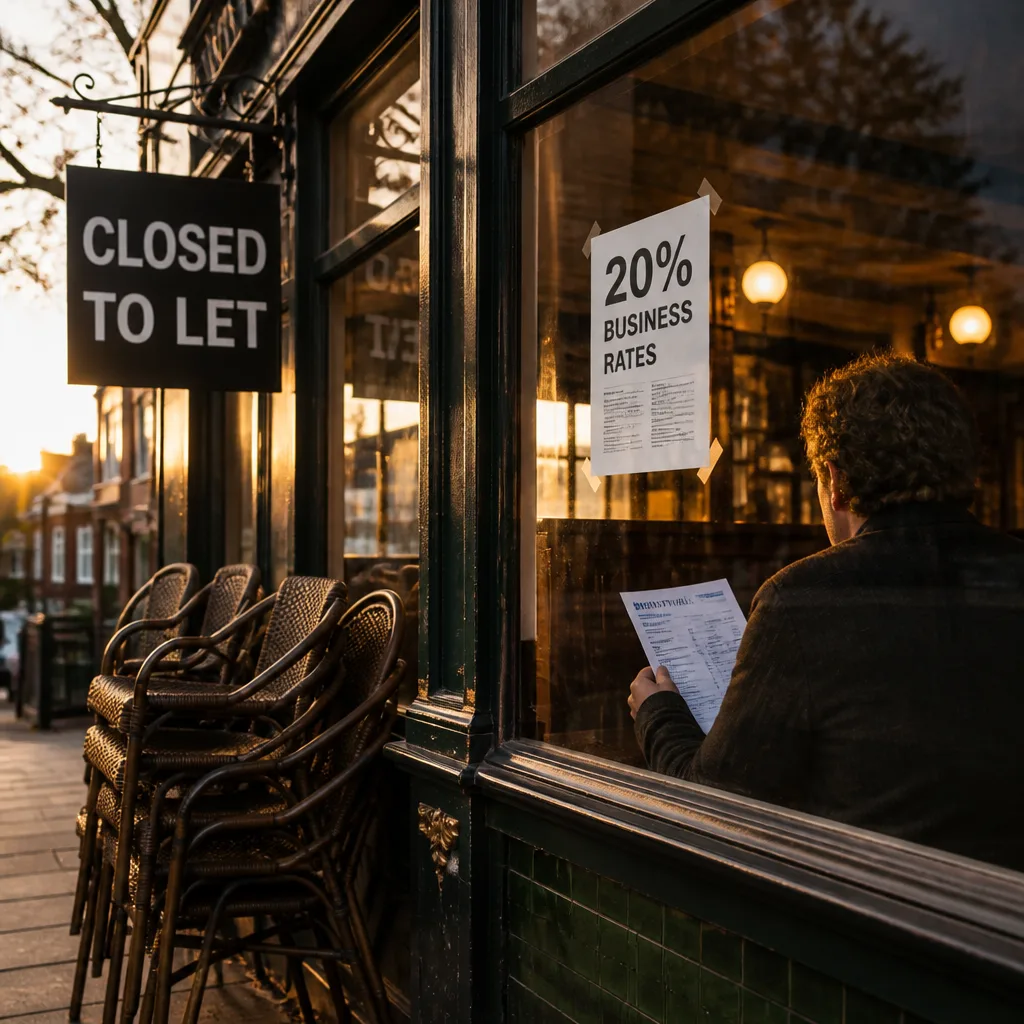
The government has announced a 20% cut to business rates for pubs, social clubs and live music venues from the next tax year, a move the hospitality sector has welcomed but described as too small to reverse a wave of closures and mounting financial pressure.
Numbers underline fragile sector
Campaigners point to alarmingly high closure figures this year: according to Campaign for Real Ale (CAMRA), 733 pubs have closed so far in 2026, following 1,103 closures in 2025. Industry bodies say these losses translate into fewer jobs and thinner local economies, even if some headline figures on savings sound reassuring.
- Average saving per pub: around £1,100 a year from the 20% rates cut.
- Closures reported: 733 in 2026 so far; 1,103 in 2025 (CAMRA).
Those numbers are a blunt reminder that business rates are just one of several cost pressures on hospitality firms. Operators face rising utility bills, wage pressures and general inflationary costs that bite into already tight margins.
Operators say the cut is helpful but limited
Landlords in Dorset struck a cautious note. Matt Mullett, landlord of The Anchor Inn in Seatown, welcomed the support but emphasised that the reduction would not cover broader cost increases.
“While the 20 per cent cut in business rates is a step in the right direction, this alone is not enough to cover the rising costs in utility bills, pay increases and broader inflation.”
Mullett called for a “more comprehensive review” of rates and for VAT cuts to align the UK with some European competitors — a recurring industry request not addressed in the government announcement. Another landlord, Alex Marshall of the Pymore Inn near Bridport, urged caution, saying the sector would wait to see the policy in practice.
What the figures mean for wages, prices and jobs
A saving of roughly £1,100 per pub will be modest compared with many of the cost headwinds landlords cite. Even if every pub passed the full saving to staff through pay rises (which is unlikely), the uplift per employee would be small given typical staffing levels and wage rates in the sector. More plausibly, the relief will be used to absorb rising operational costs, shore up cashflow or, in some cases, delay closure.
From a pricing perspective, marginal relief on business rates is unlikely to feed directly into lower consumer prices. Pubs have little room to cut prices without harming already thin margins — most will prioritise stabilising profitability or meeting fixed costs.
Employment effects are ambiguous. For some marginal businesses the cut may be the difference between survival and closure, preserving jobs. For larger chains or healthier venues, the relief will improve balance sheets but is unlikely to trigger notable hiring. Overall, given the scale of recent closures — more than 1,800 pubs lost in the past two years according to CAMRA’s published figures for 2025 and 2026 to date — the policy looks like mitigation rather than a solution.
| Measure | Figure |
|---|---|
| Business‑rates cut | 20% |
| Average annual saving per pub | £1,100 |
| Pubs closed in 2025 | 1,103 |
| Pubs closed so far in 2026 | 733 |
Policy context and sector demands
The announcement forms part of the new prime minister’s early interventions aimed at supporting high‑street and hospitality businesses. But industry groups argue it falls short of broader reforms they want, including a fundamental review of the business‑rates system and a reduction in VAT that they say would make UK hospitality more competitive with European markets.
Critically, many of the sector’s problems are structural: shifting consumer habits, higher input costs and the long tail of pandemic effects. A one‑off or modestly scaled tax cut will not by itself alter those dynamics. What it does offer is short‑term breathing space for the most precarious operators — a valuable, if limited, reprieve.
For policymakers the calculation will be whether modest fiscal relief can be targeted to prevent closures in communities where a pub is an employer and social hub, or whether more radical change to tax and regulation is required to stabilise an industry that continues to shrink.