
Goldman Sachs has flagged that the global rush into artificial intelligence is now large enough to alter the pattern of corporate spending, estimating AI investment in the United States will reach almost $600bn in 2026 — equivalent to nearly 2% of US GDP.
The investment bank cautions that this rapid deployment of capital raises the prospect that AI could be displacing other forms of business activity. Yet in its client note, Goldman says the evidence of a wide‑scale crowding‑out effect across the economy is still limited.
Where the money is going — and what it means
Goldman’s analysts found AI outlays have made up in excess of 10% of business fixed investment in recent quarters, driven in part by large technology firms and hyperscalers buying compute, software and data services. Much of this spending goes on imported technology goods, which has implications for domestic manufacturing and the balance of trade.
- $600bn — Goldman’s estimate of US AI investment in 2026.
- ~2% of GDP — the share that sum represents in Goldman’s view.
- >10% — AI’s share of recent business fixed investment.
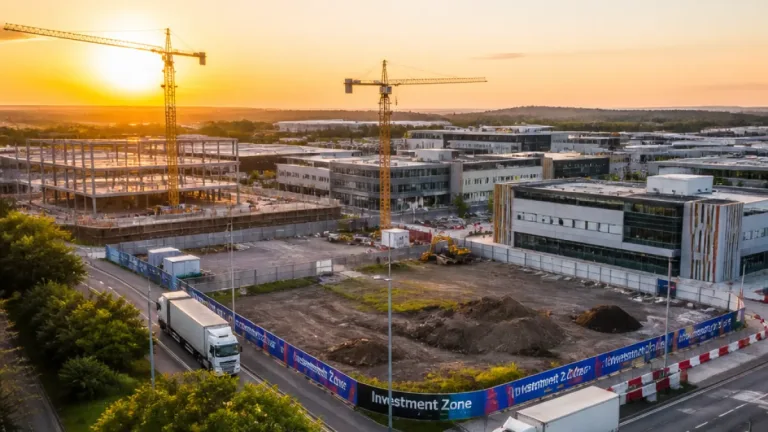
The bank draws attention to two specific channels where resource competition is visible. First, among the biggest technology companies it tracked, the AI push has been funded in part by cuts to share buybacks; some firms have also been prepared to borrow to finance investment despite higher interest rates. Second, construction related to data centres has grown rapidly — rising to 9% of private non‑residential construction — although Goldman says that coincided with a decline in subsidised manufacturing facilities, which has helped to offset resource pressure in construction markets.
"Both AI's contribution to GDP growth and its crowding‑out effects are smaller than often thought,"
The bank’s overall judgement is cautious. While Goldman recognises sizeable and fast‑moving capital flows into AI, it judges that spillovers to the wider economy have so far been modest. On borrowing, for example, AI‑related financing has come to represent close to a quarter of investment‑grade issuance, yet non‑AI credit spreads remain near historical lows — a sign that credit markets are not tightening broadly in response.
Implications for wages, prices and jobs
From a macroeconomic perspective, a near‑term surge in capital spending concentrated on imported technology and data centres changes the composition of demand rather than necessarily boosting domestic labour income directly. Heavy investment in compute and software is likely to drive demand for high‑skilled technicians and engineers, while construction of data centres creates local jobs; but Goldman’s note suggests that offsetting declines in other categories of investment — such as subsidised manufacturing facilities — could blunt net job gains.
For wage growth and inflation, the picture is mixed. If AI investment displaces other investment that would have employed lower‑paid manufacturing or construction workers, wage pressure at the lower end could ease; conversely, the scarcity of specialised labour for AI and data projects could push up salaries in that segment and increase services costs in pockets of the economy. The bank quantifies the likely scale of direct crowding‑out at about $50bn in 2026, a figure that is meaningful but small relative to the wider US economy.
Policymakers and investors will therefore need to distinguish between headline growth from technology capital accumulation and the distributional effects on employment and domestic supply chains. The reliance on imported technology goods also means the productivity benefits from AI may be partly captured abroad, at least until domestic suppliers catch up.
Goldman’s analysis underlines that while AI is an important growth story, its economic consequences are nuanced. Rapid capital deployment can create bottlenecks and shift the composition of investment, but so far the bank finds only limited evidence that it is crowding out other spending on a national scale.