
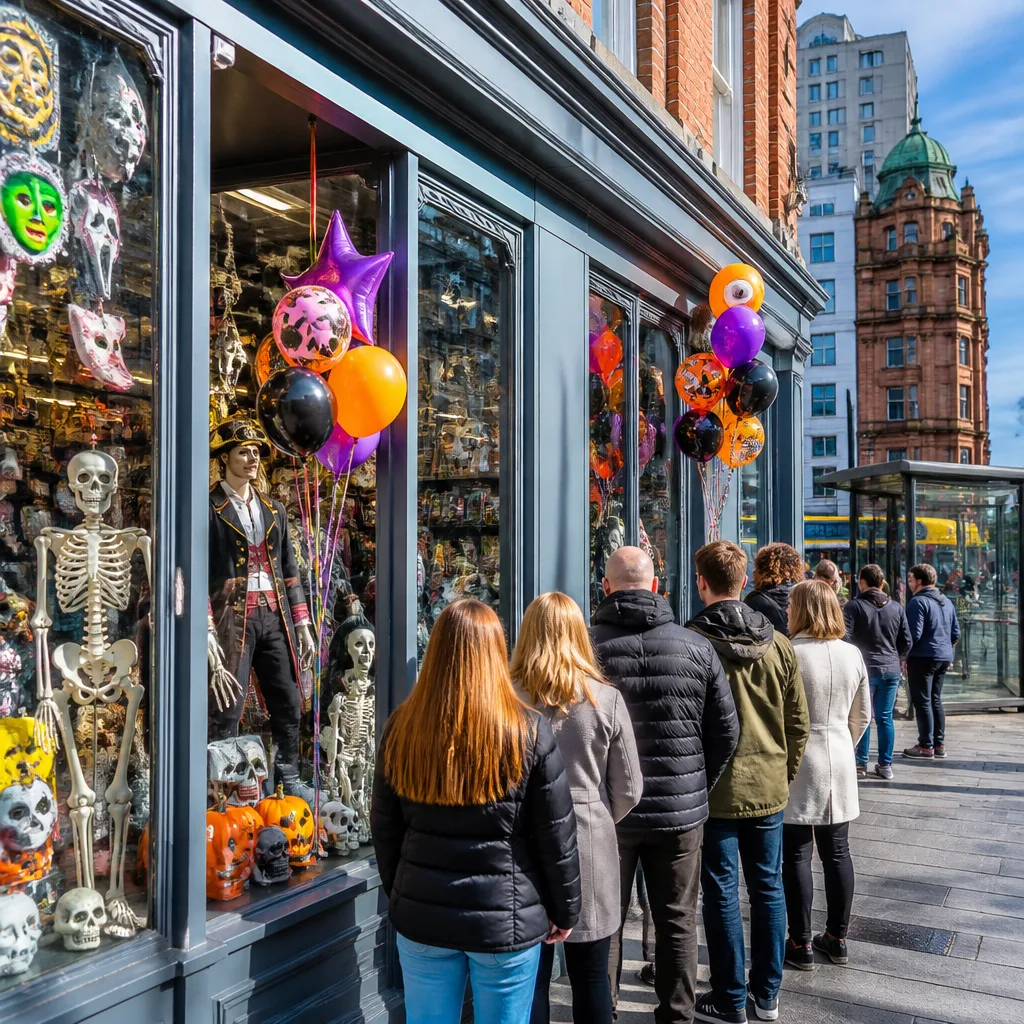
A family-owned fancy dress and party shop in Liverpool is demonstrating the staying power of long-established independents, drawing queues and regular footfall nearly 40 years after its founders first began trading.
From car boots to a two-storey city centre outlet
The business, now known as Lili Bizarre, traces its roots to stall-trading at car boot sales and antique fairs. Its founder, Lilian “Lili” Wakefield, remains a visible presence, working in the shop on Fridays and Saturdays at the age of 85. Her children, Gary, 61, and Lorna, 58, run the business today.
The family's retail journey has included several relocations and a broadening of offer from vintage clothing and house-clearance finds to costume hire and party supplies. Key moves were:
- 1988: trading in the Quiggins indoor market;
- 2003: securing a dedicated shop on Hardman Street;
- 2014: relocating to a larger premises on Tarleton Street;
The current premises occupies 4,921 sq ft over two storeys and the business has become synonymous with Halloween outfits, hen party supplies and novelty items — all categories that generate strong peak-period demand.
Why this matters for retail and local economies
The story of Lili Bizarre is a reminder that not all retail contraction is uniform. While national narratives often focus on retail closures and the rise of online shopping, specialist independents that cultivate personality, community recognition and day-of-event demand can maintain robust in-person trade.
That resilience appears linked to several factors visible in the Wakefields’ experience:
- A distinctive product mix that is hard to replicate online — costumes, rentals and party paraphernalia that customers often prefer to see and try in person;
- Strong personal branding tied to a recognizable founder — the presence of an identifiable figure can drive repeat visits and word-of-mouth;
- Adaptation of space to meet demand — moving into a larger, two-storey unit to host both retail and hire operations.
"If there was a party to be had, it was happening at ours," said Gary Wakefield, reflecting on the family culture that shaped the business.
Those elements help explain why the shop can still produce queues at its doors despite intense competition in city-centre retail and the pressures that high-street landlords impose on independents.
Business implications and risks
Independent retailers with similar profiles should recognise both opportunities and vulnerabilities. Event-driven retail benefits from concentrated peaks — for example, Halloween and wedding seasons — but also faces stock, staffing and cashflow pressures during quieter months. Larger premises can boost capacity but raise fixed costs in rent, rates and utilities.
For policymakers and investors, the Wakefields’ example highlights the economic value of legacy family businesses in urban retail ecosystems. These businesses contribute employment, attract footfall and diversify the offer available to consumers, but they need supportive local policies — from favourable rates treatment to high-street management that preserves affordable spaces.
| Fact | Detail |
|---|---|
| Founding trading roots | Car boot sales and antique fairs |
| Key relocation years | 1988, 2003, 2014 |
| Current size | 4,921 sq ft (two storeys) |
| Principal figures | Lilian (85), Gary (61), Lorna (58) |
The Liverpool shop’s durable popularity is not a guarantee of success for all independents, but it illustrates how a clear customer proposition, local loyalty and willingness to evolve premises and product lines can sustain trading over decades. For consumers, it is a reminder that parts of the high street remain alive with character — and that value in retail is increasingly measured by experience as much as price.














