
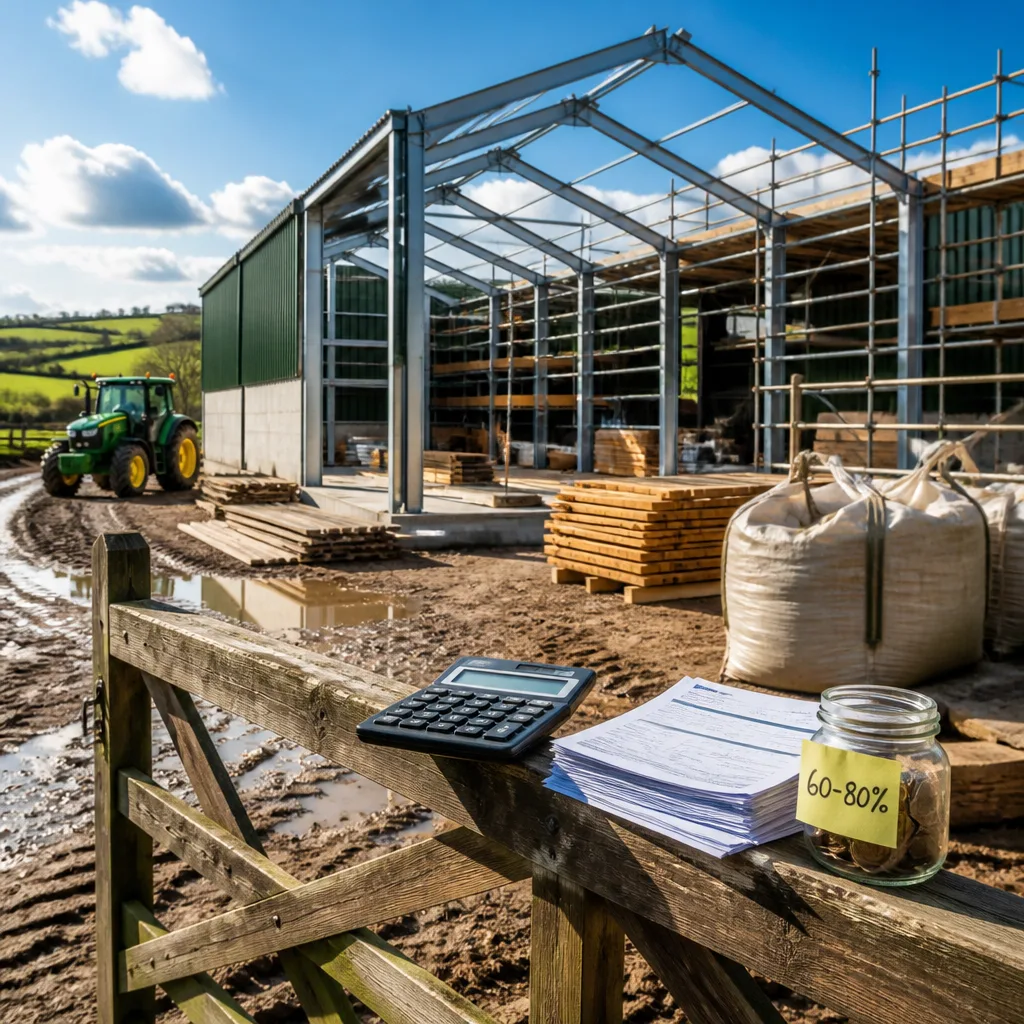
Farmers seeking finance for building projects should expect lenders to fund roughly 70% of costs on average, with individual offers commonly ranging between 60% and 80%, industry advisers say. That allocation means farm businesses must show how they will meet repayments and supply the balance of funding, often from reserves or by valuing in‑kind contributions such as labour.
Risk appetite varies between banks and secondary lenders
Lee Hayes, corporate finance partner at north‑east accountants Armstrong Watson, said mainstream banks maintain agriculture teams but may take a more conservative approach than secondary lenders, particularly when economic conditions are unsettled. Secondary providers can be quicker to arrange funding, he added, but will usually charge a higher cost for that speed.
“It’s all about risk versus reward and each lending request will need a different approach depending on timescales and the quality of the proposal.”
The implication for farmers is clear: choices between a cheaper, slower high‑street loan and a faster, pricier alternative will often come down to how urgently a building is needed and how strong the business case is. Lenders will test both the value of the proposed asset and the borrower’s ability to service debt.
Cash contributions, labour and forecasts count
Borrowers should anticipate lenders asking for evidence they can afford the debt. That usually means providing accounts for the past three years, forecasts showing how the new premises will improve earnings or reduce costs, and detail of personal drawings and household spending that affect cash available to the farm business.
High street lenders frequently use EBITDA — earnings before interest, tax, depreciation and amortisation — to judge a business’s capacity to generate cash, according to the adviser. Where current profitability doesn’t demonstrate affordability, a credible forecast that links the new building to improved performance can be decisive.
Hayes also noted that it is not uncommon for farm labour to be used on building works to reduce external contractor costs. Lenders may allow the value of that in‑kind input to be included as part of the farmer’s contribution to the scheme, reducing the cash required up front.
- Typical lender funding: around 70% of project value.
- Possible funding range: 60%–80% depending on lender and project.
- Evidence required: three years of accounts, forecasts, and details of personal drawings.
What this means for farms, wages and prices
For farm businesses, the funding gap matters for both working capital and labour. Where owners need to raise more cash or allocate paid workers to construction, that can squeeze cashflow or divert staffing from productive tasks, with potential knock‑on effects for yields and supply. If secondary lenders are used because they approve facilities more quickly, higher financing costs could add to overheads and ultimately feed into the price of agricultural goods.
Farmers weighing a building project should therefore balance the expected operational gains from the asset against the additional interest and fees, and the opportunity cost of using on‑farm labour. A robust financial plan that ties the new asset to measurable cashflow improvements will be central to securing the most favourable terms.
| Item | Typical expectation |
|---|---|
| Loan‑to‑value | ~70% (range 60–80%) |
| Accounts requested | 3 years |
| Key performance metric | EBITDA |
In short, funding is available — but not unconditional. Lenders are focused on collateral, loan‑to‑value and, crucially, repayment capacity. That means farmers must go to market with clear forecasts and a realistic appraisal of how the building will change cashflow and labour deployment if they want to secure the most competitive terms.














