Nigel Farage will attempt to reclaim the Clacton parliamentary seat this week in a by-election that has been turned into an unusual political spectacle. The Reform UK leader resigned as an MP to force the contest, which has attracted a record 34 candidates, prompted a boycott by the main Westminster parties and raised practical and financial challenges for the local returning officer.
Ballot, cost and counting present practical problems
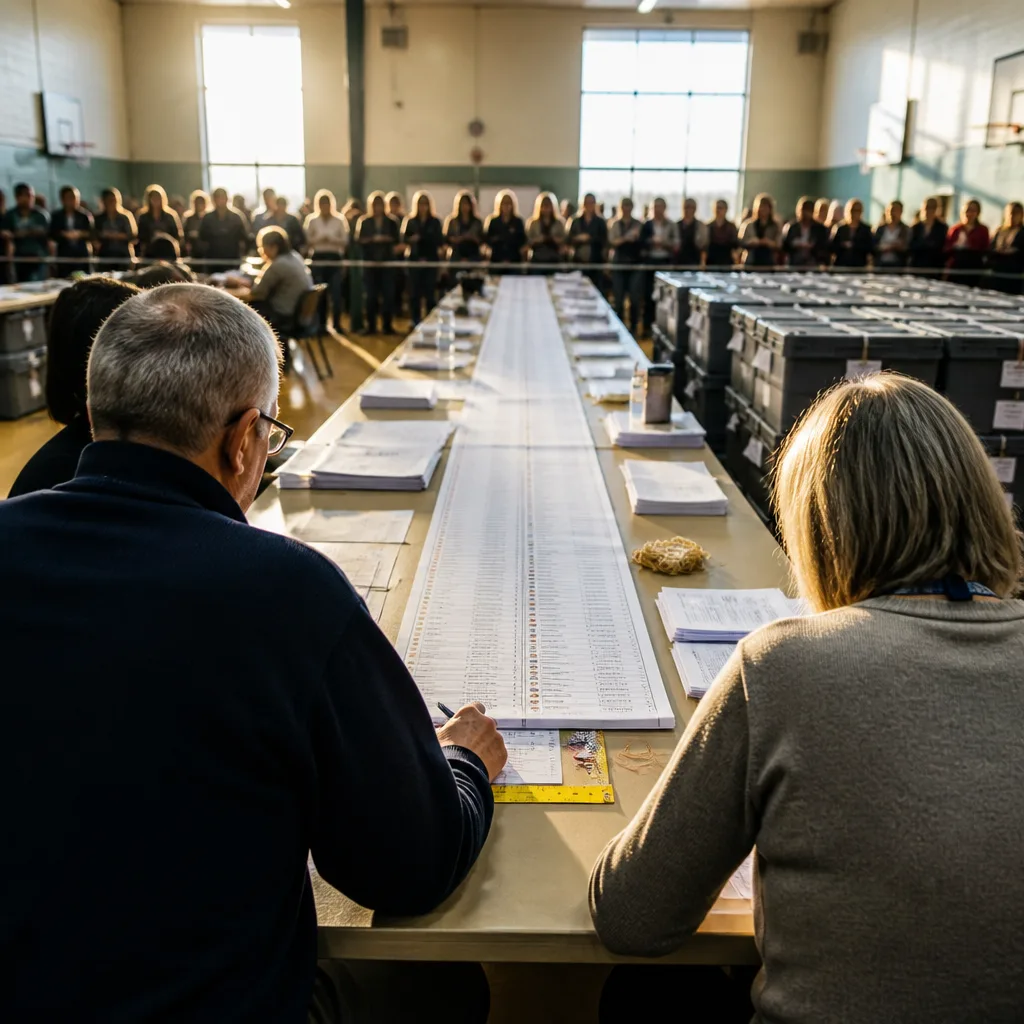
Tendring District Council has had to plan for a particularly unwieldy ballot paper because of the number of people standing. The ballot is around 90cm long, meaning the local authority must provide larger counting tables and adjust arrangements for the result announcement. Returning officer Ian Davidson has said the result will be declared on the floor of Clacton Leisure Centre rather than on a stage because of the number of candidates who must be accommodated.
The by-election is expected to cost taxpayers about £250,000. That figure reflects the additional staffing, venue and administrative requirements created by the scale of the ballot and the increased complexity of running the poll.
| Item | Figure |
|---|---|
| Number of candidates | 34 |
| Ballot paper length | Approximately 90cm |
| Estimated cost to taxpayers | £250,000 |
High-profile entrants and a party boycott
Mr Farage framed his exit from the Commons as a protest against media and parliamentary scrutiny of funding. He has described the contest as a showdown between himself and the political establishment, seeking to cast the vote as “
people versus the establishment”. Major party organisations in Westminster, however, have chosen not to contest the seat, treating the poll as a stunt. That decision has cleared space for a wide array of candidates, including satirical and fringe entrants.
The field features several notable names from outside conventional party politics. Among them are the satirical candidate known as Count Binface, actor-turned-politician Laurence Fox, and three candidates from the Official Monster Raving Loony Party. A further set of independent and minor-party candidates complete the unusually large slate.
Investigations and possible repercussions
The by-election also intersects with an active inquiry into Mr Farage’s declared finances. The parliamentary standards commissioner, Daniel Greenberg, had been investigating a £5 million gift received from cryptocurrency entrepreneur Christopher Harborne before Mr Farage took his seat. New MPs are required to register gifts above £300 received in the prior 12 months, with narrow exceptions. That investigation was paused when Mr Farage resigned his seat but will restart if he wins the by-election and returns to Parliament.
Reports additionally note potential scrutiny related to support provided by an ally, George Cottrell, who is said to have recruited and paid staff to work on Mr Farage’s campaign. Bookmakers make Mr Farage the firm favourite to prevail, though the unusual nature of the contest and the crowded ballot make turnout and vote distribution harder to predict than in a standard by-election.
Local authority and electoral officer considerations
Election officials have had to adapt standard procedures. Larger tables, revised declaration arrangements and additional staffing are among the operational changes. The returning officer’s decision to announce the result from the leisure centre floor reflects a pragmatic response to accommodate the large number of candidates on the day.
The Clacton poll underlines how a single high-profile resignation can create ripple effects: procedural headaches for local administrators, additional public expense, and renewed scrutiny of an MP’s conduct and financing. The result will determine whether Mr Farage re-enters the Commons and whether the standards inquiry resumes in full.
- 34 candidates are standing in the by-election.
- The ballot paper is roughly 90cm long, requiring larger counting arrangements.
- The contest is expected to cost approximately £250,000 to run.