
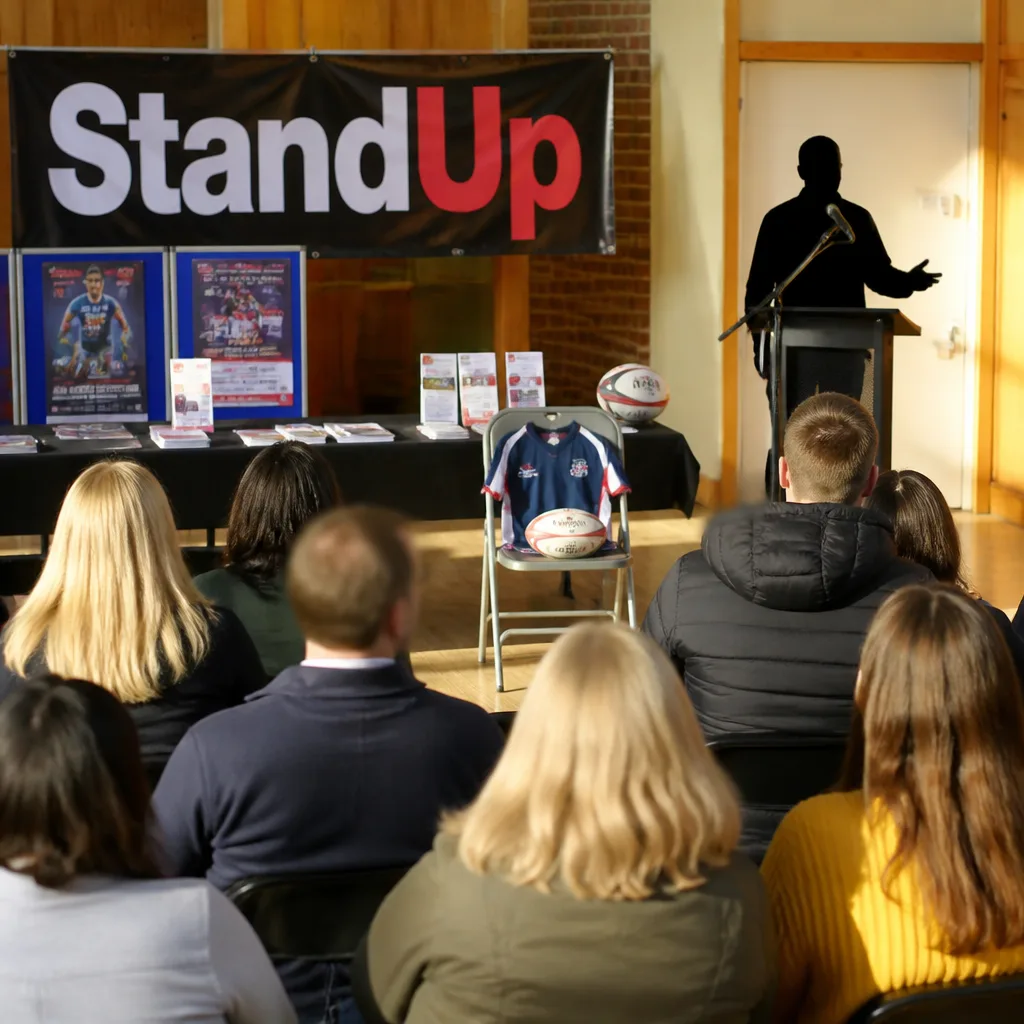
Ben Cohen, who scored a place in rugby history as part of England’s 2003 World Cup-winning side and won 57 England caps, has spent more than a decade channeling public attention into campaigning against bullying and homophobia.
From pitch to platform
Cohen, best known for his time as a winger for Northampton Saints and as a member of Sir Clive Woodward’s side that lifted the Webb Ellis Cup in Australia in 2003, discovered an unexpected admirership off the field that helped shape his later work.
Around the time of the 2007 World Cup, Cohen was contacted by a man in Paris called Laurent who had created a Facebook fan page that had attracted 37,000 members. When Cohen enquired about the page, he was told a striking detail: the membership was composed entirely of men. Laurent explained to Cohen that he had become a gay icon.
“37,000 people had joined it… I was saying, ‘Are you sure you’ve got the right Ben Cohen?’ And he said, ‘Yes, I am.’ He said I needed to know something, which is that all of the fans were men.”
From admiration to advocacy
Rather than distancing himself from the unexpected following, Cohen viewed it as an opportunity. He later said he was flattered that people found him attractive, but it was the messages of suffering and discrimination he read on the platform that pushed him towards activism.
Those stories, often describing violence and bullying experienced by LGBTQ+ people, resonated with him on a personal level. Cohen’s father, Peter, died in 2000 after being seriously injured while trying to help someone who was being attacked. Cohen has said that experience gave him a visceral understanding of what violence can do to families and communities.
StandUp Foundation and aims
In 2011 Cohen established the Ben Cohen StandUp Foundation, a charity focused on tackling bullying and homophobia. He has framed his position as a straight, high‑profile sportsman as a platform to bridge gaps between communities and challenge stereotypes about masculinity and sexuality.
- Use his public profile to advocate against homophobia
- Support victims of bullying and promote allyship
- Raise awareness of the consequences of violence and prejudice
The foundation’s creation represents a deliberate effort to convert celebrity and sporting prestige into a tool for social change, particularly in schools and community settings where bullying can take root.
Implications and context
Cohen’s case sits at the intersection of sport, celebrity and social campaigning. It demonstrates how athletes can become inadvertent symbols for communities and how those athletes might respond to that role. As debates continue in the UK about how to tackle bullying, homophobia and discrimination in educational and sporting environments, high‑profile advocates bring public visibility and potentially political pressure to bear on policymakers and institutions.
| Year | Event |
|---|---|
| 2000 | Death of Cohen’s father, Peter, after intervening in an attack |
| 2003 | Part of England team that won Rugby World Cup in Australia |
| 2007 | Notified of a Facebook fan page with 37,000 male members in Paris |
| 2011 | Founded the Ben Cohen StandUp Foundation |
Cohen’s story highlights two tensions. First, the way modern social media can create unexpected constituencies for public figures; second, the question of how those figures choose to use the platform. For Cohen, the decision has been to advocate publicly on behalf of those reporting harassment and violence.
Whether that influence translates into long-term reductions in bullying and homophobia depends on a wider set of actors — schools, governing bodies, charities and policymakers — responding to the issues his foundation highlights. But the trajectory from international sportsman to activist underlines how personal experience, public attention and organised campaigning can combine to refocus a celebrity’s role in public life.









