
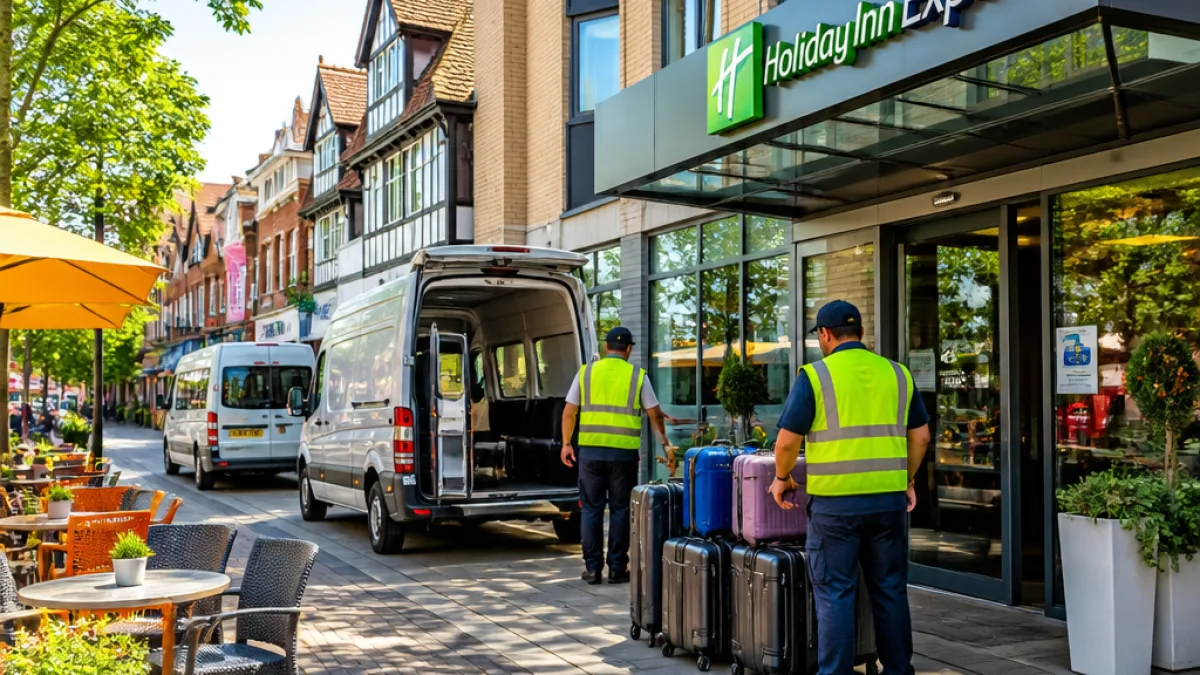
Hotels returned to town use as asylum accommodation strategy shifts
The Holiday Inn Express on London Road, Dunstable, has been cleared of people seeking asylum after the government confirmed it was one of 12 hotels nationally to be taken out of use for asylum accommodation. The move forms part of a wider programme to end the use of town-centre hotels and relocate people into larger, more basic sites such as former military bases.
The Department responsible for the policy has framed the changes as a bid to relieve pressure on local high streets and preserve hotel capacity for leisure and business travellers. Government statements accompanying the announcement said hotels can once again support town centres, local jobs and nearby cafes, shops, restaurants and attractions, helping local economies to thrive.
Locally, the closure of the Holiday Inn Express will be watched closely by small businesses and workers who rely on passing trade. The hotel is situated on a main route into the town and its guests have been visible customers for nearby outlets. While the government argues the shift will restore trade to the town centre, the immediate impact depends on how quickly alternative guests return and whether the hotel’s recent trade can be replaced.
"For too long, communities in the East of England have watched hotels at the centre of their towns and cities become symbols of a broken asylum system. We are turning that around by ending the use of asylum hotels for good and moving people into larger, basic accommodation like former military sites."
The quote above was provided by Anna Turley, the immigration minister, who described the closures as part of measures to "restore control at the border, and fairness to our immigration system." The government has previously announced waves of closures: 11 hotels in April and a further 20 in June, preceding this latest set of 12.
- Holiday Inn Express, London Road, Dunstable is confirmed among the 12 hotels closed to asylum accommodation.
- The government says it will prioritise larger, basic sites such as former military locations for future asylum housing.
- Previous closures included 11 hotels in April and 20 in June.
Local authorities and voluntary groups supporting asylum seekers have previously warned that moves away from dispersed hotel placements risk concentrating need in fewer locations and can create logistical challenges for services such as health, legal advice and schooling. In Dunstable, charities and local agencies will now need to know where former hotel residents have been moved to, and how continuity of support will be ensured.
A short table summarises the recent closure announcements and the government’s stated alternative approach.
| Announcement | Number of hotels | Government alternative |
|---|---|---|
| April | 11 | Move to larger, basic accommodation |
| June | 20 | Move to larger, basic accommodation |
| Latest announcement | 12 (including Dunstable) | Former military sites and similar larger facilities |
For Dunstable residents the consequences will be practical and political. Practically, there are questions about where people formerly housed in the hotel have been relocated, how local services will be informed and whether any support networks will be disrupted. Politically, the move is likely to revive debate about central government decisions on asylum accommodation, local planning, and the balance between national immigration policy and local economies.
Officials have argued that returning hotels to standard trade will benefit town centres, but the speed and scale of such a recovery are uncertain. Local councils and charities will be seeking clarity on the government’s plans, including how many people have been moved from the Dunstable hotel and where they are now, and what support will be in place in the alternative sites named by ministers.
The change marks another chapter in a national reshaping of asylum accommodation policies. For Dunstable, the immediate task will be to monitor the local economic impact and to ensure that any displaced residents continue to have access to the services they need.